black tourmaline meaning
Crystal Graduation: Interpreting Breaks, Nightmares & Titration
By Clara Vance · Apr 10, 2026

Crystal Graduation: Interpreting Breaks, Nightmares & Titration
Operating as a senior procurement specialist and global assessor within the esoteric mineral markets for three decades, one encounters materials ranging from museum-grade Lemurian seed quartz to highly sophisticated lab-grown counterfeits.
Transitioning from casual collection to advanced curation necessitates a radical shift in material discernment.
Practitioners no longer merely select decorative stones; rather, they engage in the meticulous curation of structural tools.
This evolution demands a microscopic understanding of material authenticity, the mechanical integration of oscillatory outputs, and the cognitive framework required for introspective practices.
When observing the physical phenomena of crystal fractures, the modulation of subjective energetic feedback, and the integration of subconscious archetypes, the operational stakes remain profoundly high.
Providing a comprehensive overview of this advanced terrain, this guide functions as a definitive blueprint for structural and thematic navigation.
Visual Interlude
Material Discernment Under Magnification
A conceptual still-life reflecting authenticity checks, lattice geometry, and the tactile realities of advanced curation.

Precise Positioning & Core Metrics of Advanced Crystal Work
The Shift from Novice to Practitioner
Within the advanced stages of mineral curation, market positioning shifts entirely from aesthetic consumption to functional mechanical application.
Selected tools must possess the geometric purity to withstand intense psychological framing and the weight of their historical context.
Whether evaluating the sudden, inexplicable shattering of a historically utilized protective stone or analyzing the qualitative observation of energetic titration—modulating a stone's subjective frequency to mitigate sensory overwhelm—evaluation criteria must remain utterly ruthless.
Core Quality & Performance Metrics
Navigating this sophisticated landscape requires evaluating every piece of mineralogical hardware against a stringent set of sensory and structural parameters.
When sourcing tools for advanced introspective frameworks or deep somatic mapping, practitioners rely on specific, objective metrics.
Vibrational Resonance & Piezoelectric Output
The tactile sensation of the stone presents a primary metric.
Does the specimen possess a subtle, steady thrum under mechanical pressure, or does it remain inert?
This relates directly to the science behind crystal energy, specifically the piezoelectric effect where mechanical pressure—such as a firm grip—yields a measurable electrical charge across the crystalline lattice.
Material Authenticity & Provenance
Verifiable origin defines the baseline of any procurement strategy.
Determining whether the specimen is ethically mined, untreated, and unheated ensures the preservation of its natural geometric structure.
Cleansing Capacity & Retention
Assessing how much subjective energetic debris the mineral structure can absorb before requiring a baseline reset forms another operational parameter.
This metric becomes particularly relevant when evaluating if and how often do crystals need to be cleansed during heavy introspective processing sessions.
Ergonomic & Somatic Adaptability
Physical weight, surface texture, and thermal conductivity dictate how the stone interacts with the human biofield and physical body during prolonged meditation or sleep cycles.
Value-to-Cost Ratio
The intersection of financial investment and the tangible subjective stabilization the stone provides over time requires careful analysis.
This represents a historical market observation regarding the utility of the tool rather than a guaranteed financial return.
The Science Behind Crystal Energy and Piezoelectric Realities
While the broader industry frequently circulates mystical narratives, seasoned buyers ground their assessments in observable physical phenomena.
The foundational mechanics rely deeply on structural geometry and piezoelectricity.
Quartz, possessing a Mohs hardness of 7, operates as a highly efficient oscillator.
When discussing aligning a crystal matrix, practitioners refer to the physical and subjective synchronization of these internal geometric structures with the user's bio-electric field.
A stone containing a compromised internal lattice—often due to harsh chemical treatments or artificial irradiation—fails to hold a sustained oscillatory frequency, rendering it mechanically unsuited for advanced titration work.
Understanding the Attunement Process of Encoding
True mineral attunement functions not as a passive event, but as an active, deliberate encoding sequence.
The attunement process of encoding involves marrying specific neuro-linguistic frameworks with the stone's natural resonant frequency.
Achieving this requires a crystal of exceptional clarity and robust structural integrity.
When practitioners infuse your crystal with your intention, they are essentially programming its oscillatory output to act as a subjective bio-feedback loop.
Should the stone possess low material quality, this encoding degrades rapidly, leading to erratic sensory feedback during sensitive practices like dream analysis or memory recall.
Deep Anatomy & Horizontal Comparison: Authentic Matrices vs. Commercial Synthetics
Natural High-Vibration Stones vs. Lab-Grown Imitations
The most rigorous horizontal comparison within today’s market exists between naturally formed minerals and their heavily manipulated counterparts.
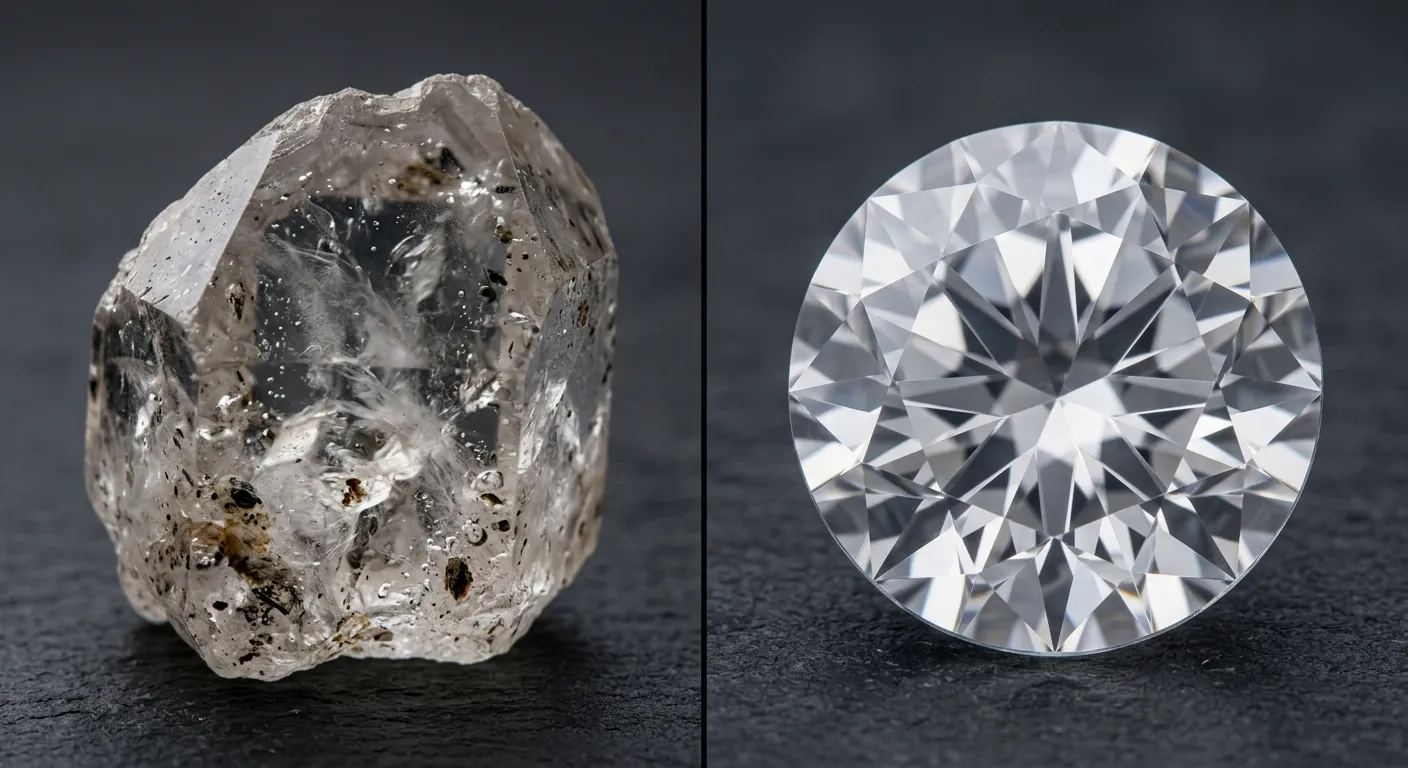
Natural stones, forged over millennia under immense geological pressure, possess microscopic inclusions, veils, and structural anomalies that serve as unique acoustic fingerprints.
Lab-grown quartz or synthetic opal, while optically flawless, often presents an entirely sterile tactile response to the experienced touch.
In practical application, a synthetic stone lacks the deep earth-resonance historically utilized to anchor the psyche during an intense thematic analysis of the self.
Visual Interlude
Natural Inclusions vs. Synthetic Sterility
A comparative macro aesthetic that highlights veils, inclusions, and tactile realism.
Vogel Crystal Meaning and Healing Properties vs. Standard Points
Evaluating tools for precision structural work reveals a monumental distinction between a true Vogel-cut crystal and a standard polished point.
Marcel Vogel’s historical research dictated precise angles—specifically 51 to 52 degrees, mirroring the geometry of the Great Pyramid—to maximize the optical amplification and transmission of light.
The vogel crystal meaning and healing properties depend entirely on this microscopic mathematical precision.
A genuine Vogel acts as a focused structural director, historically favored for targeted introspective practices.
Conversely, a standard, mass-produced polished point—frequently cut haphazardly to maximize carat weight rather than geometric integrity—scatters light and subjective energy, making it mechanically ineffective for precise titration.
Precision Angle Reference
Angles explicitly stated: 51 to 52 degrees.
Aligning a Crystal Matrix: The Structural Integrity of Fractures
Spontaneous mineral fracturing remains one of the most misunderstood phenomena in this field.
Novices frequently assume a failure of the material.
Expert assessors, however, examine the break under a 10x jeweler's loupe.
A clean, natural cleavage plane often indicates the stone has absorbed a massive mechanical or thermal shock.
Reassessing the tool after a break involves evaluating the two new pieces.
Frequently, the fracture creates a multiplicity of facets that actually increase the stone's refractive capabilities.
Conversely, should a stone shatter due to being dyed, heated, or structurally compromised by commercial acid baths, it serves merely as a sign of inferior quality and warrants immediate discarding.
The Great Debate: Do Crystals Need to Be Cleansed?
Within the realm of advanced curation, the necessity of clearing material structures is met with rigorous methodology.
While novices might simply charge your crystals under the full moon—a culturally significant but sometimes mechanically insufficient practice—advanced practitioners employ deep-clearing techniques.
These include sound wave obliteration using 4096 Hz tuning forks or earth-burial for stones subjected to intense subjective use.
A high-quality, authentic stone bounces back to its baseline frequency immediately after proper cleansing, whereas a treated stone remains acoustically muddy.
Risk Mitigation & Verification: Navigating the Pitfalls of the Crystal Market
The Marketing Gimmick of "Pre-Programmed" Stones
Contemporary markets frequently feature vendors selling pre-programmed or pre-attuned specimens at exorbitant markups.
Observers will note marketing jargon claiming stones contain ancient or extraterrestrial frequencies.
Procurement specialists must emphasize that getting real high quality crystals requires ignoring the marketing narrative and focusing entirely on the mineralogical and tactile reality of the stone.
The user remains the sole entity capable of authentically establishing a subjective baseline with their tools.
Case Study / Pitfall Breakdown: The "Astral Sorcery" Trap
A distinct qualitative observation perfectly illustrates the dangers of this unregulated market.
An individual operating within a highly sensitive framework acquired a supposedly elite set of moldavite and quartz pieces marketed under gamified, pop-culture terminology.
The Pitfall
The vendor claimed these stones were pre-titrated for immediate nocturnal navigation.
Upon receiving the package, the user placed the stones under their pillow.
Instead of experiencing the advertised subjective relief, they reported severe sleep disruption, sensory fragmentation, and a dramatic shift in their baseline state.
The Anatomy of the Scam
Shipping the stones to a testing studio revealed the truth.
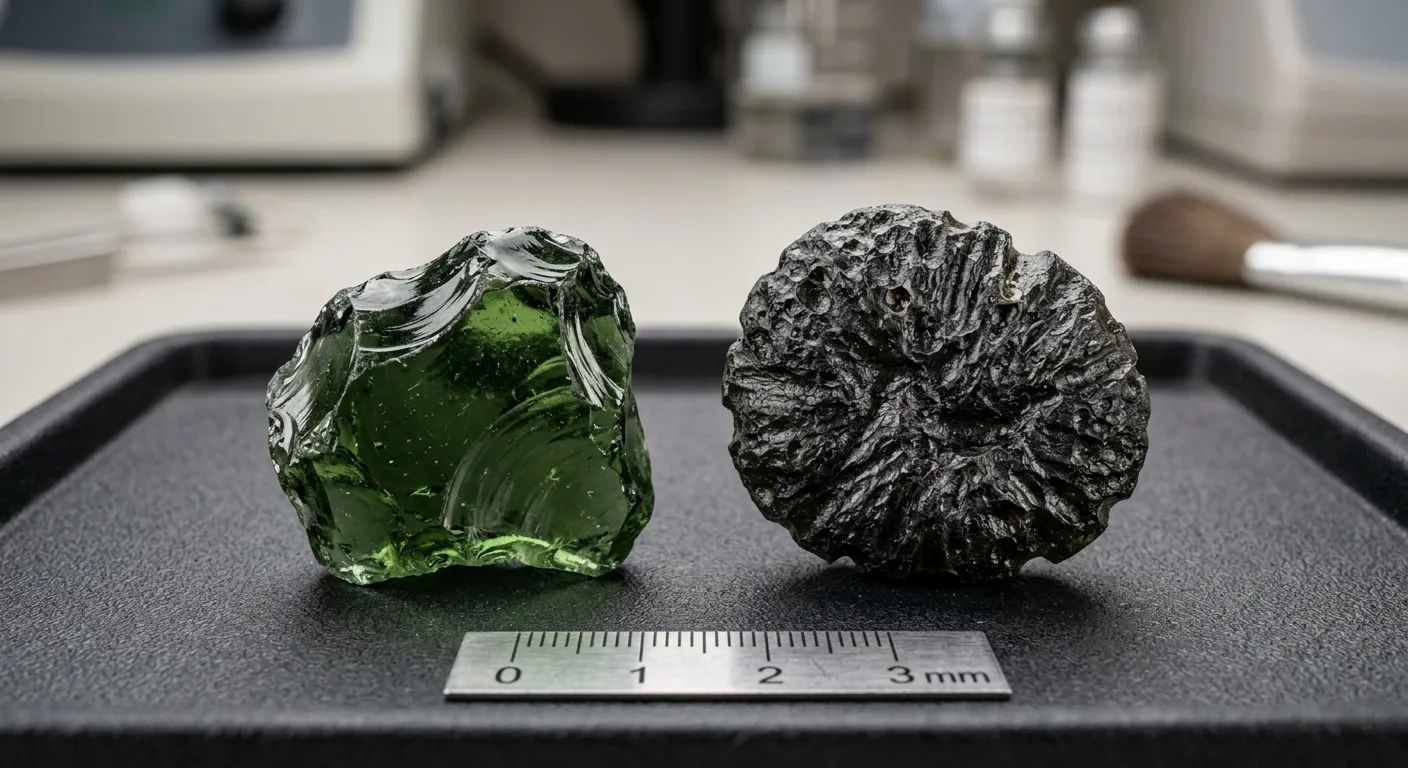
Under magnification, the moldavite proved to be nothing more than melted green bottle glass—completely devoid of the chaotic, meteoric lechatelierite structures found in genuine tektites.
The quartz had been heavily irradiated to appear smoky and exhibited severe structural brittleness.
The Verification Lesson
The user experienced the psychological placebo effect combined with the acoustic deadness of synthetic glass.
Avoiding this requires buyers to demand unedited macro-photography, verify the refractive index (which for authentic moldavite registers strictly between 1.48 and 1.54), and reject vendors utilizing fantasy terminology.
True attunement functions as an intimate, personal process.
Visual Interlude
Macro Verification and Refractive Index Reality
A verification-centric composition: glass impostors vs. genuine tektite texture cues.
How to Programme a Crystal: The Authentic Buyer’s Method
Learning how to programme a crystal requires somatic discipline rather than mystical reliance.
First, the stone must be physically washed and acoustically reset.
Next, the user must enter a state of deep physiological coherence—stabilizing heart rate variability and anchoring the breath by inhaling for 4 seconds, holding for 4 seconds, and exhaling for 4 seconds.
Only then does the practitioner hold the stone and project a singular, distilled neuro-linguistic command into its lattice.
Observing the subtle temperature shift or the micro-vibration in the palm signals the stone's thermal and acoustic response.
This precise mechanical and cognitive sequence is how practitioners authentically establish their baseline.
Breath Anchor (4-4-4)
Stabilizing heart rate variability and anchoring the breath by inhaling for 4 seconds, holding for 4 seconds, and exhaling for 4 seconds.
Inhale
4
seconds
Hold
4
seconds
Exhale
4
seconds
Interpreting Nightmares to Receive Healing: Avoiding Toxic Positivity
When utilizing minerals for introspective shadow work, nocturnal disturbances serve as diagnostic data rather than enemies to be banished.
The amateur approach involves acquiring an amethyst, hoping for pleasant imagery, and suppressing darker themes.
The graduated approach involves interpreting nightmares to receive healing.
When a specific nocturnal narrative recurs, an advanced practitioner uses a grounding stone with high iron content, like authentic black tourmaline or shungite, to anchor the physical body's tactile awareness.
This allows the conscious mind to safely observe the nightmare's symbolism.
This represents the essence of subjective energetic titration—exposing oneself to the subconscious narrative in manageable, structurally supported doses.
Use-Case Adaptation & Value Assessment: Curating Your Graduation Kit
Demonstrating the practical application of these strict metrics involves designing highly specific procurement scenarios.
Each scenario is tailored to a distinct psychological archetype and budget, complete with a rigorous value-to-cost analysis.
Scenario A: The Highly Sensitive Archetype (Budget: $50-$150)
The User Profile
An individual whose sensory framework frequently processes overwhelming amounts of external emotional data.
They require tools to protect your energy without shutting down their natural empathetic responses.
The Procurement Strategy
Avoiding high-frequency, ungrounded stones like moldavite or phenakite prevents immediate sensory overload.
Instead, sourcing the best crystals for empaths involves acquiring a dense, unpolished piece of Madagascar Black Tourmaline for immediate tactile grounding, paired with a high-grade, gem-quality Lepidolite palm stone.
Lepidolite is rich in natural lithium, making it historically recognized among the crystals for overthinking.
Value Assessment
For under $100, the value-to-cost ratio remains highly favorable.
The tactile, ergonomic weight of a Lepidolite palm stone provides immediate sensory anchoring during moments of acute stress, offering a lifetime of subjective regulation that far exceeds the initial financial outlay.
Scenario B: The Shadow Worker Utilizing Nightmares in Witchcraft (Budget: $200-$400)
The User Profile
An advanced esoteric practitioner looking to actively mine their subconscious narratives for integration.
They intend to utilize nightmares in witchcraft to identify and deconstruct historical psychological blockages.
The Procurement Strategy
This requires a dual-action toolkit.
First, a raw, untreated piece of Obsidian—a volcanic glass that acts as a visual and psychological mirror, forcing the user to confront their shadow aspects.
Second, a meticulously sourced, authentic Vogel-cut Clear Quartz to direct and safely titrate the intense subjective focus required during these nocturnal sessions.
Value Assessment
The $300 investment in a genuine Vogel is justified by its precise geometric functionality.
Unlike a low-grade point, the Vogel focuses the user's intent, providing a highly structured, controlled environment for psychological excavation.
Scenario C: The Sound Facilitator Playing the Crystal Singing Bowls (Budget: $500+)
The User Profile
A professional facilitator who induces altered states of subjective awareness for groups.
They are playing the crystal singing bowls to facilitate mass somatic relaxation and require flawless acoustic resonance.
The Procurement Strategy
The market contains numerous frosted bowls made from crushed, low-grade silica.
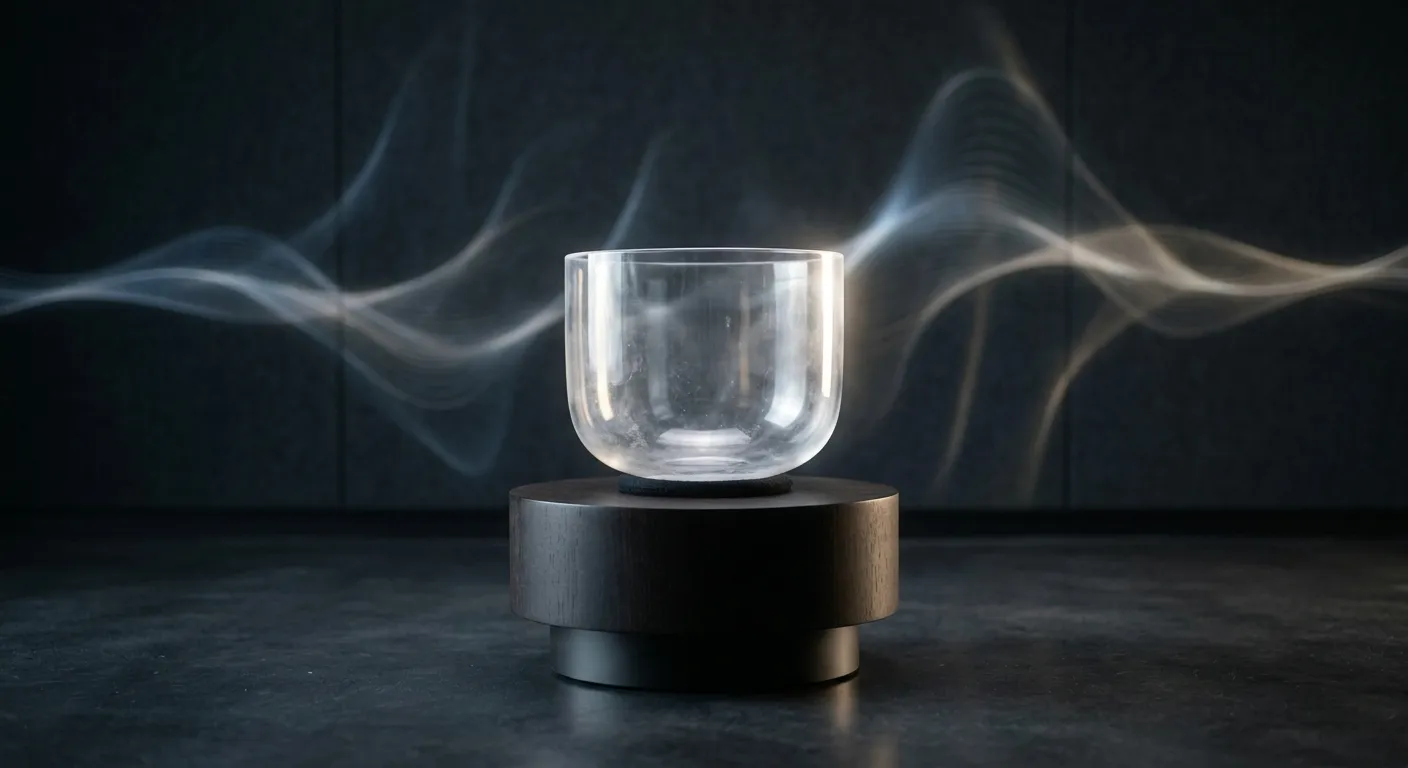
A graduated buyer seeks clear, pure-quartz alchemy bowls, potentially infused with precious metals or specific minerals that mathematically alter the acoustic wave.
The bowls must be perfectly pitched—such as tuning precisely to 432Hz—to ensure acoustic entrainment without causing auditory fatigue.
Value Assessment
While a single alchemy bowl can cost upwards of $800, the historical market observation of its efficacy justifies the cost.
The purity of the sound wave directly impacts the depth of the clients' subjective experience.
A low-grade bowl produces dissonant overtones that agitate the auditory system, whereas a pure quartz bowl creates a seamless, mathematically perfect frequency that effortlessly guides a room into a relaxed brainwave state.
Acoustic Pitch Reference
Explicit value noted: tuning precisely to 432Hz.
Visual Interlude
Quartz Sound and Geometric Order
A cinematic representation of resonance, purity, and mathematically disciplined acoustics.
The Value-to-Cost Framework for Structural Investments
Ultimately, the value of a mineral specimen in this advanced stage of curation is determined not by its rarity on a jeweler's scale, but by its functional resilience.
A proprietary Value Assessment Framework for these tools asks three objective questions.
Somatic Longevity
Does the stone maintain its tactile and acoustic baseline after heavy introspective use, or does it present as structurally inert?
Authenticity of Provenance
Does the physical reality of the stone match its historical claims, remaining devoid of synthetic manipulation and marketing gimmicks?
Titration Capability
Can the tool be utilized dynamically to either amplify subjective focus for deep extraction or ground sensory input to prevent nervous system overload?
Applying this ruthless, microscopic level of scrutiny to the curation process allows practitioners to transcend commercial noise.
Stepping into true mineral graduation means wielding authentic tools capable of facilitating a thematic analysis of the darkest narratives, surviving the deepest material fractures, and masterfully titrating the profound subjective energies of the human experience.
References
Source list rendered from the provided JSON.
-
Element 50 (2024). Vogel Crystals: Precision Tools for Spiritual Alignment - Element 50. Element 50.https://element50.com/vogel-crystals-precision-tools-for-spiritual-alignment/
-
MindBodyGreen (2024). How To Clear, Activate & Store Your Crystals - MindBodyGreen. MindBodyGreen.https://www.mindbodygreen.com/articles/how-to-clean-store-program-your-crystals
-
Cristal Vibrasons (2024). White Paper on Crystal Singing Bowls – Cristal Vibrasons. Cristal Vibrasons.https://www.cristalvibrasons.com/en/page/30-white-paper-on-crystal-bowls