black tourmaline mineralogy
Real vs. Fake: How to Identify Authentic Black Tourmaline
By Clara Vance · Apr 16, 2026
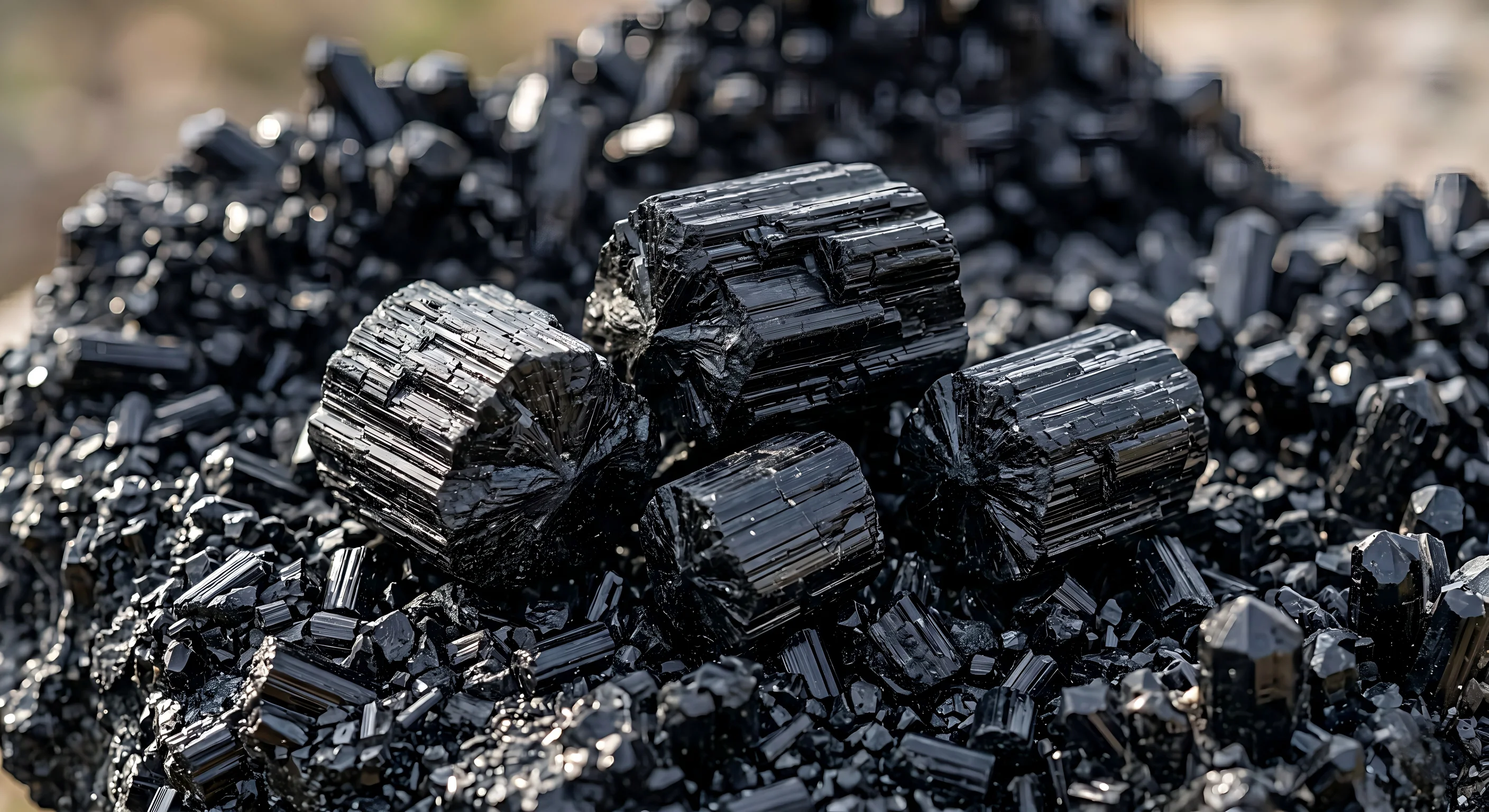
The Professional Identification of Authentic Black Tourmaline: A Material Analysis
Navigating the global mineral trade requires a sophisticated understanding of material science and market dynamics, particularly when dealing with specimens frequently targeted by counterfeiters.
Black tourmaline, a mineral historically valued for its structural density and aesthetic depth, has seen a surge in market prevalence.
Consequently, the proliferation of sophisticated imitations necessitates a rigorous framework to identify real black tourmaline.
This comprehensive overview moves beyond superficial marketing claims to provide a thematic analysis of the stone’s physical properties, ensuring that collectors and professionals can distinguish real black tourmaline from fakes with absolute certainty.
Material Metrics and Technical Specifications
To evaluate high-quality black tourmaline, one must adopt the perspective of a senior gemological buyer. This process involves a qualitative observation of the specimen’s inherent physical characteristics, which remain consistent regardless of the stone's historical context or its subjective use in modern design.
The Significance of Specific Gravity and Mass
A primary method to tell if black tourmaline is real involves assessing its weight-to-volume ratio.
Due to its high iron content, authentic specimens exhibit a specific gravity ranging from 3.15 to 3.25.
When performing a tactile comparison, the stone should feel significantly heavier than common glass or resin substitutes. This density is a non-negotiable physical parameter that provides immediate feedback regarding the material's structural integrity.
Architectural Signatures and Surface Topography
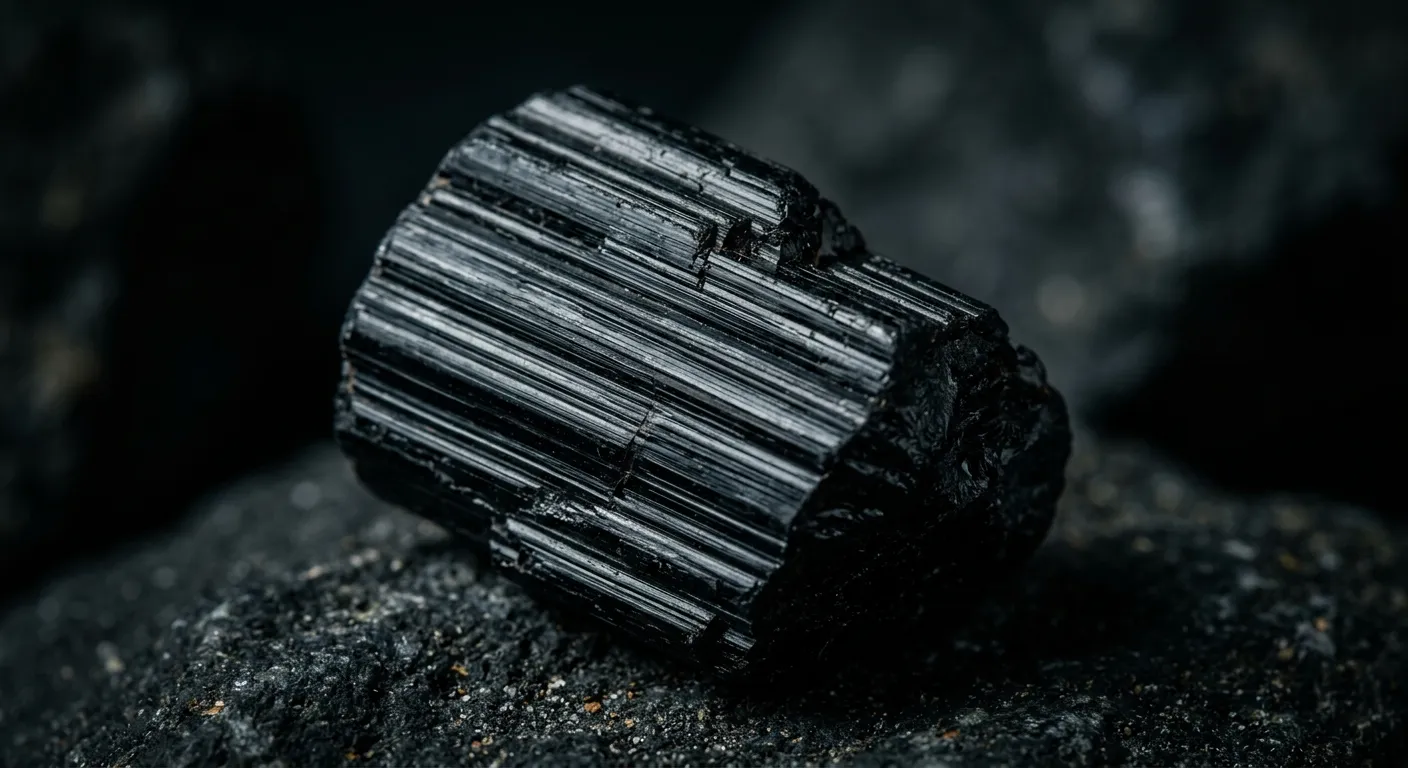
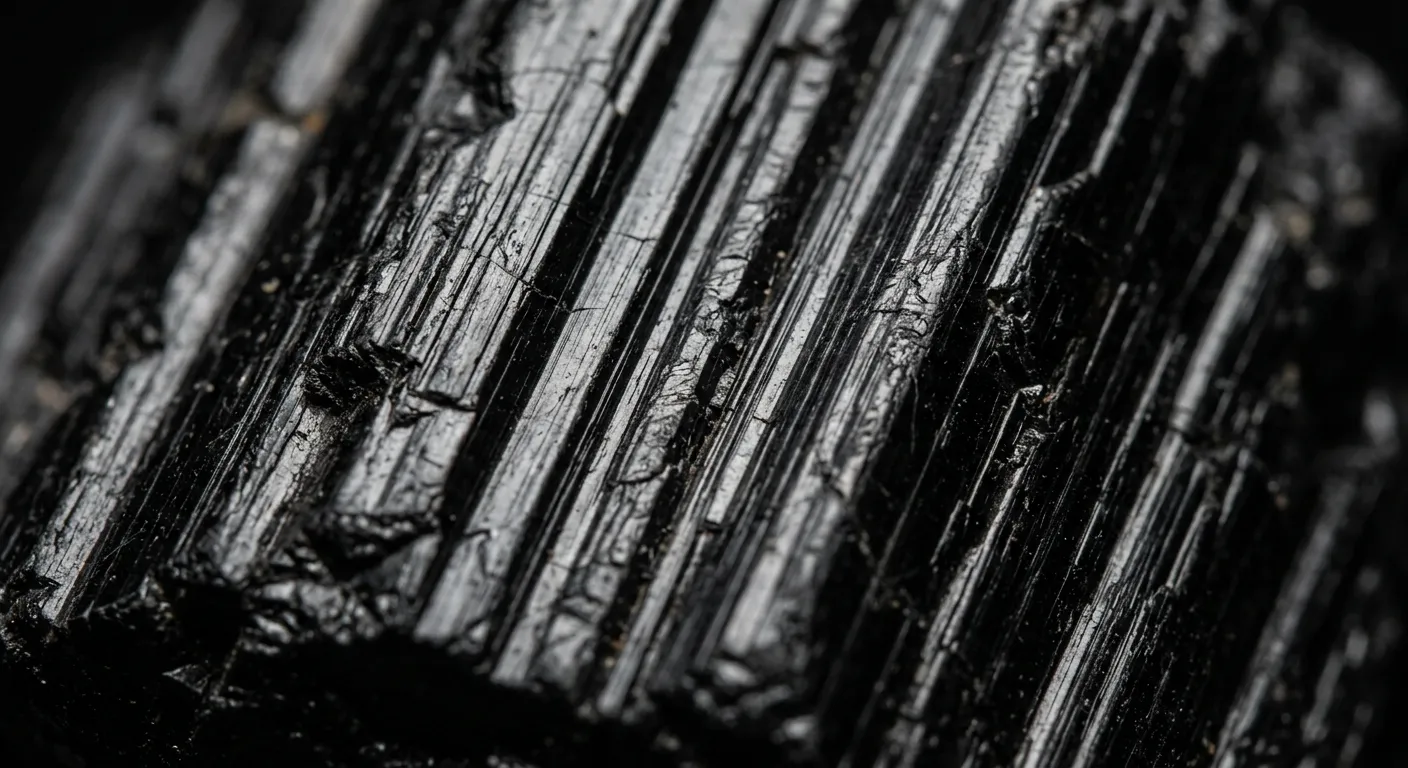
Raw specimens are characterized by prominent vertical striations ridges or furrows that run parallel to the primary C-axis of the crystal.
These features are not surface defects but are fundamental to the trigonal crystal system in which the mineral forms.
These ridges serve as a reliable diagnostic tool to identify real black tourmaline, as they are difficult to replicate in molded glass or synthetic resins without appearing unnaturally uniform.
Thermal Conductivity and Tactile Feedback
Genuine minerals possess distinct thermal properties compared to polymers. Real black tourmaline is highly conductive and will feel cold to the touch upon initial contact.
- Furthermore, it retains its cool temperature longer than synthetic materials, which tend to reach equilibrium with body heat almost instantaneously.
- This sensory evaluation is a standard practice for those seeking to distinguish genuine black tourmaline apart from its imitations.
Structural Integrity and Mineralogical Hardness
Maintaining a hardness of 7-7.5 on the Mohs scale, this mineral is notably resilient.
This specific level of hardness means the stone can easily abrade glass surfaces while remaining susceptible to chipping if subjected to high-impact force due to its brittle nature.
Understanding this metric is essential for testing the authenticity of your black tourmaline, as it separates the mineral from softer stones or plastic-based counterfeits.
The Distinction Between Black Tourmaline and Schorl
A frequent point of technical discussion involves the difference between black tourmaline and schorl. From a mineralogical standpoint, there is no functional difference.
Schorl is the specific scientific nomenclature for the sodium-iron-rich member of the tourmaline supergroup. Professionals and high-end dealers use these terms interchangeably, though "schorl" is preferred in academic and technical documentation to denote the opaque, black variety.
Comparative Analysis: Schorl versus Common Imitations
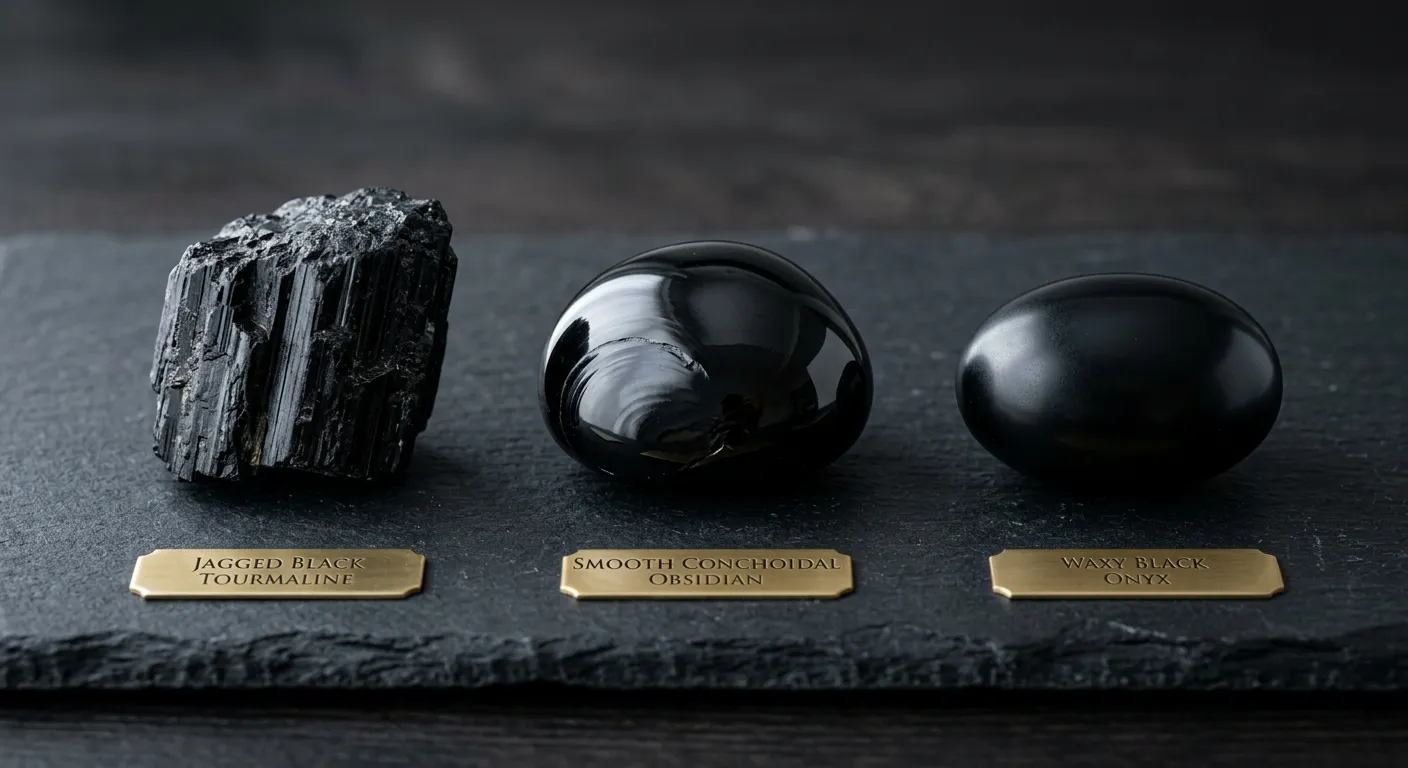
A senior buyer must be able to differentiate between onyx tourmaline and obsidian with precision. The market often utilizes these materials as substitutes because they share a similar opaque, dark aesthetic, yet their physical compositions are radically different.
Distinguishing Schorl from Volcanic Glass
Black obsidian is a naturally occurring volcanic glass. While it may appear similar to the naked eye, it lacks the complex crystalline structure of tourmaline.
Obsidian
Obsidian possesses a significantly lower specific gravity (approximately 2.4) and exhibits a conchoidal fracture pattern, resulting in smooth, curved surfaces when broken.
Tourmaline
In contrast, tourmaline fractures in an uneven, jagged manner. Observing these fracture points is a critical step to distinguish real black tourmaline from fakes.
Comparative Evaluation Against Black Onyx
Black onyx, a variety of chalcedony, is another common look-alike. While onyx is a genuine mineral, its density is lower than that of tourmaline, typically sitting at 2.7.
Visually, onyx often displays a waxy luster and may show subtle parallel banding under magnification, whereas tourmaline exhibits a vitreous, glass-like luster. Furthermore, onyx lacks the characteristic vertical striations that define the raw growth of schorl.
Identifying Synthetic Polymers and Resins
The most common signs of fake black tourmaline in the lower-tier market include the use of dyed glass or resin. These materials are easily identified by their lack of thermal mass and the presence of microscopic air bubbles.
When examined under a jeweler's loupe, a perfectly spherical bubble is a definitive indicator of a synthetic, man-made material, as natural tourmaline forms under immense pressure that precludes the formation of such voids.
Verification Protocols and Market Value Assessment
For those looking to identify black tourmaline in jewellery, the challenge increases as the stone is often polished, hiding its natural striations. In these instances, one must rely on advanced testing and market logic.
Physical Verification and the Steel Blade Test
If a specimen is unpolished or has an inconspicuous area, rubbing the surface with a steel blade can provide clarity. Since steel has a hardness of approximately 5.5, it will not leave a scratch on a genuine tourmaline surface.
If the blade creates a permanent gouge or scratch, the material is likely a softer imitation or a coated glass. This test confirms the mineral's resistance to abrasion and validates its placement on the Mohs scale.
Optical Analysis and Light Penetration
While the stone appears entirely opaque, holding it against a high-intensity light source can reveal its true nature. The thin edges of a genuine specimen may show a faint, deep brown or dark green translucency.
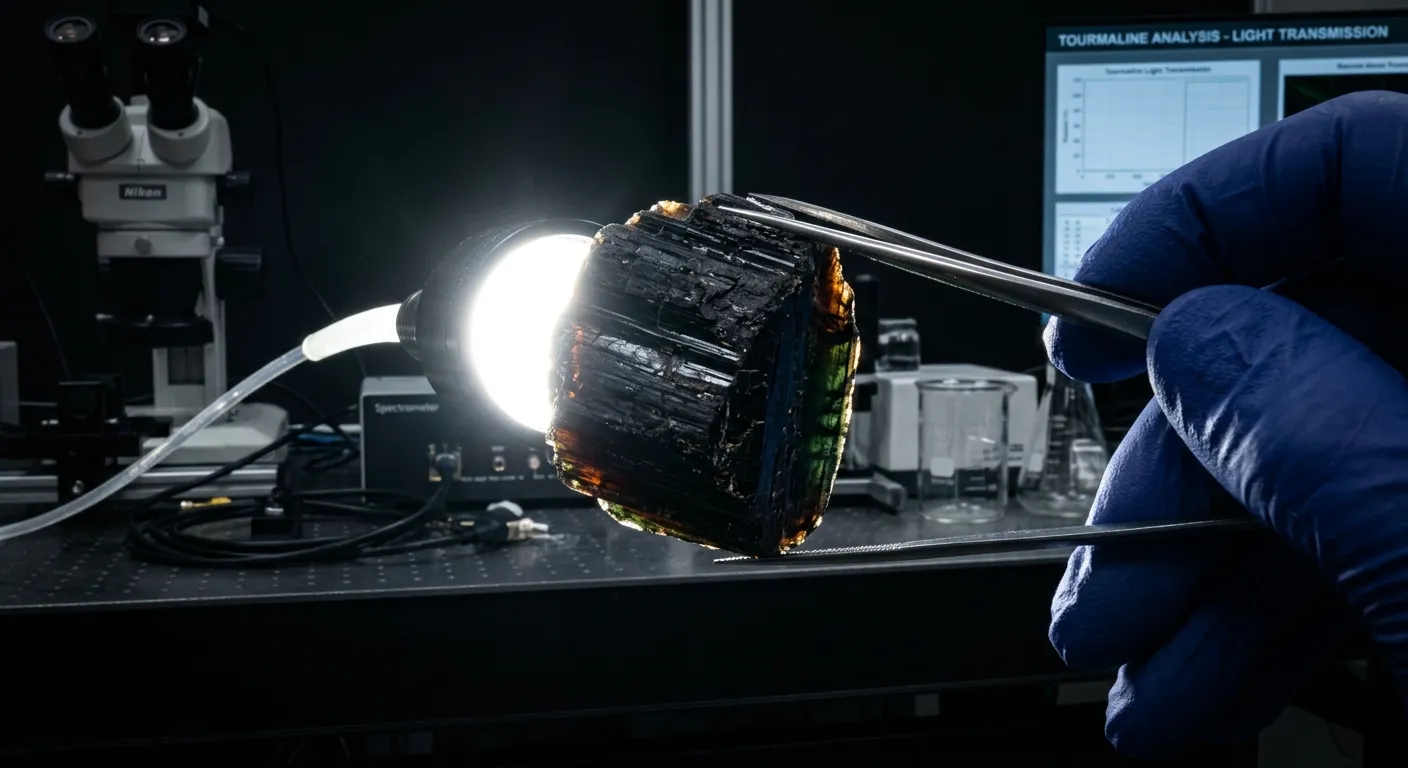
This is a result of the complex chemical impurities within the crystal lattice. If the stone remains entirely "flat" or shows a uniform artificial color, its authenticity should be questioned.
Procurement Framework and Pricing Metrics
Understanding the tourmaline price per carat is vital for risk mitigation. While schorl is more abundant than its colorful counterparts like Paraiba or Rubellite, it still commands a specific market value based on its luster and termination.
Faceted and loose black tourmaline usually ranges from $5 to $25 per carat for high-quality, precision-cut stones. If a vendor offers "flawless" faceted specimens at prices significantly below this range, it is highly probable that the material is glass.
Evaluating Finished Jewellery
When attempting to identify black tourmaline in jewellery, pay close attention to the weight of the piece. A genuine cabochon or faceted stone will add a noticeable heft to a ring or pendant.
- Additionally, look for "natural inclusions."
- Even high-grade stones often possess microscopic surface pits or internal veining that confirm their natural origin.
- Perfect, mirror-like surfaces without any internal variation are often a red flag for synthetic mass production.
By integrating these technical parameters—ranging from specific gravity and Mohs hardness to the observation of vertical striations—collectors can confidently navigate the market.
This objective approach ensures that the acquisition of black tourmaline is based on verifiable material facts rather than marketing narratives, allowing for the procurement of specimens that possess true structural and historical value.
Academic & Market References
How To Tell If Black Tourmaline Is Real
Unearthed Gemstones (2024) · Unearthed Gemstones
How to Tell If a Tourmaline Is Real | Gemstone Identification Guide
Reve Diamonds (2023) · Reve Diamonds
6 Ways to Tell if black Tourmaline is Real
Rock Identifier (2024) · Rock Identifier
Some Gemological Challenges in Identifying Black Opaque Gem Materials
Gemological Institute of America (GIA) (2019) · GIA Research
Nomenclature of the tourmaline supergroup minerals
Henry, D. J. et al. (2011) · American Mineralogist