black tourmaline market aesthetic
The Maker’s Studio: Sourcing Raw Schorl for Intentional Gifting
By Clara Vance · Apr 22, 2026

The Artisan’s Bench: Procurement Mechanics of Raw Schorl for Curated Presentations
Operating as a veteran procurement specialist evaluating gem-grade minerals across global supply chains—from the arid extraction zones of Antananarivo to elite lapidary workshops in Florence—demands an uncompromising methodology. Procuring a raw black tourmaline crystal for curated presentations transcends basic mineralogy; the process requires calibrating a specific tactile and historical narrative. Within the artisan's workspace, the selected materials establish a baseline aesthetic before any fabrication begins.
Contemporary supply lines are heavily saturated with inferior stock, synthetic composites, and aggressively processed stones that strip away the core mechanical identity of the mineral. Elevating a physical craft requires subjecting the material to microscopic, geometric, and ergonomic scrutiny. This technical brief dismantles the anatomical framework of authentic schorl, delivering a structural methodology for sourcing, verifying, and mounting this specific silicate in professional studio environments.
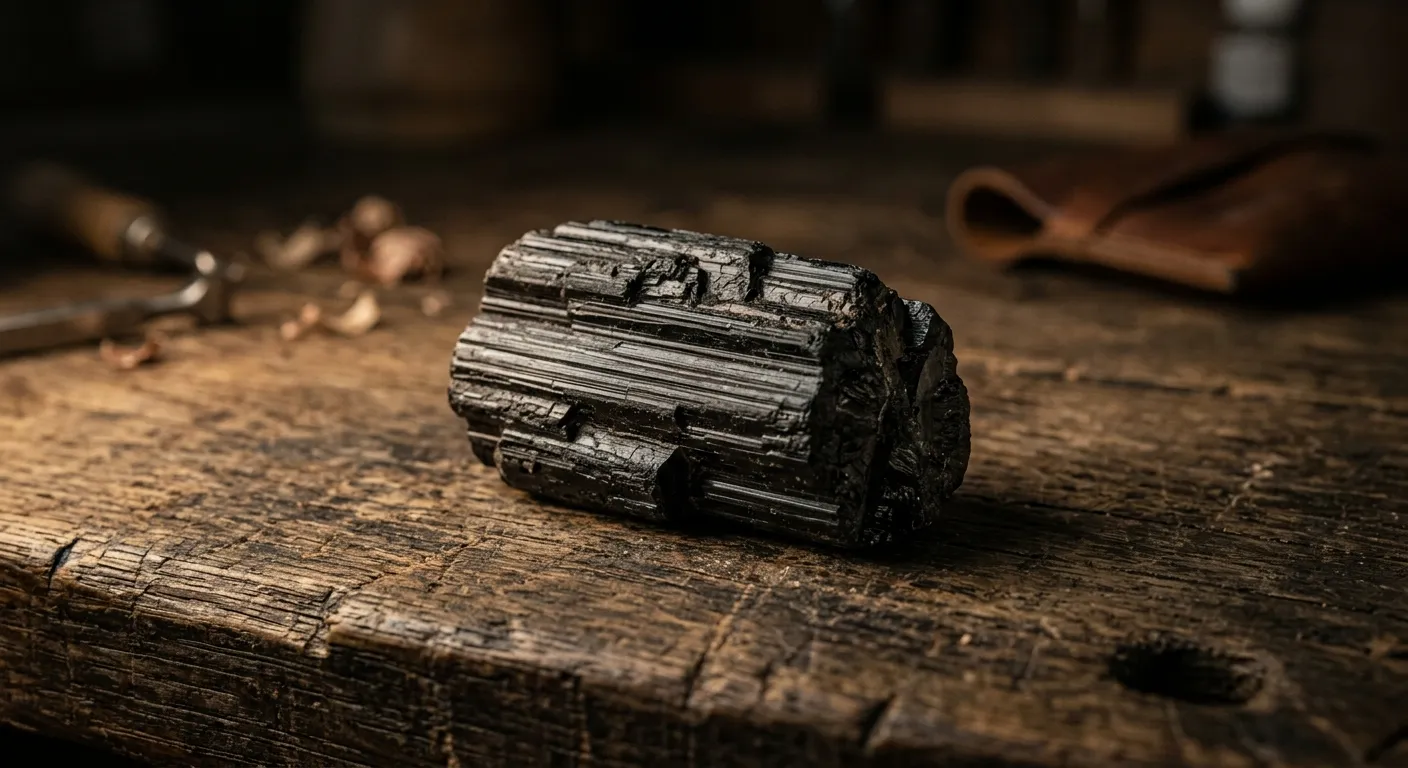
Precise Positioning & Core Metrics: The Architecture of Spatial Curation
Establishing the Curatorial Baseline: Historical Context and Spatial Mechanics
Within the parameters of spatial design and historical context, schorl operates as more than a dense mineral specimen. Anthropological records indicate that various cultures relied on its dense visual weight to establish perceived boundaries within physical spaces.
For the bench jeweler engineering a curated object, material positioning dictates the entire user interaction. The objective is not distributing generic ornaments; the goal involves engineering a physical anchor that communicates stability through sheer mass and geometric presence.
Ergonomic and Visual Calibration of Genuine Silicates
Evaluating a master-grade specimen yields immediate ergonomic feedback. The visual depth of the unpolished matrix commands attention through pure light absorption rather than artificial refraction. Optically, the material draws focus inward, projecting a mathematically solid footprint.
The tactile feedback registers as ancient and geologically grounded, functioning as a mechanical reminder of terrestrial physics. Such ergonomic profiling separates a meticulously engineered artifact from mass-produced commercial extrusions.
Technical Specifications for Studio Procurement
Guaranteeing that the physical parameters translate accurately into the final mounted piece requires measuring the raw stock against strict optical and mechanical baselines. Standardized commercial grading holds little utility at the artisan's bench; instead, procurement relies on rigorous functional teardowns.
-
1
Luster and Opacity Parameters
Premium stock must present as entirely opaque with a vitreous lustre. The surface should never simulate the dull resonance of molded polymers or the hyper-reflective sheen of manufactured glass. Optically, the exterior mimics polished anthracite or high-grade obsidian, deflecting ambient light off its natural geometric facets while remaining completely impermeable to direct illumination.
-
2
Surface Topography Analysis
Genuine specimens consistently demonstrate highly specific, mathematically complex growth patterns. Encountering a perfectly smooth, featureless raw exterior serves as an immediate indicator of mechanical tumbling or synthetic casting.
-
3
Density and Ergonomic Heft
The mineral must project a commanding physical weight that perfectly mirrors its visual density. Holding the specimen should deliver surprisingly substantial resistance against the palm, establishing a core ergonomic requirement for objects engineered to function as physical touchstones.
-
4
Assessing Structural Integrity
While the exterior projects solidity, the lapidary artist must continuously verify internal structural integrity. Stock compromised by deep, intersecting fissures will inevitably shatter upon the jeweler's bench under the pressure of a setting tool, immediately voiding the geometric continuity of the intended design.
Deep Anatomy & Horizontal Comparison: Sourcing the Global Matrix
Micro-Topographic Architecture of Premium Matrices
Understanding the true market classification of a specimen requires magnification. The definitive morphological signature of investment-grade schorl involves the manifestation of deep vertical striations running parallel to the primary c-axis of the crystal. These naturally occurring ridges and furrows generate a raw earthy texture that synthetic laboratories cannot accurately duplicate.
Furthermore, inspecting the terminations—the natural apex of the crystal structure—requires identifying sharp pyramidal points or complex, multi-faceted trigonal faces. Securing a specimen with clean, unbruised terminations exponentially increases the baseline aesthetic value of the final mounted object.
Global Matrix Sourcing and Aesthetic Trajectories
Geographical provenance dictates both the optical personality of the silicate and its ultimate mechanical application at the bench. Procurement specialists universally navigate between two dominant global extraction zones, each providing distinct ergonomic variables.
The Namibian Erongo Morphological Profile
Securing the absolute apex of display-grade morphology directs procurement toward the Erongo Mountains. These geological zones are renowned for producing multi-terminated clusters from Namibia. Such formations exhibit an exceptionally high refractive index on their faces, deep obsidian coloration, and pristine geometric apexes.
Often, these formations emerge in stark visual contrast alongside white quartz or feldspar matrices. These configurations represent high-end architectural centerpieces, engineered specifically for luxury spatial curation.
The Brazilian Minas Gerais Structural Profile
Brazilian schorl typically crystallizes in massive, elongated columnar prisms. While these extrusions lack the delicate, multi-pointed geometry of their African counterparts, they deliver unmatched volumetric scale and mechanical solidity. The surface reflection generally registers as a muted matte or satin finish.
These robust formations function as the primary industrial stock—perfectly suited for lapidary carving, slicing, or deployment as large, standalone architectural anchors.
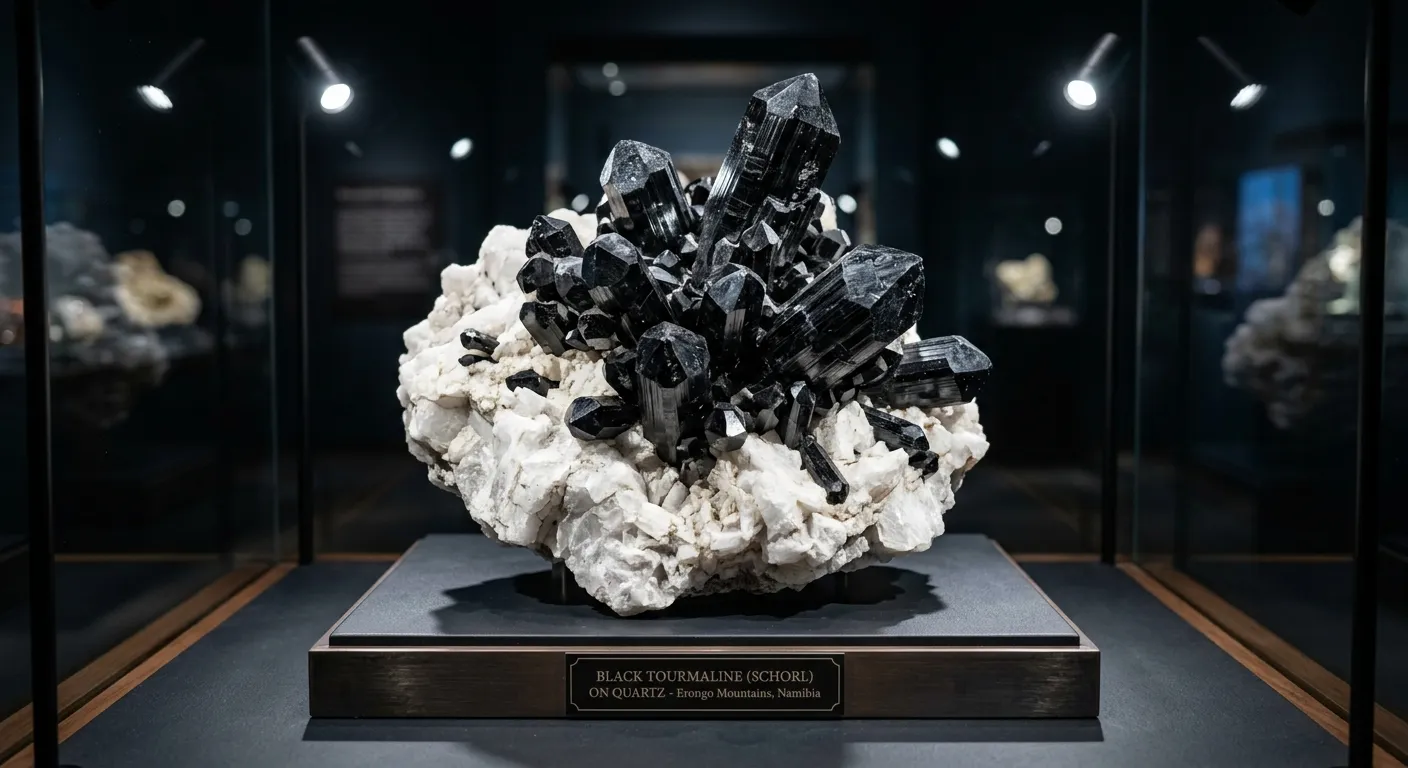
Ergonomic Divergence: Mechanical Processing Versus Natural Extraction
Fabricators must deliberately engineer the intended tactile interaction. Tumbled stones worn smooth deliver a frictionless, highly consistent ergonomic interface. Such processed pieces function as highly portable, pocket-sized objects that accommodate continuous, repetitive handling.
Conversely, unpolished specimens retain their aggressive natural geometry and jagged apexes. The unmodified surface forces a highly deliberate, mindful physical interaction, maintaining an unpolished mechanical link to terrestrial geology. For curated presentations, unmodified formations consistently command a higher perceived artisanal premium.
Fabrication Mechanics and Material Vulnerabilities
From a strict fabrication perspective, this specific silicate introduces complex mechanical challenges. Registering a definitive 7 to 7.5 on the Mohs scale ensures the surface resists superficial abrasion; however, the internal matrix remains notoriously hard but brittle. The structure fundamentally lacks the tensile toughness associated with nephrite or microcrystalline quartz.
When engineering wearable artifacts, protective settings are recommended. Deploying heavy bezel walls or structural wire-wrapping to isolate the stone against kinetic impact represents a mandatory fabrication protocol. Overlooking this specific mechanical vulnerability guarantees the object will fracture upon its initial collision with a rigid surface, instantly neutralizing the structural viability of the piece.
Risk Mitigation & Verification: Navigating the Counterfeit Minefield
Supply Chain Contamination and Synthetic Extrusions
Expanding commercial interest in geological aesthetics has catalyzed a highly sophisticated market for synthetic replicas. Unregulated manufacturing hubs consistently flood global supply lines with cast resins, artificially dyed glass, and chemically altered inferior silicates masquerading as premium stock. Mastering the protocols for identifying fake black tourmaline stands as the most critical defensive capability a procurement specialist can deploy. Unknowingly integrating a cast polymer replica into a curated presentation permanently compromises the operational integrity of the entire studio.
Forensic Teardown of a Compromised Lapidary Project
Analyzing a recent supply chain failure from an established lapidary workshop in Sedona provides a rigorous qualitative observation. The fabricator acquired fifty supposedly flawless black silicate wands for a new collection of wearable objects historically associated with protective and grounding properties. Supplier documentation displayed uniform, mathematically perfect cylinders. Upon arrival, the fabricator immediately mounted the stock into heavy sterling silver enclosures.
Inspecting the finalized inventory revealed immediate mechanical discrepancies. The primary optical failure involved the surface reflection; the enclosures housed materials displaying an unnatural glossiness that contrasts sharply with the authentic, slightly resinous-to-vitreous luster of genuine schorl. The extrusions visually mimicked polished industrial acrylic.
Deploying a 10x magnification loupe across the exterior confirmed the failure. Rather than displaying the complex, parallel micro-striations indicative of natural geological growth, the planes remained entirely featureless, interrupted exclusively by microscopic, perfectly spherical air bubbles suspended beneath the surface—a physical impossibility within natural crystal matrices. Furthermore, subjecting the edges to high-intensity halogen illumination exposed a faint, sickly greenish-brown chromatic shift, definitively identifying the material as dyed industrial glass.
The fabricator was forced to liquidate the entire production run, resulting in a severe loss of precious metals and bench labor.
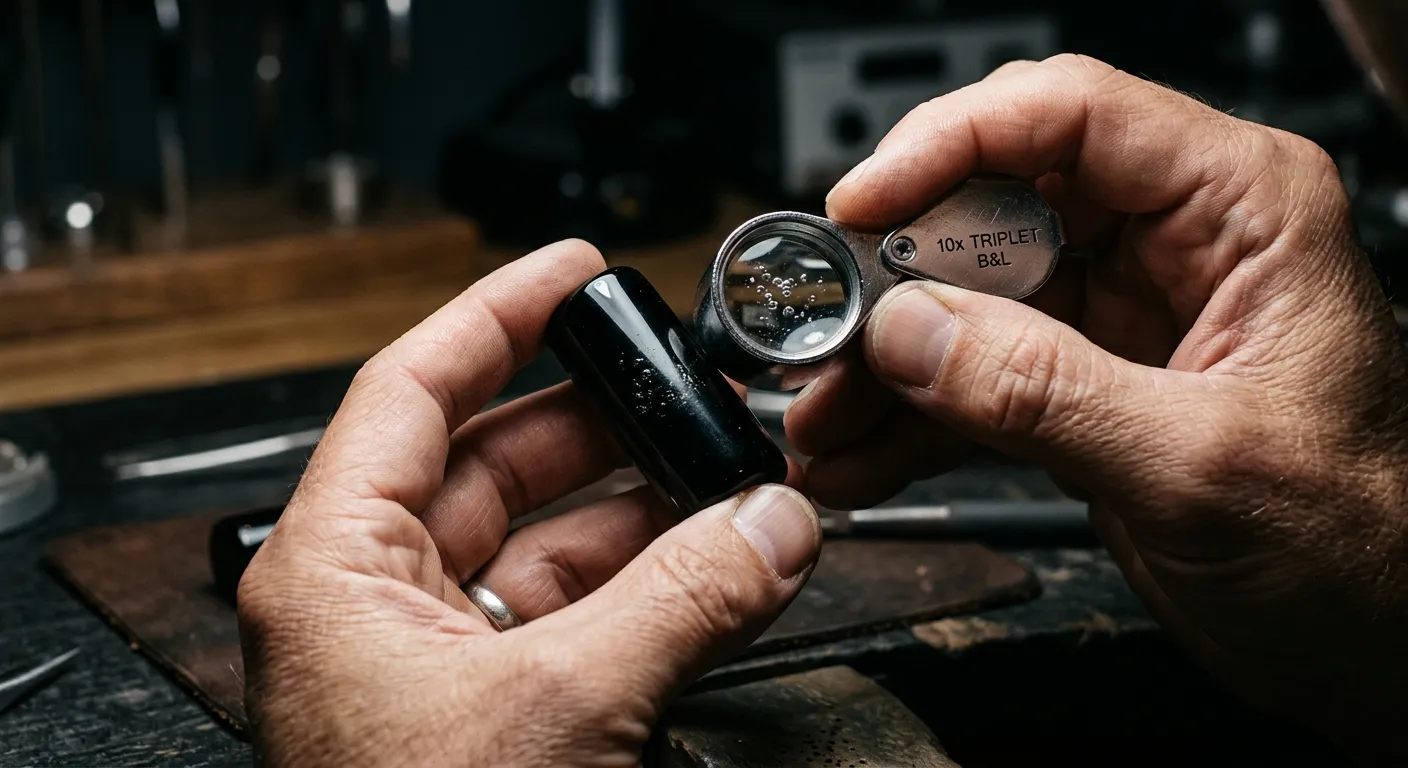
Destructive and Non-Destructive Field Verification
Preventing similar supply chain catastrophic failures requires executing rigorous mechanical field tests. Because authentic tourmaline possesses significant surface hardness, one of the most definitive verification methods involves rubbing the surface with a steel blade. A standard high-carbon pocket knife registers a Mohs hardness of approximately 5.5.
Applying the tip of the blade with firm pressure across an inconspicuous section of the matrix will leave genuine stock entirely unscathed, potentially depositing only a superficial silvery streak of metallic residue across the crystal face. Should the metal bite into the substrate and carve a physical channel, the material is definitively categorized as a cast polymer, resin, or chemically compressed composite.
Ergonomic Verification Through Specific Gravity
Secondary verification protocols rely on strict volumetric weight analysis. Authentic iron-rich schorl registers a specific gravity of about 3.15. This mathematical constant dictates that the genuine mineral is significantly denser than the industrial materials utilized to counterfeit it. Standard glass measures approximately 2.5, while cast resins register even lower on the scale.
Placing a verified specimen in the hand must deliver a disproportionate gravitational drag relative to its visual footprint. Should a massive, volumetrically large specimen feel hollow or lightweight, immediate rejection of the lot is mandatory.
Use-Case Adaptation & Value Assessment: Curating for the Client
Spatial Anchoring in High-Velocity Corporate Environments
A commission requires engineering a spatial boundary for a hyper-competitive, high-velocity corporate workspace. The objective involves establishing a visual and tactile contrast against digital overstimulation.
Executing this specific brief demands sourcing a large raw schorl crystal. Deploying a miniature, processed stone will result in the object being visually neutralized by a massive executive workstation. Procurement should target a massive, fist-sized Brazilian columnar extrusion featuring a naturally flat, self-standing base. The aggressive, heavily striated exterior establishes a severe visual contrast against the sterile, mathematically flat surfaces of modern technological hardware. The sheer volumetric mass of the specimen operates as a psychological anchor, executing a thematic analysis of natural chaos versus corporate order.
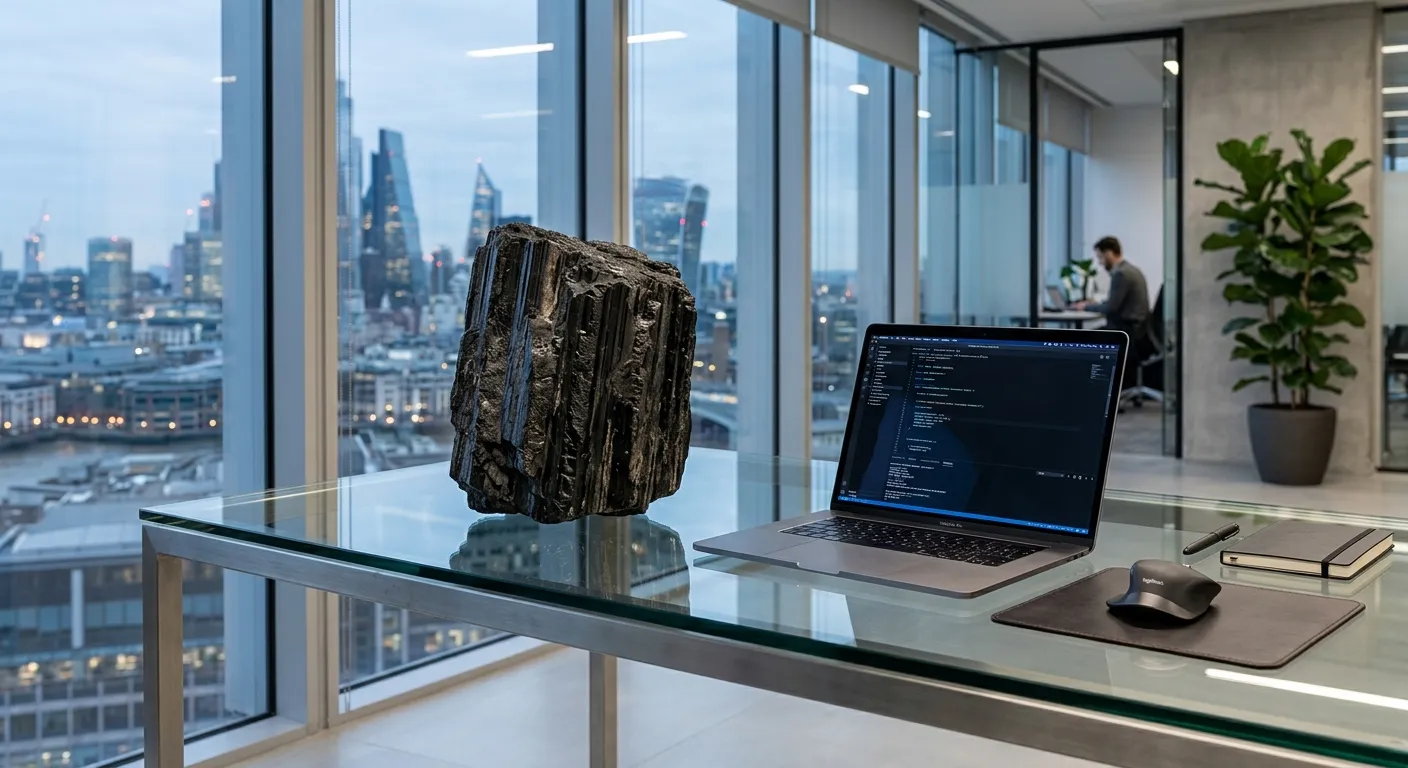
Micro-Scale Wearable Architecture
Engineering a discreet, curated object intended for daily ergonomic interaction, functioning as a transitional tactile focal point.
Volumetric scale must be aggressively sacrificed to secure exceptional optical quality. The buyer must exclusively target high-quality terminated specimens. Procurement parameters should focus on thumb-sized formations from Namibia or the Hindu Kush featuring pristine, unbruised pyramidal apexes. Because the object requires continuous daily wear, the bench jeweler must fabricate a highly fortified, fully enclosed bezel architecture—potentially utilizing 18k gold to establish high-contrast chromatic boundaries—to shield the brittle internal matrix. Orienting the natural apex downward aligns with traditional geometric theories regarding the directional flow of kinetic force.
Multi-Point Spatial Perimeter Engineering
Commissioning a multi-node architectural installation designed to establish a controlled, visually isolated atmosphere within a dedicated meditation studio.
Executing a comprehensive overview of the spatial perimeter dictates acquiring a matched set of geological nodes. Rather than deploying a single massive focal point, the buyer must source four to six medium-scale, heavily textured unpolished chunks. Aesthetic consistency represents the primary variable here; while mathematically perfect apexes are unnecessary, the nodes must exhibit identical surface luster and parallel striation frequencies to register visually as a cohesive geological family. Positioning these nodes at the architectural corners of the room establishes a deliberate, mathematically precise boundary of visual calm.
Financial Calibration and Value-to-Cost Analytics
Within the specialized sector of curated geological presentations, the Value-to-Cost ratio actively rejects standard retail markup percentages; instead, it is calibrated through objective visual impact relative to procurement expenditure. Analyzing the financial viability of raw stock requires deploying this specific analytical framework.
Baseline Commodity Metrics
Standard, heavily fractured, and optically dull Brazilian extrusions frequently trade near $10 per kilogram. The aesthetic output remains negligible, visually registering closer to industrial gravel than curated art. Consequently, the Value-to-Cost ratio registers as fundamentally poor, regardless of the depressed acquisition price.
The Aesthetic Premium Threshold
Securing a single, geometrically defined structure featuring aggressive vertical channeling and a structurally sound apex commands an acquisition cost near $40. However, the optical impact and ergonomic satisfaction scale exponentially. This specific tier represents the optimal financial intersection for independent lapidary fabricators engineering wearable artifacts.
Investment-Grade Resonance
Procuring a mathematically flawless, multi-apex Erongo formation seated upon a contrasting white quartz matrix requires capital deployment ranging from $300 to $800. While the initial fiscal outlay registers as severe, the sheer architectural presence the formation commands within a physical space thoroughly justifies the premium. For elite-level spatial curation, this specific grade yields the highest possible Value-to-Cost ratio.
Ultimately, operating as a master fabricator and procurement specialist requires bridging the mechanical realities of geology with the ergonomic requirements of the end-user. By rigorously executing these microscopic teardowns, demanding uncompromising material authenticity, and calibrating the physical parameters of the silicate to the specific spatial requirements of the installation, the fabricator successfully elevates raw geological stock into a highly calibrated instrument of curated design.
Academic References & Literature
-
2017
Crystal chemistry of tourmalines from the Erongo Mountains, Namibia, studied by Raman spectroscopy
European Journal of Mineralogy • Schweizerbart Science Publishers -
2007
Chemical and boron-isotope variations in tourmalines from an S-type granite and its source rocks: the Erongo granite and tourmalinites in the Damara Belt, Namibia
Contributions to Mineralogy and Petrology • Springer Link -
2016
Fluor-schorl, a new member of the tourmaline supergroup, and new data on schorl from the cotype localities
California Institute of Technology • CaltechAUTHORS