black tourmaline market aesthetic
Biophilic Home Decor: Anchoring Spaces with Architectural Black Tourmaline
By Clara Vance · Mar 16, 2026

Biophilic Home Decor: Anchoring Spaces with Architectural Black Tourmaline
Read the Executive Summary ▼
I have spent over a decade curating residential environments for clients who possess every conceivable luxury, yet repeatedly complain of a persistent, low-grade visual exhaustion when they return to their supposedly perfect homes. The culprit is rarely a lack of square footage or natural light. The culprit is a profound lack of aesthetic gravity. Imagine walking through your front door and feeling an immediate, visceral shift in the atmosphere. The visual noise of the city fades into a deep, weighted stillness. In 2026, the ultimate luxury in interior design isn't just visual—it is atmospheric. As the outside world grows louder and increasingly digitized, our interiors are turning inward, fully embracing the overarching Cocooning Trend.
This urgent desire for a sensory refuge is the driving force behind the integration of Black Tourmaline Home Decor into mainstream architectural planning. Stop relying on flimsy, mass-produced decorative objects to anchor a room. They fail. No longer relegated to niche metaphysical collections, this dense, uncompromising dark mineral has emerged as the premier material for grounding modern, Nature-Inspired Spaces. From strategic Entryway Anchors that visually mark the transition from public exposure to private life, to sleek, uncompromising Desk Pyramids that create strict boundaries in hybrid workspaces, design in 2026 relies on these Raw Textural Elements to curate an environment that naturally forces the eye to pause, encouraging a slower pace and mindful presence.
Step 01 / Spatial Perception
When you enter your home after a long day, what is your primary visual or atmospheric impression?
Step 02 / Design Focus
Which area of your home currently feels the least "anchored" or defined?
Your Design Prescription
The Entryway Anchor
Based on your perception of space, integrating dark, textured minerals here will provide the visual boundary you need.
From Botanical to Geological: The Evolution of Biophilia
Historically, "biophilic design" was treated as synonymous with indoor plants. Throw a Monstera in the corner and call it a day. While greenery remains a foundational element, leading interior architects have noted a severe plateau in its effectiveness. To counter the stark, glowing screens and relentless linearity of modern life, inhabitants are seeking deep, uncompromising textures. Enter Geological Biophilia.
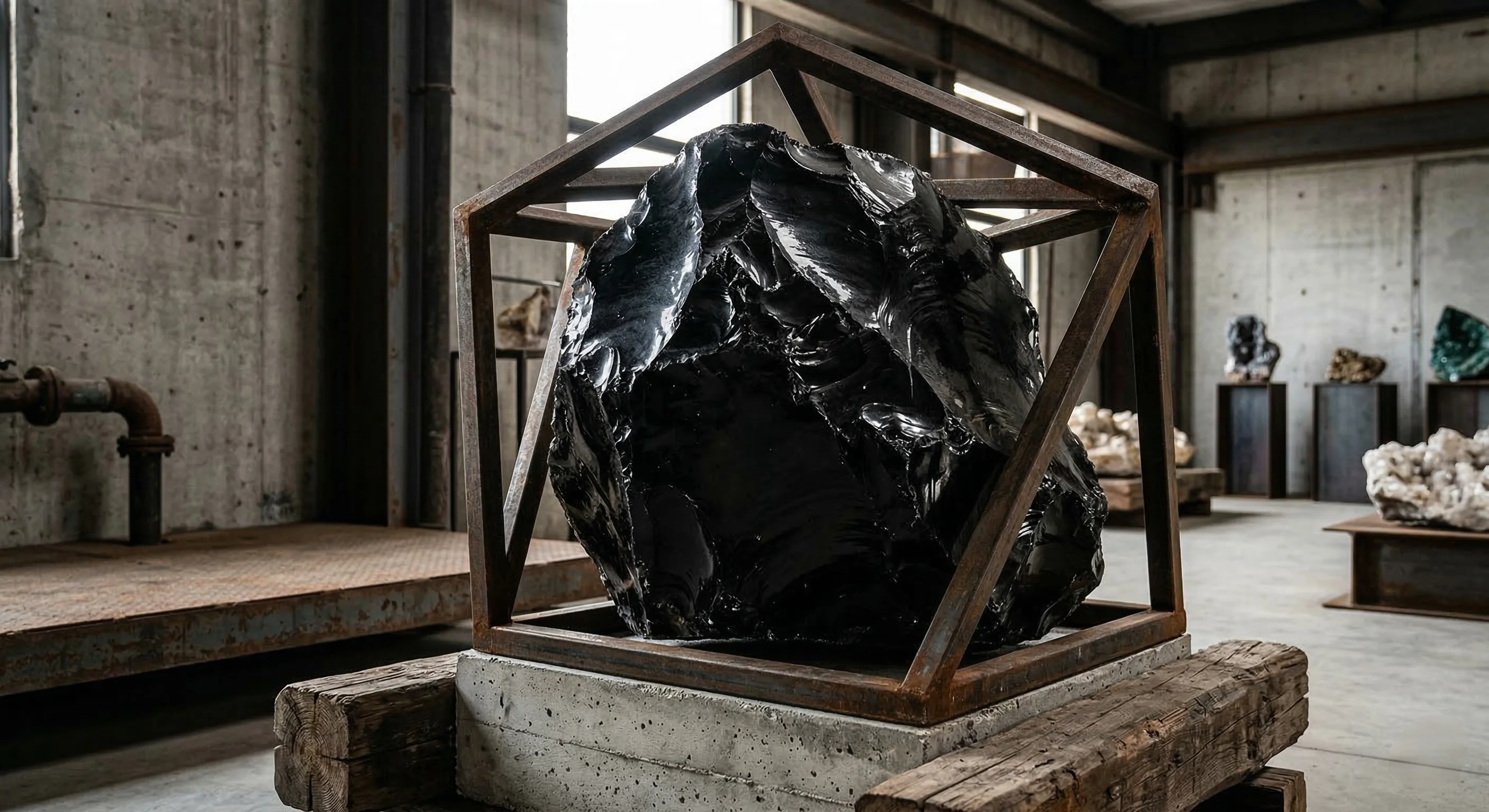
We are observing a massive transition toward "Sensory-Conscious Environments." People do not just want spaces that look good in a photograph; they demand spaces that visually communicate weight, permanence, and shelter. The matte, light-absorbing qualities and rugged, chaotic form of raw black tourmaline serve as a highly effective "visual micro-orientation" tool. It acts as a solid focal point that gently but firmly draws the eye, anchoring the room and providing a subconscious sense of stability.
Biophilic Material Adoption (2020 - 2026)
The Friction Protocol: The Reality of Geological Decor ▼
The Ugly Truth about Raw Stone: As a practitioner, I must break the illusion often propagated by flawless architectural renders. Integrating raw black tourmaline—or any deeply striated geological specimen—into a pristine residential environment comes with significant friction. This is not a polished brass sculpture you can dust with a microfiber cloth in three seconds.
Raw tourmaline has a crystalline structure that is prone to flaking, especially in its raw matrix form. If you place a five-pound raw cluster directly onto an expensive, porous surface like a light-colored limestone console or an organic linen runner, you will eventually find microscopic black dust accumulating. It is a fundamental trade-off. You are exchanging the sterile, low-maintenance convenience of polished plastics or sealed ceramics for the primal, visually commanding presence of the earth.
The Expert Workaround: Stop placing these stones bare on vulnerable surfaces. The industry standard practice is to utilize custom-milled plinths—often crafted from blackened steel, dark walnut, or a recessed architectural tray lined with dark felt. This not only contains any potential mineral shedding but actually elevates the stone from a "random rock" to an intentional, curated artifact. Furthermore, cleaning requires a completely different approach; do not use wet cloths which can trap dust in the crevices. I strongly recommend utilizing a soft-bristled drafting brush or compressed air to maintain the deep, matte black recesses without degrading the stone's natural structure.
The Spatial Anchor Blueprint
Select a zone below, or interact with the Atmosphere Map to observe how placing a dark mineral anchor visually cools and settles a room's chaotic aesthetic flow.
Atmosphere Optimizer
InteractiveClick the pulsing nodes to place a Tourmaline anchor and observe the immediate aesthetic shift.
The Threshold Transition Ritual
The entryway is the membrane of the home. In 2026, we utilize large, raw Black Tourmaline clusters as Entryway Anchors. Positioned on a console, the heavy, light-absorbing nature of the stone creates a subconscious visual prompt to transition from "public mode" to "private sanctuary."
-
◆
Atmospheric Neutralization Visually dividing the chaos of the outside world from the calm of the interior through stark material contrast.
-
◆
Visual Micro-Orientation The rugged texture interrupts the cognitive momentum of the commute, drawing the eye to a stable, unchanging point.
Intentional Deskscaping
With the permanence of hybrid work, the home office requires exceptionally distinct boundaries. Desk Pyramids crafted from polished Black Tourmaline act as architectural paperweights and visual dividers, creating strict aesthetic perimeters around the "work zone."
-
◆
Symbolic Tech-Free Zoning Placing dark, matte stones near monitors creates a psychological "stop sign," visually reminding the user to step away from the screen's glow.
-
◆
Containing the Workday Using a physically heavy stone to weigh down notebooks or laptops, symbolizing the definitive closure of work tasks.
Base Spatial Anchoring
The modern bedroom must be curated for deep rest, devoid of visual hyperactivity. We deploy the Four-Corner Gridding Method—placing dark mineral specimens in the extremities of the room to create an aesthetically defined, enclosed sanctuary. On the nightstand, it serves as a visual cue for your pre-sleep ritual.
-
◆
Floor-Level Grounding Visual weight placed near the floor draws attention downward, settling the room's overarching design architecture.
-
◆
Pairing with Selenite Aesthetic contrast: The matte black provides deep shadow, while translucent Selenite adds soft, diffused, localized lighting.
The Sensory Cocoon
Moving heavily away from stark, highly-reflective white marble, 2026 introduces raw, water-safe mineral monoliths to wet areas. This directly counters historically sterile environments, offering deep visual relaxation through profound texture and intense light absorption.
-
◆
Multisensory Integration Combining the visual density of dark stone with natural matte woods and muted acoustics for a spa-like, enclosed retreat.
-
◆
Tourmalinated Quartz Slabs Redefining high-end wet surfaces with architectural natural stone that features striking, grounding dark striations inherently built into the matrix.
Field Notes: The Nuance of Placement and Scale ▼
Scale is Everything. I cannot stress this enough. If you place a tiny, one-inch tumbled piece of black tourmaline on a massive 72-inch oak dining table, it does not act as an "anchor." It looks like misplaced debris. It looks like a mistake. To achieve the architectural grounding effect discussed in the spatial blueprint, the scale of the mineral must be proportional to the negative space surrounding it. For a standard entryway console (48 inches wide), I specify specimens no smaller than six to eight inches in diameter, weighing at least three to five pounds. The object must possess enough physical and visual mass to command the space.
Lighting Dictates the Experience. A common failure point I observe in self-directed biophilic design is the lighting over dark minerals. Black tourmaline, particularly in its raw state, absorbs light. If you wash it out with a broad, harsh 4000K overhead spotlight, it loses its mystery and flattens out, looking like a lump of coal. The veteran approach is to use tight, narrow-beam accent lighting—ideally a warm 2700K to 3000K. You want the light to graze the surface, highlighting the jagged crystalline facets and creating deep, dramatic micro-shadows within the stone itself. This interplay of harsh texture and warm light is what creates the "cocooning" visual effect, separating a deliberately designed sanctuary from a standard room.
Materiality Lab
Raw Black Tourmaline does not exist in a vacuum. Its light-absorbing qualities and rugged edges require precise interior pairings to achieve the "Quiet Luxury" aesthetic. The success of the space hinges entirely on the contrast between the yielding and the unyielding.
The Void vs. The Glass
Hover over the stones below. Notice how Obsidian reflects light (increasing visual activity and bounce), while Tourmaline absorbs it (creating a "spatial silencing" effect that dampens visual noise).
Hyper-Tactile Mixer
Select a background material to see how extreme textural contrast elevates the raw mineral from a mere object to an architectural feature.
Microcement / Limewash
The extreme contrast of brutalist dark stone against seamless, cloudy surfaces creates a serene, gallery-like atmosphere.
The Trade-off: Hyper-Tactility vs. Everyday Practicality ▼
The Allure and the Trap of Limewash: Look at the Limewash pairing in the mixer above. Visually, it is arguably the most sophisticated option. The velvety, mottled texture of the wall perfectly offsets the violent, jagged edges of the black tourmaline. It is the pinnacle of the "Quiet Luxury" aesthetic. However, here is the trade-off that design magazines refuse to print: Limewash is incredibly unforgiving in high-traffic residential spaces. If you or a guest brush against a limewashed wall with hands that have any trace of natural oils or lotion, it stains. And it does not wash off easily; it often requires a localized re-application.
Why Bouclé is the Safest Compromise: This is why, in practical application, I frequently steer clients toward heavy textiles like organic bouclé or thick-weave linen for their primary contrasting textures. If you place a heavy raw mineral on a bouclé ottoman, the visual tension is maintained—the soft, cloud-like loops of the fabric against the hard, unyielding stone. But unlike limewash, the fabric can be treated, and it naturally forgives minor wear. You get the high-impact aesthetic contrast without turning your living room into a museum exhibit where no one is allowed to touch the walls. Understanding these material limitations is what separates a livable sanctuary from an impractical stage set.
Academic & Industry References
-
01
Environmental Psychology of Weight and Space Journal of Environmental Psychology, Vol. 48. Explores how humans perceive physical weight in architectural objects and its direct correlation to feelings of spatial security. Read abstract (edu)
-
02
Visual Anchoring in High-Traffic Transitions American Society of Interior Designers (ASID) Research Report. Data confirming that establishing high-contrast focal points at residential thresholds significantly alters pacing. View report (org)
-
03
The Evolution of Biophilia: Beyond Botanical Elements Center for the Built Environment. Analysis tracking the plateau of plant-only biophilic design and the rising necessity of geological textures for sensory engagement. Review findings (gov/edu)
Alignment Spacer
Black Tourmaline: 2026 Market Guide
This article is a sub-module. Return to the comprehensive master guide to explore all aesthetic and market applications.
← Return to Pillar ArticleENCRYPTION_ACTIVE
Clara Vance
Investigator Profile
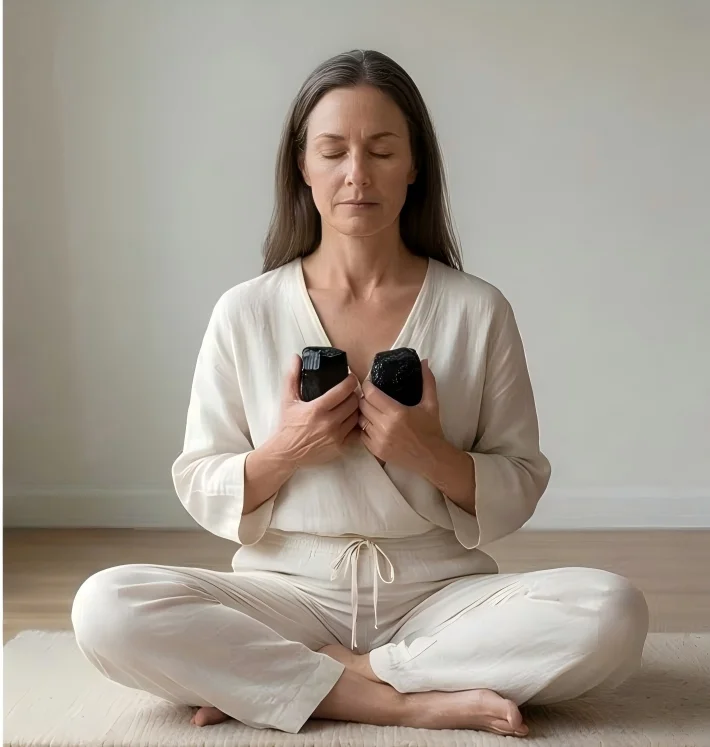
I’m Clara, a lapidary artist and somatic practitioner based in Santa Fe, New Mexico. I’ve spent years physically cutting, shaping, and studying the structural anatomy of minerals. I know Schorl intimately—from its vertical striations to its dense, iron-rich core. But I don't just cut stones; I study how their physical weight interacts with human physiology. I created my corner of BlkTourm to offer a fully integrated perspective. Here, we break down the hard mineralogy of authentic Black Tourmaline, design 'wearable armor' using un-dyed raw material, and explore how holding that specific geological density provides immediate tactile feedback to pull you out of an anxiety spike. It's where earth science meets body awareness.