black tourmaline meaning
The Science of "Brain Cooling": Intercepting Panic With Cold Heavy Minerals
By Clara Vance · May 11, 2026
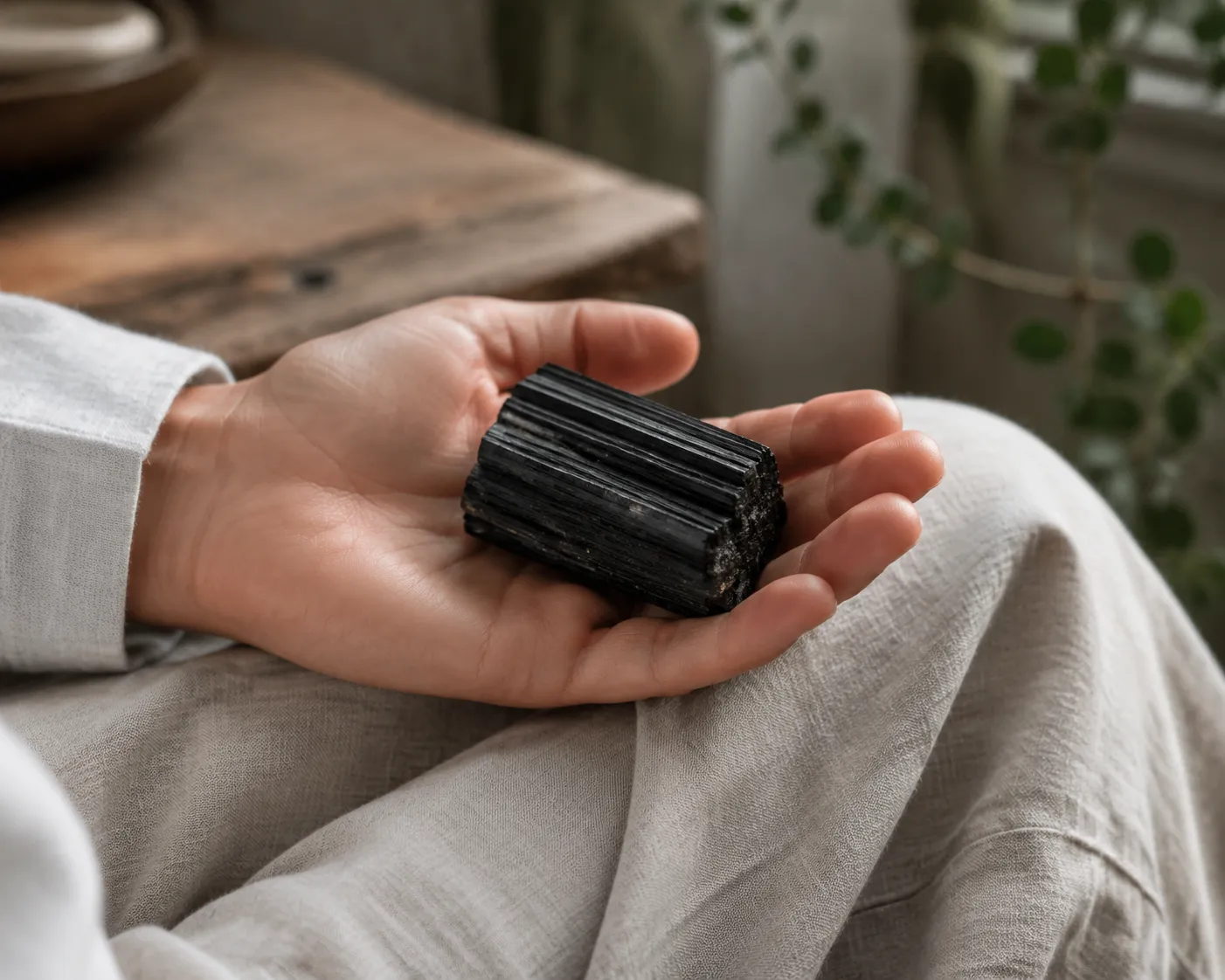
Panic, sensation, and material grounding
The Science of “Brain Cooling”: Intercepting Panic With Cold Heavy Minerals
A cold, heavy mineral can plausibly help some people interrupt the felt momentum of panic, but not because it literally cools the brain. The most reasonable explanation for brain-cooling panic interruption is sensory: cold temperature, weight, smoothness, and deliberate touch create a strong external signal that competes with racing internal sensations.
In plain terms, the object gives attention somewhere concrete to land.
That matters because panic can feel hot, flooded, fast, and trapped inside the head. A cool piece of black tourmaline, hematite, river stone, or another dense object may feel like a brake in the hand. The useful part is not a special mineral power or a command over the nervous system. It is the combination of sensation, attention, and orientation.
What the cold heavy mineral may actually be doing
During panic, attention often tightens around internal alarm signals: heartbeat, breath, chest tightness, heat, trembling, dizziness, or the fear that something is going wrong. A cold heavy object gives the body a different stream of information.
Several features can work together:
- Cold sensation is vivid. It is hard to ignore, especially in the palm or against the wrist.
- Weight gives a clear pressure signal. A dense object can feel more present than a light one.
- Smoothness or texture gives the fingers a task. The mind can track edges, ridges, polish, grain, or natural faces.
- Stillness contrasts with the speed of panic. Holding one object can simplify the moment.
- Personal meaning can strengthen attention. If a mineral is familiar, visually grounding, or part of a calming routine, it may be easier to use.
None of this requires the mineral to have special neurological effects. The practical message is closer to: notice this real, cold, heavy thing.
For black tourmaline in particular, the appeal often comes from its tactile presence: dark color, striated surfaces, blunt mass, and a feeling of density that suits grounding language. But the likely sensory role is not exclusive to black tourmaline. A cool stone, ceramic object, metal worry coin, or chilled glass can also provide a strong sensory anchor. The mineral may matter most through feel, temperature, safety, symbolism, and repeatability.
Why “brain cooling” is a metaphor here
In medical language, brain cooling usually refers to controlled temperature management in clinical settings. That is a separate world from holding a cool stone during panic. Clinical temperature control is monitored, time-sensitive, and used only in specific medical contexts.
A hand-held mineral is not doing that. It may cool a small area of skin. It may feel as if it is drawing heat away. It may create a strong enough sensation that the mind stops spiraling for a moment. But it is not lowering brain tissue temperature in the clinical sense.
This is where the “heat sink effect” can be useful as a metaphor, not as a medical claim. Dense stone or mineral often feels cool because it can draw warmth from the skin at the point of contact. That local feeling can be striking. Someone might describe it as “cooling my head” or “cooling my brain” because the relief feels mental. Physically, the event is local skin cooling plus attention redirection.
That distinction matters. Panic language is vivid and bodily. “My brain cooled down” may be an honest description of the experience. It should not be mistaken for evidence that brain temperature changed.
Pulse points and the sympathetic-interruption claim
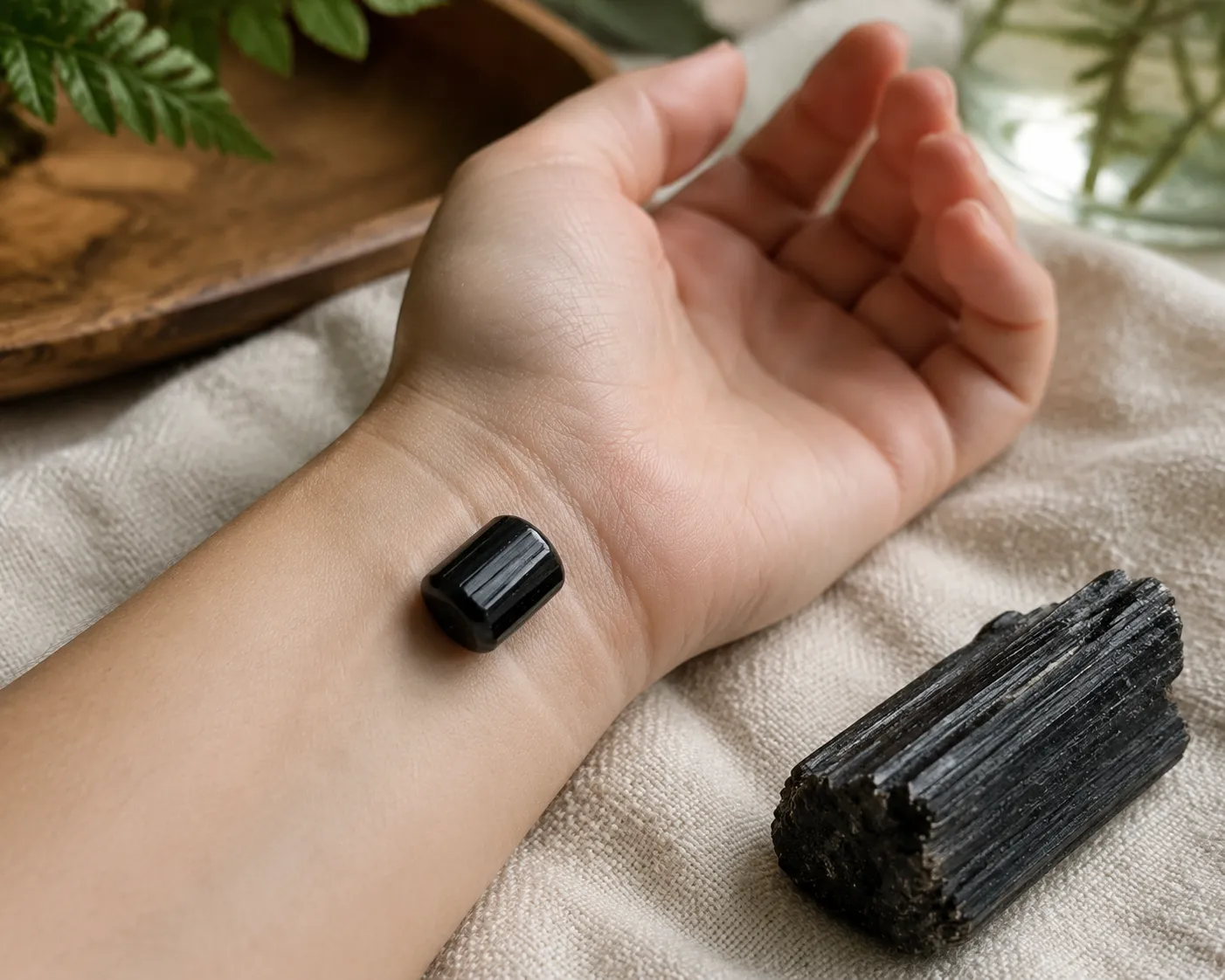
People often place a cool object at the wrist, palm, collarbone, chest, or sometimes near the side of the neck because those areas are easy to locate and sensitive to temperature. “Pulse points” can be a helpful everyday map for finding noticeable sensation.
The overreach begins when pulse points are described as guaranteed switches. A cold mineral at the wrist does not reliably turn off fight-or-flight sensations. It may interrupt the experience of panic by giving the body a competing cue. It may help someone pause, orient, and notice the room. But the available evidence does not justify claims of a predictable nerve reset or precise autonomic shutdown.
A more accurate way to describe “sympathetic interruption” is:
- it may interrupt the felt momentum of panic;
- it may redirect attention from internal alarm to external sensation;
- it may support a brief orientation pause;
- it may make the moment feel more manageable for some people.
That is still meaningful. A modest mechanism does not make the practice useless. It simply keeps the claim in proportion.
What changes whether it helps
Whether a cold heavy mineral helps depends less on the mineral category and more on the conditions of use.
Temperature matters.
Cool is different from painfully cold. A mineral that feels refreshing or sharply noticeable may serve as an anchor. Something icy enough to cause pain, numbness, or skin color change is not a better version of the practice.
Contact time matters.
Brief contact is the safer frame. Prolonged cold exposure can irritate or injure skin, especially if the object has been chilled aggressively.
Body location matters.
The palm, fingers, wrist, or upper chest area are common because they are accessible and easy to monitor. Be careful around the neck: do not press hard, restrict breathing, or use pressure-based techniques around the throat or carotid area.
The panic pattern matters.
For someone who already uses sensory grounding, a mineral may fit naturally. For someone whose panic escalates around bodily sensations, cold may feel too intense or may become another sensation to fear. In that case, a softer anchor—texture, visual orientation, naming objects in the room, or feeling the feet on the floor—may be less provocative.
Meaning matters.
A mineral that feels personally steady may work better as a cue than a random object. That meaning can be aesthetic, ritual, tactile, or symbolic. It does not need to be framed as a biological force.
Expectations matter.
If the person expects the stone to stop panic on command, continued symptoms may feel more frightening. If the object is understood as one possible interrupting cue, the practice stays more flexible.
A cleaner way to use the idea
The simplest frame is: use the cool heavy mineral as an orientation object.
That means the object is not asked to control the body. It is used to help attention return to the present environment. A person might notice the stone’s temperature, weight, surface, edges, and exact points of contact. They might compare one side to another, turn it slowly, or name what the skin can feel.
The goal is not to force calm. The goal is to give the mind a specific physical signal that is not the panic story.
This is also why smoothness and weight can matter. A small, light crystal may be visually meaningful but less physically convincing. A heavier palm stone or dense mineral specimen may be easier to feel. A rough black tourmaline piece may add texture, while a polished piece may be easier to hold without irritation. Neither form is inherently more powerful. The useful question is: does this object give clear, safe, repeatable sensation?
The same principle explains why some people prefer stone over ice. Ice can be too sharp, wet, or aversive. A cool mineral may feel less extreme and more controlled. It can be kept at room temperature and still feel cool to the touch, or chilled mildly without becoming harsh. That makes it better suited to gentle sensory grounding than to intense cold exposure.
Grounding does not mean every online claim about grounding
“Grounding” is used in several different ways online. Here, it means sensory orientation: using touch, temperature, weight, sight, or sound to bring attention back to the present moment.
That is different from “earthing” claims about electrical contact with the Earth. It is also different from mineral marketing that presents a stone as changing health outcomes through its composition. Those topics use some of the same words, but they are not needed to explain why a cold heavy object may feel useful during panic.
For this question, the grounded explanation is enough: the object is cold, heavy, real, and available. It gives the senses something simple to track when the mind is flooded.
Safety limits to keep clear
A cold mineral should not be used as a reason to delay help when symptoms may be medical rather than panic. Panic-like sensations can overlap with other problems. Chest pain, fainting, severe breathing difficulty, confusion, new weakness or numbness, overheating, substance exposure, or a first severe episode calls for appropriate professional or emergency help rather than relying on a grounding object.
Keep the cold gentle. Do not use extreme cold, prolonged icing, breath restriction, hard pressure on the neck, or any method that causes numbness, pain, skin changes, or dizziness. A mineral used for grounding should remain a simple sensory cue, not a test of endurance.
People with reduced skin sensation, circulation concerns, cold sensitivity, or conditions that make temperature exposure risky should be especially conservative. Remove the object if it becomes uncomfortable.
So, does a cold mineral “cool the brain” during panic?
Not literally. A cold heavy mineral may cool the skin and interrupt attention. It may feel like it cools the brain because panic often feels mentally hot, crowded, and fast. The more accurate phrase is: it can act as a cold sensory anchor.
That modest explanation is still useful. The object’s coldness, weight, and texture can create a pause. The pause may help some people orient to the present moment instead of being pulled further into the panic spiral.
The strongest version of the practice is also the simplest: hold something cool, heavy, and safe; notice it precisely; let the body register that there is more happening than the alarm signal. The stone is not controlling the nervous system. It is giving attention a place to land.
Sources
Sources and further reading
Reference links are limited to sources considered suitable for public citation in this page.