black tourmaline market aesthetic
The Collector's Vault: Identifying Provenance & Museum-Grade Specimens
By Clara Vance · Apr 08, 2026
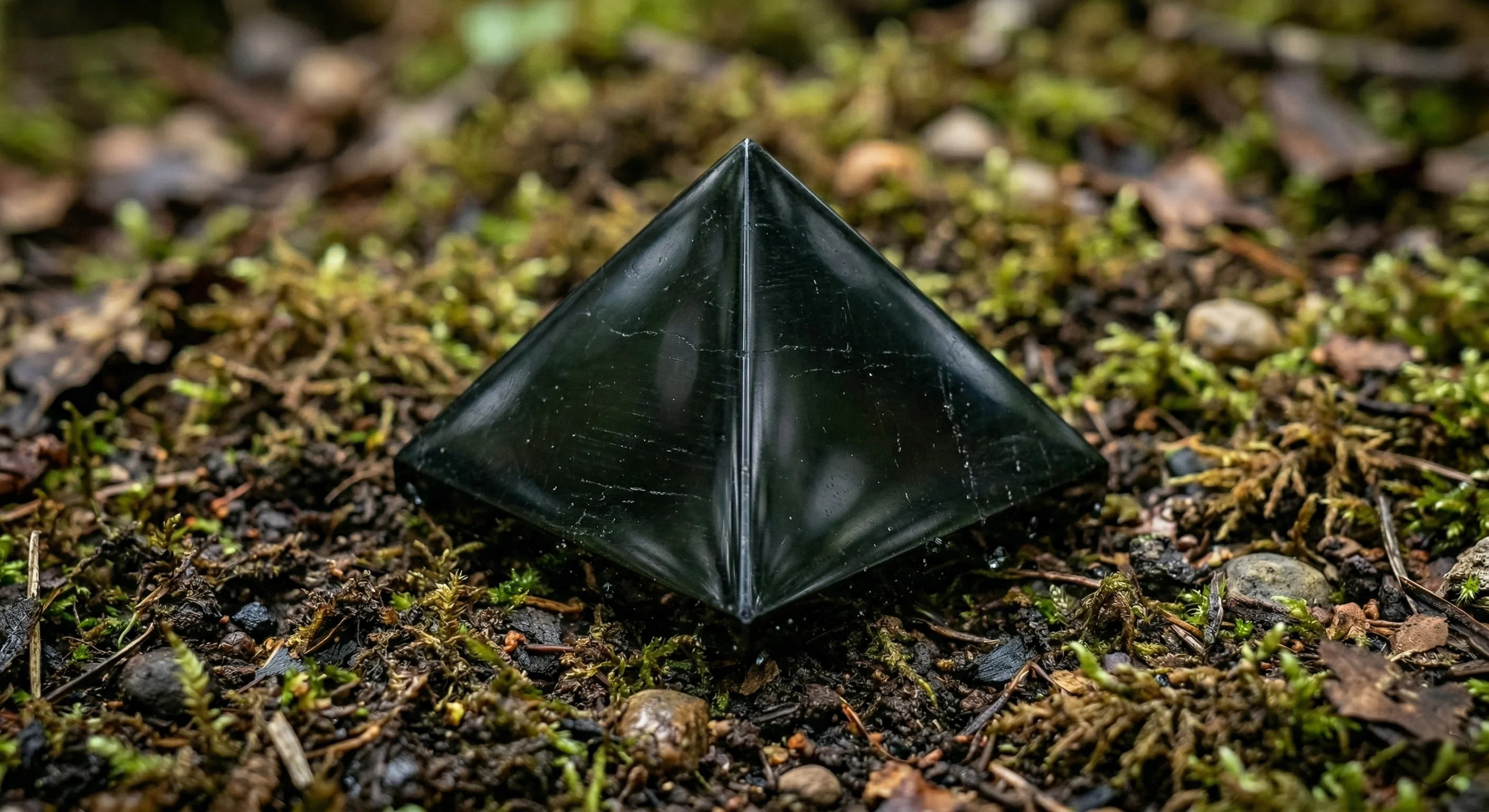
The Collector’s Vault: Identifying High-Fidelity Black Tourmaline Specimens from Erongo to Pala
In 2026, serious curatorial work rejects mere decoration. Before you sits a geological fragment of absolute severity—an uncarved block of pegmatite violently interrupted by a massive, light-absorbing crystal. This interactive dossier strips away marketing jargon, exposing the harsh physical realities of authenticating High-Fidelity Black Tourmaline Specimens from the dust-choked extraction pits of Erongo Namibia to the exhausted historical tunnels of Pala California.
I vividly recall unpacking a forty-pound Erongo matrix in 2018. The rust-colored pocket clay settled deep into my hands, smelling faintly of oxidized iron. Hit genuine schorl with a sharp 4000K spotlight, and it does not simply bounce light. It swallows ambient illumination and fires it back exclusively along its longitudinal striations like a stark barcode. It is heavy, cold, and entirely unforgiving.
This application synthesizes three decades of field data into a single diagnostic interface. Decode the rare structural symmetry of double-terminated wands, verify true vitreous luster against synthetic polymer coatings, and understand the brutal spatial tension required to display massive minerals. Stop trusting soft gallery lighting. Start demanding physical evidence of violent extraction.
The Authentication Paradigm: How Crystal Habit, Vitreous Luster, and Matrix Integrity Define Curatorial Value
Authentication in the field extends far beyond a casual glance through a jeweler's loupe. A rigid consensus operates in the high-end sourcing network: commercial polished stones have permanently erased their geological narrative. They are craft objects, not historical records. Raw, scientifically verified natural specimens anchored on their original, unadulterated matrix are the sole focus of serious institutional archiving.
The Severity of the Trigonal Cross-Section
The primary diagnostic physical characteristic of authentic schorl is its complex trigonal crystal system. Unlike hornblende or common augite, which novices frequently mistake for tourmaline, true schorl exhibits a distinct, heavily rounded triangular cross-section. It is brutally striated along the vertical axis, a record of its rapid, pressurized growth deep within the earth. You can intuitively examine this dense geometric structure through the touch-responsive 3D model below.
Diagnostic Tool: Drag to Rotate Crystal Habit
The Structural Cost of Double Terminated Wands
Locating a specimen completely intact with natural terminations—complex, faceted pyramidal structures—on both ends is statistically improbable. These "floater" crystals grew entirely suspended in semi-liquid pocket clay, actively avoiding destructive, fused attachment to the rigid feldspar or quartz host rock. The trade-off is extreme fragility. Because they lacked a solid anchor during tectonic shifts over millions of years, most floaters shattered long before human excavation. A pristine double-terminated wand from a verified locality possesses academic significance far beyond common, single-terminated fragments violently blasted from the rock face.

The Reality Check: Solvents, Glue, and Fabricated Matrices ▼
We need to openly address the extensive fabrication occurring in secondary markets. The visual perfection you see on a dealer's shelf is frequently an engineered lie. I once spent four hours meticulously auditing a supposedly "flawless" schorl wand jutting aggressively from a bed of pristine white cleavelandite. The visual tension was spectacular. But when I finally lifted the specimen out of its custom foam crate, the specific gravity felt fundamentally wrong. It was marginally too light. A firm tap against the base with a steel dental probe produced a dull, plastic thud rather than a sharp mineral ring. The grim secret? The entire matrix was a fabrication. It was a carefully molded composite of crushed host rock dust, local dirt, and high-strength industrial epoxy, explicitly designed to anchor a loose, lower-grade 'floater' crystal to artificially inflate its curatorial presence.
UV Forensics Laboratory
Discover invisible cyanoacrylate repairs under intense 365nm light.
Stop trusting standard, warm incandescent gallery lighting. It hides everything. Start demanding intensive UV audits and acetone swab tests. I have observed countless suppliers utilize thin layers of cyanoacrylate (superglue) to invisibly reattach a terminated tip that snapped during brutal pneumatic extraction. Under standard room lighting, the repair passes flawlessly; the refractive index of the glue is just close enough to fool the naked eye. Under a focused 365nm UV beam, however, the glue inevitably fluoresces an unnatural, chalky, glowing blue. It instantly ruins the piece's integrity. Furthermore, if you suspect artificial oiling to enhance the luster, taking an acetone-soaked cotton swab to the surface will immediately strip away the grease. The room will smell sharply of solvent, and the previously "lustrous" stone will revert to its actual, dull, highly fractured reality.
The severe trade-off of acquiring zero-intervention, fully natural specimens is that they are almost never perfectly symmetrical. You must learn to accept the raw, jagged contact points where the crystal was forcibly separated from the pocket wall. The physical reality of raw matrix specimens is that they are inherently messy, structurally chaotic objects. The natural pocket clay embedded deep in the microscopic crevices smells unmistakably like damp earth, even decades after extraction from the mine. If a piece looks too surgically clean, too perfectly arranged, it usually is an industrial assembly. You are trading a manufactured illusion of perfection for the heavy, undeniable weight of authentic geological history. Do not compromise on this.
Cultural Significance & Curatorial Scarcity
Why has raw, untreated black tourmaline transitioned from a niche enthusiast collectible to the absolute focal point of top-tier art galleries and natural history archives? It represents unyielding naturalism combined with extreme, rigidly documented scarcity. By 2026, cryptographic registry tracking and distributed archiving have brought unprecedented, critical transparency to the heritage of these isolated fragments of the Earth's crust.
Cryptographic Digital Twin
Top-tier specimens now require immutable digital registries, detailing extraction records and an unbroken, cryptographically verified chain of custody.
Curatorial Focus Simulator
Commercial polished spheres lose their geological narrative entirely. Observe the institutional focus shift strictly toward intact matrix specimens across different timeline phases.
Institutional Exhibition Frequency: Standard Display Routine
Private Gallery Inventory Volume: Moderate Circulation Available
Institutional & Gallery Curatorial Interest Index (2020-2026)
Diagnostic Line Chart: Reflects the frequency index of top natural specimens appearing in major museum exhibitions versus commercial polished crafts (Base 100 established in 2020).
The Ugly Truth of Provenance Decay ▼
Digital registries and "cryptographic twins" sound absolutely foolproof during a sterile boardroom presentation. But wait until you actually confront the grueling physical reality of the archive: someone has to manually digitize the decaying analog history. An advanced digital registry is only as reliable as the initial, highly fallible human data entry. We are racing against the physical decay of paper.
My team routinely spends hundreds of tedious, eye-straining hours comparing faded, cracked, severely moisture-damaged 1970s Polaroid photographs from the Pala district against the physical, microscopic striation patterns of a heavy crystal sitting on the steel desk. We do this merely to verify a single link in an unbroken chain of custody. It is grueling, highly analog detective work. We are scanning the rock under heavy magnification, searching for a specific chipped edge, an irregular termination face, or a unique micaceous inclusion that precisely matches a shadow on a forty-year-old piece of photographic paper. Paper trails were routinely and aggressively forged in the 1990s by opportunistic brokers to bypass strict export restrictions. Assuming a yellowed, typewritten label glued to the bottom of a specimen is authentic simply because it looks old is a massive beginner's mistake.
The severe trade-off of establishing an immutable digital registry is the massive upfront labor, the staggering verification cost, and the very real possibility that the analog record is already lost to humidity or fire. You must actively trade immediate cataloging speed for absolute, unquestionable historical weight. A massive black tourmaline specimen without a meticulously documented extraction history is, quite frankly, just a beautiful, heavy rock. But with a verified, cryptographically secured registry tracing it back to the exact pocket in the mine wall, it transforms into an anchor point in geological heritage. We reject roughly 40% of submitted high-end specimens for digital registry simply because the analog paper trail completely collapses under minor scrutiny. The burden of proof is absolute.
Architectural Anchors & Severe Spatial Curation
Procuring a masterpiece is merely half the equation. The physical presentation of dark, heavy, structurally complex minerals requires a deep understanding of human psychology and unforgiving spatial principles. You must master spatial proportion, cognitive visual contrast, and strict material harmony to prevent the stone from overwhelming the room.
Biophilic Diorama Sandbox
Experiment with extreme material contrast protocols. Select different structural plinths and environments below to observe how the sheer visual weight of the mineral anchors the surrounding space.
Plinth Material
Atmosphere Protocol
"Earthbound Serenity: The matte, highly porous finish of microcement perfectly grounds the sharp, aggressive vitreous luster of the crystal."
The Rule of "Quiet Luxury"
The 2026 gallery aesthetic demands deliberate, aggressive negative space. A raw, uncarved black tourmaline matrix offers absolute naturalism—an unyielding physical anchor in a chaotic, ephemeral digital world. You do not place this stone on a crowded shelf; you dedicate an entire visual plane to it.
- Warm Minimalism & Microcement Placing dark stones on soft, tactile microcement pedestals reduces point-load visual stress. It creates "Earthbound Serenity," contrasting the sharp vitreous luster directly against a completely matte, light-absorbing base.
- Botanical Synergy Integration Styling dark, rigid stones with indoor greens. The uncompromising, geometric forms of the heavy crystal provide a stable visual anchor against the chaotic, shifting foliage of organic plant life.
The Law of Environmental Tension
Material equilibrium is achieved exclusively through severe contrast. Displaying a brittle, ancient piece of heavily structured mica schist and tourmaline alongside pristine brushed metals or warm oak flooring creates a dramatic, unavoidable spatial dialogue. Harmony is boring; tension commands focus.
The Hidden Costs of Structural Curation ▼
Displaying an eighty-pound mineral matrix in a minimalist interior is a hidden structural nightmare. Microcement pedestals look incredibly sleek and effortless in architectural photography, but the ugly truth is their extreme surface porosity and structural weakness under point-load stress. One careless touch with unwashed hands leaves a permanent, highly visible organic oil stain that cannot be scrubbed out. Furthermore, inside that seemingly hollow minimalist plinth, we have to weld custom, heavy-gauge steel armatures just to support the intense downward pressure of the irregular matrix base without cracking the cement shell. You are essentially building a bridge pillar disguised as furniture.
Thermal Shock Demonstration
WARNING: AUDIO PLAYBACK ENABLED
"Awaiting thermal load simulation..."
Then comes the lighting and the associated climate control friction. I have seen countless inexperienced curators use intense, old-school halogen spots to forcefully extract a vitreous luster out of a mediocre, dull stone. The catastrophic result? Thermal shock. The extreme, focused heat expands the dark, highly light-absorbing tourmaline significantly faster than the lighter, structurally rigid associated quartz. This rapid differential expansion physically rips the matrix apart. It causes deep micro-fractures that sound exactly like a sharp, metallic 'ping' in a quiet gallery. It is a sickening sound that instantly degrades the specimen's structural integrity and curatorial value.
We now strictly mandate 4000K low-heat LED spots, exclusively. The necessary sacrifice is a slightly lower absolute brightness, but it unequivocally ensures the specimen survives the decade intact. Furthermore, introducing "biophilic synergy" (indoor plants) near the display introduces massive amounts of ambient moisture. That moisture aggressively rusts any hidden iron inclusions deep within the matrix over time, causing it to crumble from the inside out. The brutal trade-off for that beautiful, organic juxtaposition is running aggressive, loud dehumidification loops 24/7. And maintenance? Forget standard microfiber cloths; the synthetic fibers snag tightly on the microscopic crystal terminations and rip them clean off. We strictly use controlled blasts of highly compressed nitrogen to blow away settled gallery dust. True curation is an exhausting, expensive, and constant physical battle against gravity, heat, and structural degradation.
Authoritative Academic References
- Gemological Institute of America (GIA) - Tourmaline Research - Comprehensive institutional data on Tourmaline physical properties, complex crystal structures, and the impact of geographic origins on refractive indices.
- Mindat.org - Schorl Mineralogical Data Registry - The world's largest open, peer-reviewed database of minerals, detailing exact crystallographic parameters, specific gravity metrics, and global distribution maps.
- Smithsonian National Museum of Natural History - Mineral Sciences - Strict institutional guidelines on long-term curatorial preservation, matrix stabilization protocols, and preventing thermal shock in macroscopic specimens.
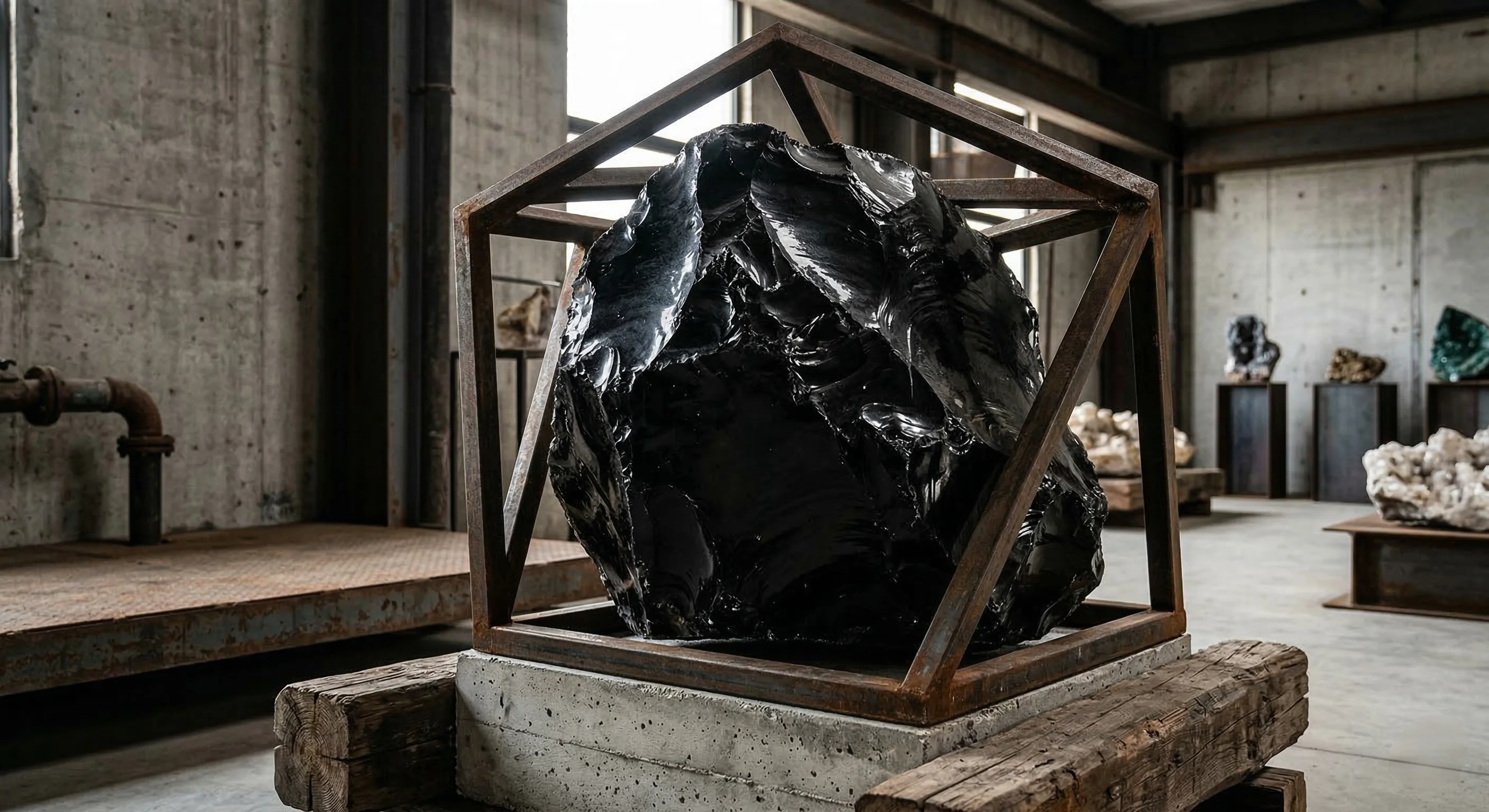
Black Tourmaline: 2026 Market Guide
This curatorial dossier is an integrated module of our master pillar article. Return to the main hub to explore broader market aesthetics, overarching valuation frameworks, and foundational acquisition strategies.
Explore Master Guide →ENCRYPTION_ACTIVE

Clara Vance
Investigator Profile
I’m Clara, a lapidary artist and somatic practitioner based in Santa Fe, New Mexico. I’ve spent years physically cutting, shaping, and studying the structural anatomy of minerals. I know Schorl intimately—from its vertical striations to its dense, iron-rich core. But I don't just cut stones; I study how their physical weight interacts with human physiology. I created my corner of BlkTourm to offer a fully integrated perspective. Here, we break down the hard mineralogy of authentic Black Tourmaline, design 'wearable armor' using un-dyed raw material, and explore how holding that specific geological density provides immediate tactile feedback to pull you out of an anxiety spike. It's where earth science meets body awareness.