black tourmaline meaning
The Safety Container: Black Tourmaline for Mindful Integration
By Clara Vance · Apr 03, 2026
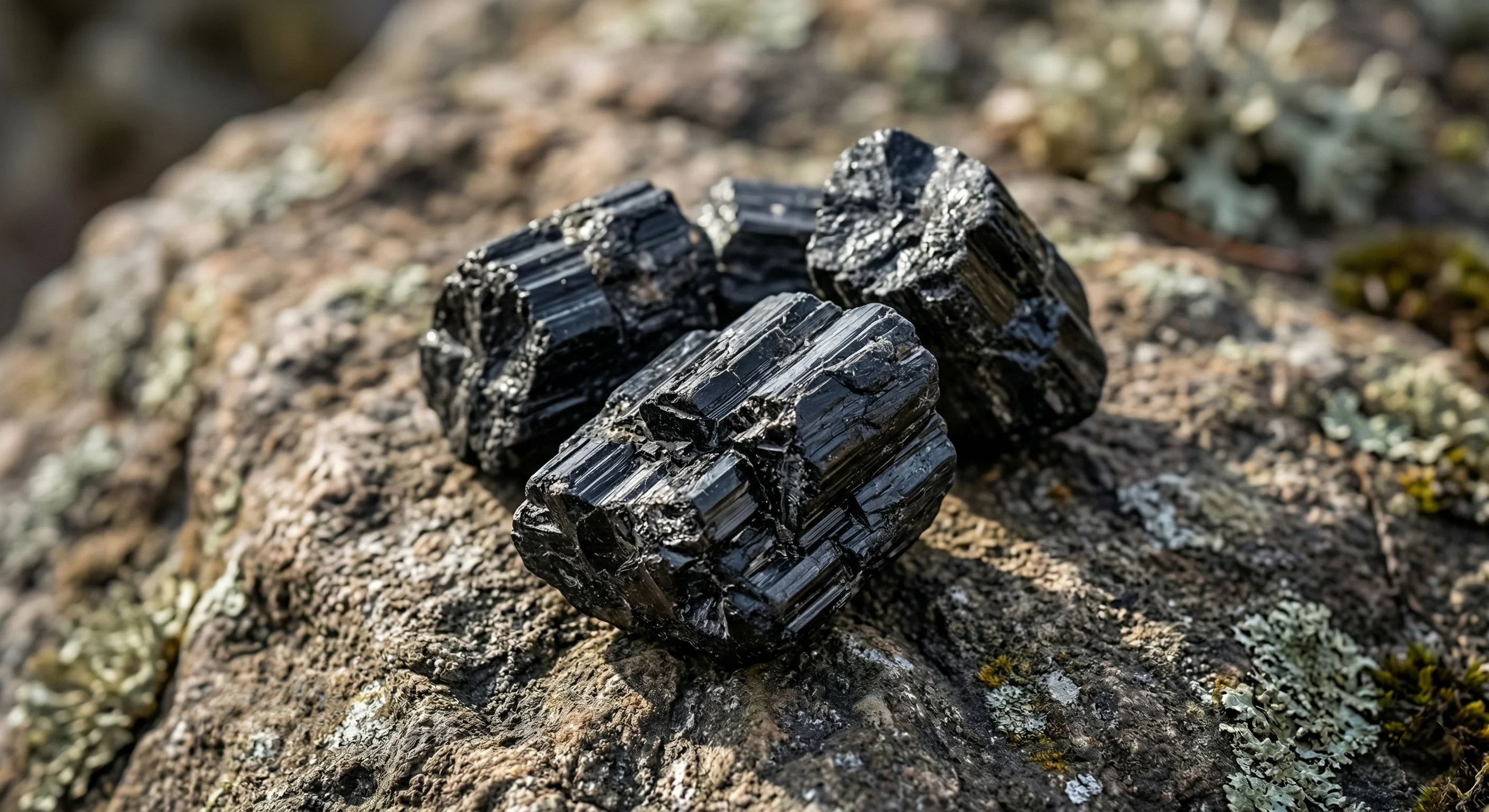
The Mindful Container: Physical Anchors for Deep Reflection
It is 3:00 AM, and your internal monologue is deafening. You sit down to journal, but instead hit a wall of mental static. When your mind races at 120 mph, standard advice like "just take a deep breath" feels useless. You don't need a mantra right now; you need physical, undeniable friction.
You reach for the raw, unpolished mineral on your desk. Its sheer weight, sharp ridges, and freezing temperature provide a sudden, grounding sensory shock. This tether forces your brain to process external tactile data instead of internal abstract panic.
This isn't energy manipulation—it is biological bandwidth allocation. The physical boundary of the anchor provides Mindful Safety, buying you the crucial six seconds needed to manage deep reflection without burning out your mental reserves.
Building the Mindful Container
Why rely on a physical object for inner work? The goal is to keep yourself within a "Zone of Balance" while exploring difficult topics. Here is the operational reality behind using external physical anchors.
The Art of Mindful Anchoring
A Tactile Approach to Grounding: When you feel mentally overwhelmed, pure willpower usually fails. I see people try to out-think their overthinking. It never works. Bypassing complex visualization and relying on a dense, physical medium provides undeniable sensory feedback, creating a simple intervention that yanks your attention back to the present room.
Why Texture Dictates Efficacy
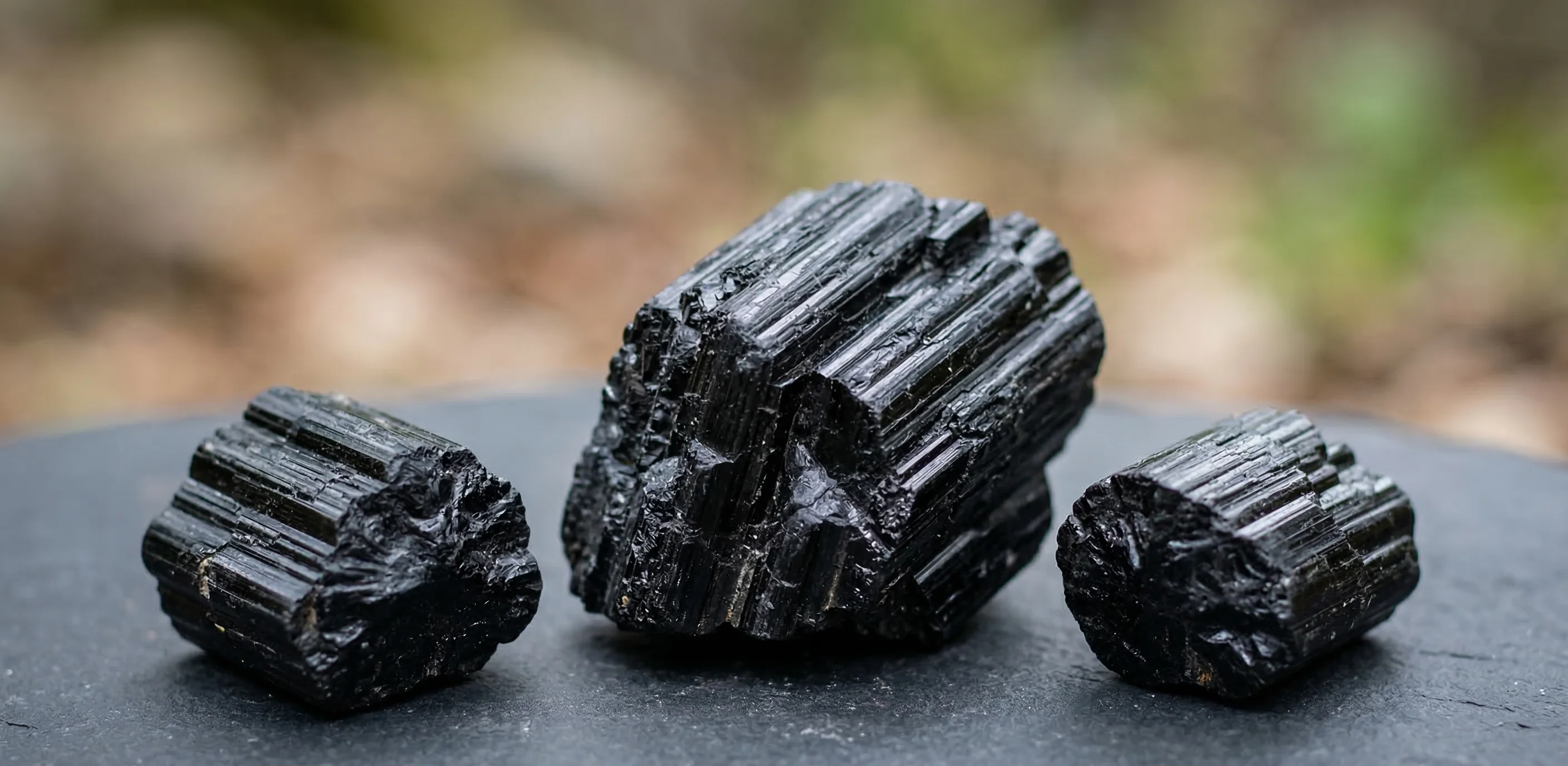
Raw Stone vs. Tumbled Stone: Stop buying perfectly polished stones for grounding work. They look great on Instagram, but they fail in practice. The deep striations and ridges of a raw stone offer high-friction tactile stimulation. This intense physical anchor demands attention. A smooth stone is ignored by your nervous system after five seconds; a sharp edge cannot be ignored.
Symbolic Release
The Psychology of the Anchor: Just as gripping the steering wheel tightly during a storm provides an illusion of control, gripping a dense stone provides a symbolic destination for nervous energy. It serves as a physical "stop" button when your thoughts race too far ahead, offering a tangible place to direct physical tension.
Check Your Current State
Drag the slider to reflect your current mental energy level.
You are currently in the Zone of Balance.
The Ugly Truth: The Realities & Trade-offs of Physical Anchors
Click to expand: Why this method fails, the maintenance cost, and separating practical tools from marketing hype.
▾
The Ugly Truth: The Realities & Trade-offs of Physical Anchors
Click to expand: Why this method fails, the maintenance cost, and separating practical tools from marketing hype.
Let's get something straight: a piece of black tourmaline will not solve your life's underlying complexities. It is a rock. Anyone selling you a crystal sphere promising absolute, seamless serenity is peddling fiction. Over my years of practice, I have watched individuals completely misinterpret the purpose of these tools.
The Reality Check of Material Fragility: The reality of using physical anchors for mental containment is messy. Raw black tourmaline, the specific mineral I recommend for its texture, is inherently brittle. It flakes fine black dust onto your keyboard. If you drop it on a hardwood floor, it shatters into razor-sharp splinters. You are trading convenience for efficacy. You sacrifice a perfectly clean desk for a tool that actually interrupts a cognitive loop. If you want something that won't break, buy steel. But steel warms up too quickly in the hand, losing its sensory impact.
The Maintenance Trap: Another common point of friction is maintenance. Because it is a fragile mineral, you cannot just throw it in a bag of water to clean it without risking degradation. People obsess over the "energetic clearing" of their stones, spending more time placing them under moonlight than actually using them to manage their daily stress. Stop doing that. The stone doesn't need a ritual; your mind needs the stone. If it gets dusty, wipe it with a dry cloth. Do not let the maintenance of the tool become another source of anxiety.
Bandwidth vs. Resolution: Understand what the anchor actually does. It does not resolve the conflict you are journaling about. It merely frees up the mental bandwidth required to look at the conflict objectively. It buys you time. The trade-off is that you still have to do the difficult work of self-reflection afterward. The stone is the parking brake; you still have to turn off the engine and step out of the car.
Mindfulness Practices
Select your current mental state below. These routines leverage physical grounding when your internal focus fractures.
The Interruptive Friction
You cannot think your way out of a thinking problem. When cognitive tools fail, use this physical override.
1. Exteroceptive Shock
Forget gentle breathing. Grip the raw stone until the ridges dig into your palm. The sharp, cold friction forces your brain to process immediate physical data, buying you a crucial three-second window of clarity.
2. Kinetic Discharge
Adrenaline needs an exit. Shake your hands loosely for fifteen seconds. You will feel ridiculous doing it—accept the awkwardness. It releases built-up tension and instantly breaks the overthinking loop.
The Architecture of Integration
Personal growth is an ongoing practice of mindful containment and authentic self-reflection. It is not always pleasant. Understanding the mechanics of psychological boundaries ensures you are actively integrating your experiences, rather than just surviving them.
The Pendulation Method
Pacing Your Reflection: A core concept in mindfulness. Rather than diving into the deepest issue all at once, you pendulate. You move your attention between a place of safety (anchored by your stone) and a small dose of reflection. Do not rush this.
Golden Shadow Integration
Beyond the Difficult: Exploring your positive traits. This involves reclaiming hidden gifts, talents, and confidence you may have minimized to make others comfortable. It requires acknowledging your own strengths without apologizing for them.
Mindful Journaling
Staying Grounded in Reality: Using soul-searching prompts while holding a physical anchor. This prevents your mind from turning emotional processing into purely intellectual or anxious exercises. It forces the narrative to stay rooted in the present moment.
Energetic Boundary Setting
A Tactile Approach for Empaths: Creating a mental "emotional moat." Managing overwhelm requires distinguishing between personal emotions and external pressures from others. Using a dense stone acts as a physical reminder of where you end and the world begins.
High-Pressure Environments
Mindfulness at Work: Covert grounding tools for workplace burnout. In high-stress corporate spaces, utilizing simple tactile objects (like a smooth, heavy stone in your pocket) provides passive physical feedback, maintaining mental stability covertly during hostile meetings.
Digital Release Sandbox
Let it go: Type a recurring frustrating thought below. When you click release, it will be digitally destroyed and cleared from the page.
Thought released.
Veteran Insights: The Reality of Long-Term Integration
Click to expand: Why most people quit, the illusion of rapid progress, and the true cost of setting boundaries.
▾
Veteran Insights: The Reality of Long-Term Integration
Click to expand: Why most people quit, the illusion of rapid progress, and the true cost of setting boundaries.
The Failure Rate of Mindfulness: Let me be brutally honest. Most people abandon mindful integration after three weeks. Why? Because they treat it like a luxury spa treatment instead of a daily hygiene routine. They expect the stone to do the work. The pendulation method—dipping into a difficult thought and retreating—sounds highly effective on paper. In practice, it feels like failing. It feels incredibly frustrating to stop a journaling session after just four minutes because your focus shattered. But I am telling you right now: stop pushing through the static. Pushing through is exactly how you reinforce the cycle of overwhelm.
The Ego of Rapid Progress: The friction here is ego. We want to believe we can process a year's worth of stress in a two-hour weekend sprint. You cannot. You trade the illusion of rapid, dramatic progress for the reality of slow, sustainable stability. When you use a physical anchor, you are agreeing to the limits of your own biology. You are accepting that your nervous system has a hard cap on what it can handle today. Respecting that cap is the entire point of the practice.
The Burden of the Golden Shadow: Furthermore, regarding "Golden Shadow" work—the act of reclaiming your positive traits and power—be warned. It is rarely a joyful, cinematic realization. Usually, realizing that you are actually highly competent or deeply resilient carries an immediate, terrifying burden: you now have to change your life to reflect that competence. It means you can no longer play small. It means setting boundaries that will inevitably upset people who relied on your lack of boundaries. That is the actual cost of integration. It is not about feeling lighter; it is about carrying the right weight.
Educational References & Further Exploration
The physical grounding frameworks and material mechanics discussed above are aligned with standard behavioral observation principles, deliberately separated from metaphysical claims.
- Sensory Grounding Mechanics: Exploration of how exteroceptive focus (processing external tactile data) interrupts internal cognitive loops and mental static. Grounded in cognitive behavioral educational models.
- Material Friction and Attention: Understanding why the nervous system habituates to smooth surfaces (polished stones) and requires high-variance textures (raw minerals) to maintain active attention bandwidth.
- The limits of Willpower: Analysis on why physiological interventions (temperature, sharp texture) are necessary when cognitive load exceeds functional capacity during high-stress scenarios.
This article is a deep-dive module belonging to our core framework. Return to the main pillar article:
Black Tourmaline: The Somatic Anchor | 2026 Veteran Guide
ENCRYPTION_ACTIVE
Clara Vance
Investigator Profile
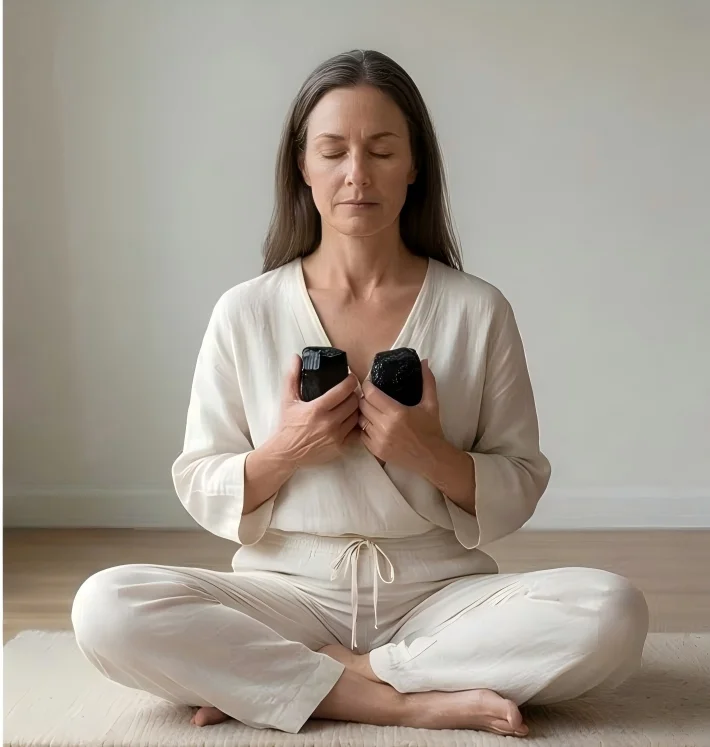
I’m Clara, a lapidary artist and somatic practitioner based in Santa Fe, New Mexico. I’ve spent years physically cutting, shaping, and studying the structural anatomy of minerals. I know Schorl intimately—from its vertical striations to its dense, iron-rich core. But I don't just cut stones; I study how their physical weight interacts with human physiology. I created my corner of BlkTourm to offer a fully integrated perspective. Here, we break down the hard mineralogy of authentic Black Tourmaline, design 'wearable armor' using un-dyed raw material, and explore how holding that specific geological density provides immediate tactile feedback to pull you out of an anxiety spike. It's where earth science meets body awareness.