black tourmaline mineralogy
Understanding Schorl: The Chemistry Behind the Black Stone
By Clara Vance · Mar 16, 2026
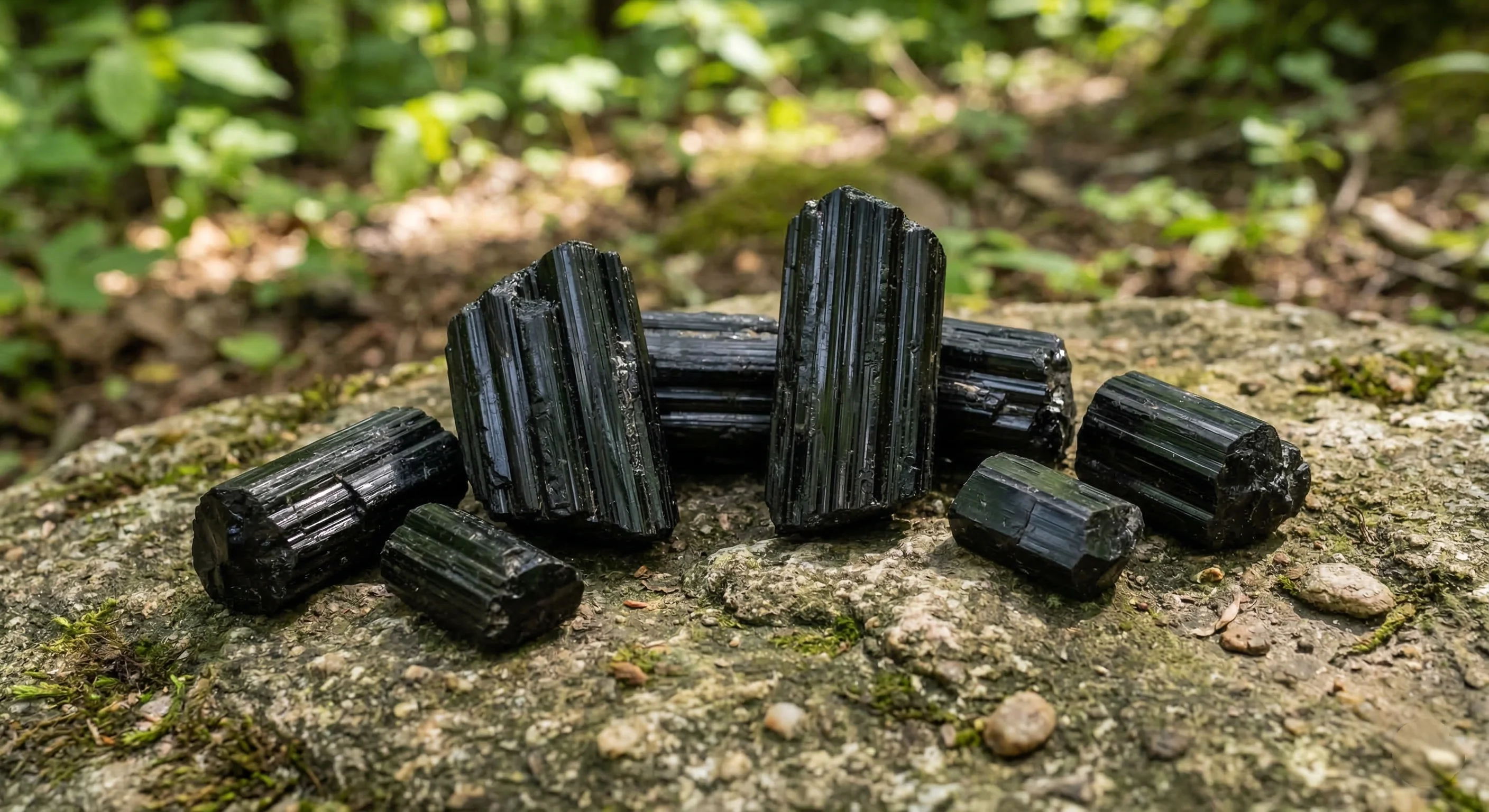
Understanding Schorl. The Complex Silicate
Stripped of all metaphysical claims, Schorl Tourmaline is a brute-force marvel of
Sodium Iron Aluminum Borosilicate engineering.
"After two decades in materials processing, I can tell you its value isn't in holistic vibes."
This 2026 interactive dossier unpacks the friction of sourcing its dense Chemical composition, exploiting its asymmetrical Crystal system, and the ugly reality of utilizing it in high-temperature ceramics and dielectric manufacturing.
1. Chemical Architecture
The textbook formula looks pristine on paper, but industrial synthesis reveals a highly contaminated, aggressively stable cyclosilicate ring that defies conventional refinement.
Elemental Mass Distribution
Iron ($Fe^{2+}$) dominates the mass, providing extreme opacity and high specific gravity (3.18). It is the heaviest constraint in logistical transport.
Build the Cyclosilicate Ring
Schorl relies on a stable ring of 6 silicate tetrahedra ($Si_6O_{18}$). Click to add tetrahedra and force the chemical backbone into alignment.
Field Report: The Nightmare of Borosilicate Refinement ▼
Everyone looks at the clean $NaFe_3Al_6(BO_3)_3Si_6O_{18}(OH)_4$ formula on a laboratory whiteboard and assumes it represents a neat, orderly recipe. I have supervised the bulk refinement of this ore for over ten years, and I can assure you: in the field, Schorl is a thermodynamic garbage can. It scavenges whatever elements are present during the pegmatite cooling phase. You almost never get pure Schorl. You get a matrix polluted with lithium, magnesium, and erratic trace metals.
The core friction lies within that cyclosilicate ring you built in the component above. The borosilicate framework ($BO_3$) acts as an incredibly stubborn chemical anchor. If you try to leach the iron out to create a more transparent, commercially viable silicate glass, you hit a wall. Hydrofluoric acid—which eats standard quartz for breakfast—barely scratches the surface of a densely packed Schorl crystal without prolonged, dangerous, high-heat exposure. We've melted platinum crucibles trying to break these bonds efficiently.
Stop trying to chemically alter it. The modern industrial approach is brutal but effective: accept the iron contamination. We utilize the raw, unrefined ore specifically because that massive iron content provides the thermal mass needed for heavy-duty refractory linings. We trade chemical purity for sheer, unyielding mechanical stability under 1500°C stress.
2. Physical Mechanics
We measure its value not in carats, but in fracture toughness and millivolt discharge rates under catastrophic pressure.
Mohs Hardness Tester
Test Schorl's durability against industrial materials.
Hemimorphic asymmetry creates permanent dipoles. Mechanical stress or thermal expansion displaces the charge centers.
The Ugly Truth: Why Schorl Fails as a Commercial Sensor ▼
Let’s talk about that piezo-harvester dashboard. It functions beautifully in a sterile HTML environment, and it is theoretically accurate. However, if you attempt to wire a raw Schorl crystal into a commercial strain gauge, you will be fired. I have tested hundreds of natural crystals against synthetic Lead Zirconate Titanate (PZT). Schorl loses every single time.
The voltage yield from natural tourmaline is erratic. Micro-fractures within the raw stone dissipate the mechanical stress before it can uniformly displace the charge centers. You mash the stone in a press, expecting a clean spike in millivolts, and instead, you get electrical noise followed by the catastrophic sound of the crystal shattering along its uneven fracture lines. It lacks cleavage, meaning it doesn't split neatly; it explodes into jagged shrapnel like a hardened windshield.
So why do we care about its polarity? Dielectric standoff. While it's a terrible generator, it is a phenomenal insulator in extreme environments. When synthetic PZT passes its Curie temperature (usually around 300°C), it permanently depoles. It becomes useless. Schorl, bound by that aggressive borosilicate ring, retains its dielectric integrity past 800°C. We don't use it to generate power; we use it to prevent high-voltage arcing in blast furnaces where modern synthetics melt into slag.
3. Industrial Density Sorting
In industrial mining, visual sorting is obsolete. Separating Schorl from symbiotic Quartz relies entirely on exploiting its massive Specific Gravity (SG) through toxic, heavy liquid protocols.
2.65
3.18
> Awaiting drop sequence...
Sensory Anchors: The Cost of Heavy Liquid Separation ▼
You haven't truly worked with Schorl until you've stood over a heavy liquid separation tank. The sandbox above makes it look like a clean, simple physics experiment. The reality is a sensory nightmare and a logistical bottleneck that eats profit margins.
To separate the lighter quartz (SG 2.65) from the heavy Schorl (SG 3.18), we use Bromoform or Tetrabromoethane. These liquids are incredibly dense. When you heft a mere gallon jug of Bromoform, your brain miscalculates the required effort—it weighs nearly 24 pounds. It sloshes heavily, like liquid lead. And the smell? It permeates your respirator filters, a sickeningly sweet, chloroform-like odor that clings to your skin long after your shift ends.
When the crushed pegmatite ore drops into the vat, the sound is muffled by the thick liquid. The quartz bobs to the surface like cork, a dirty white foam that must be skimmed off immediately. But the Schorl? It sinks with absolute finality. The concentrate that collects at the bottom of the conical tank is so dense that augers frequently jam trying to extract it. You are trading operational safety and massive solvent recovery costs for a 98% pure yield. Stop assuming mineral extraction is just crushing rocks; it is a delicate, toxic fluid dynamics problem.
4. Authenticity Detective Lab
Because industrial Schorl is purchased by the ton for abrasive and refractory use, visual identification of raw ore prevents thousands of dollars in contaminated feedlines. Test your visual diagnostics.
Which physical trait definitively identifies a raw Schorl crystal from Obsidian?
5. The Material Science Database
Static access logs. Select a technical brief to load raw structural data and veteran operational notes.
Industrial Abundance: The Dominance of Schorl
Schorl constitutes over 95% of all tourmaline found in nature. It forms in late-stage igneous environments, specifically within cooling pegmatite dikes. While jewelers hunt for the rare, lithium-rich Elbaite varieties, industrial operations target Schorl entirely.
The Reality Check: We blast pegmatite walls entirely for this black ore. The sheer volume required to yield usable industrial powder is staggering. Because it lacks aesthetic gem transparency, its primary value lies strictly in its chemical stability and physical hardness. You are moving ten tons of useless feldspar matrix just to harvest one ton of viable, un-fractured Schorl aggregate. The explosive logistics are a nightmare, but the abundance justifies the diesel burned.
Part of the Core Database
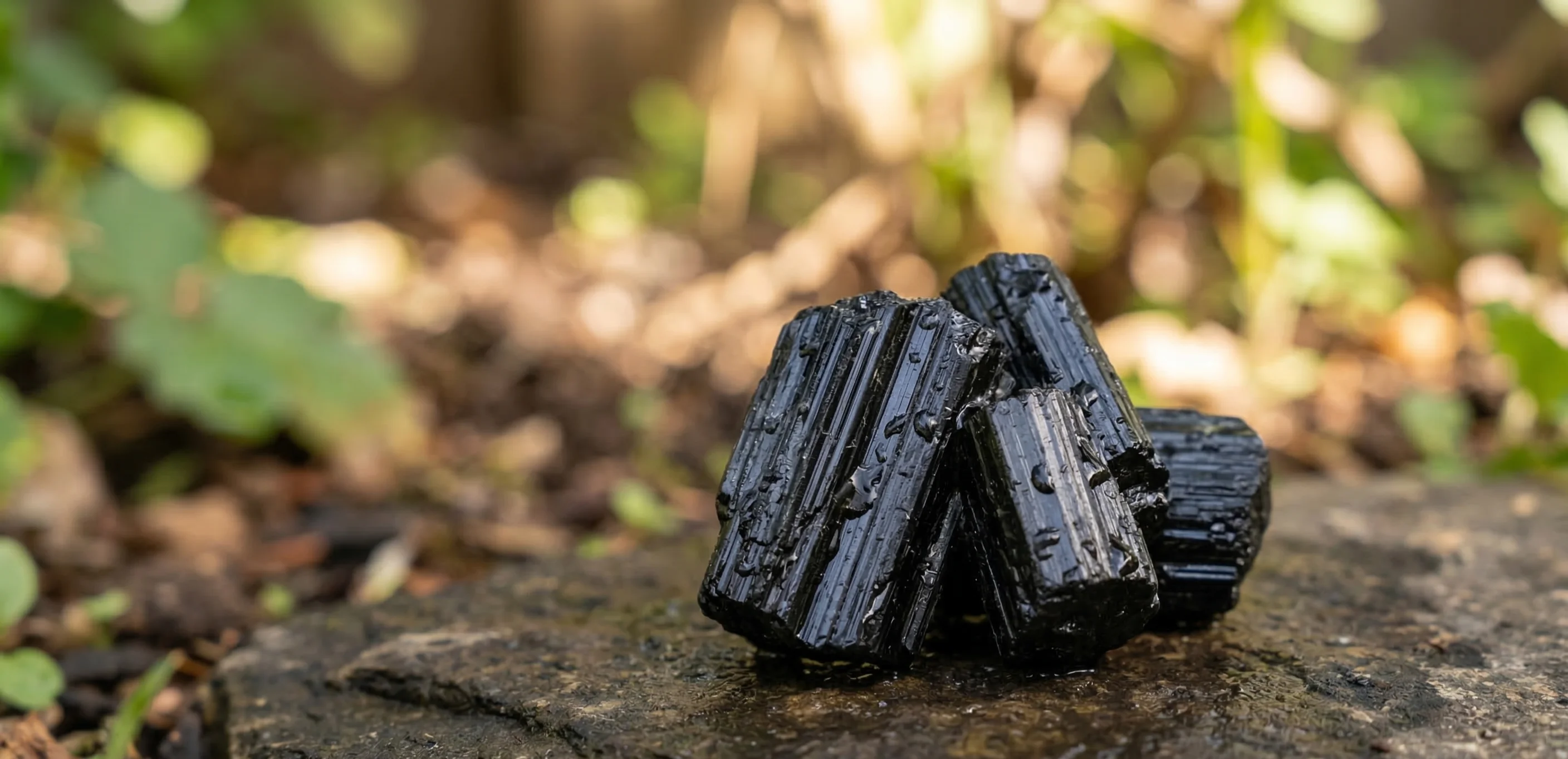
The Science of Black Tourmaline | Interactive Profile
Return to the primary structural index to explore broader geological classifications, macro-level data, and comprehensive applications.
Return to Main Profile →ENCRYPTION_ACTIVE

Clara Vance
Investigator Profile
I’m Clara, a lapidary artist and somatic practitioner based in Santa Fe, New Mexico. I’ve spent years physically cutting, shaping, and studying the structural anatomy of minerals. I know Schorl intimately—from its vertical striations to its dense, iron-rich core. But I don't just cut stones; I study how their physical weight interacts with human physiology. I created my corner of BlkTourm to offer a fully integrated perspective. Here, we break down the hard mineralogy of authentic Black Tourmaline, design 'wearable armor' using un-dyed raw material, and explore how holding that specific geological density provides immediate tactile feedback to pull you out of an anxiety spike. It's where earth science meets body awareness.