black tourmaline market aesthetic
Wearable Armor: The Rise of Brutalist & Matte Black Tourmaline Jewelry
By Clara Vance · Apr 01, 2026
Clear the Noise.
Find Your Anchor.
The modern workspace generates relentless visual static.
Hover or drag across this space to simulate the visual quiet created by Matte Black Tourmaline.
We are witnessing a profound evolution away from delicate, highly polished adornments and toward Modern Architectural Accessories and gender-neutral talismans. Defined by the velvet friction of Matte Beads, the structural dominance of Signet Rings, and the striking contrast of Solar Empress Gold, jewelry is no longer just a passive aesthetic choice. It functions as a symbolic boundary line.
Veteran's Deep Dive: The Tactile Deficit of Modernity ▼
I have spent the last twelve years sourcing, cutting, and setting raw minerals. Around 2023, I noticed a distinct shift in client requests. They stopped asking for clarity. They stopped asking for refractive indices. They started asking for weight. They asked for stones that felt "heavy." Why? Because our daily physical interactions have been entirely flattened. We touch glass screens. We type on low-travel polymer keyboards. We swipe across frictionless aluminum trackpads. We live in a tactile deficit.
Stop buying flawless, hyper-polished gemstones if you sit in a corporate environment for ten hours a day. You do not need more smooth surfaces. The rise of brutalist black tourmaline is not a random fashion cycle; it is a direct behavioral response to environmental sterility. When you wear a piece of matte tourmaline, you are introducing a high-friction, light-absorbing anomaly into a low-friction, light-emitting workspace. It breaks the visual and physical monotony. However, there is an ugly truth that most designers refuse to discuss: raw stones are hostile to the wearer. They snag on silk. Their sharp, unpolished edges will scratch laptop chassis. If you choose brutalism, you must accept the collateral damage to your wardrobe and your tech. You are prioritizing a personal sensory anchor over seamless convenience.
From Ornament to Architecture: The Data
Why has brutalist black tourmaline jewelry become the ultimate wearable structure in 2026? The answer lies in our collective craving for physical presence in a disembodied, digital world.
Our market index shows a dramatic divergence. Consumers are actively rejecting the perfect, light-reflecting polish of the past decade. Instead, they demand unrefined edges, significant physical weight, and materials that anchor the senses.
Market Sentiment: Polished vs. Brutalist Matte
Veteran's Deep Dive: The Flawed Metrics of Luxury ▼
Look at the chart above. Most analysts interpret the death of the "high-polish preference" as a mere aesthetic shift toward minimalism. They are wrong. It is a rebellion against the maintenance of perfection. For decades, the jewelry industry sold a lie: that a mirror finish equates to value. But anyone who has worn a highly polished platinum and onyx ring knows the reality. Within three weeks of daily wear, the microscopic scratches—the patina of life—destroy the mirror finish. You are left with a dull, disappointing surface that requires constant professional buffing.
Brutalist jewelry, specifically utilizing matte or raw black tourmaline, operates on an inverted value system. It is designed to look weathered from day one. It embraces entropy. However, let us discuss the trade-off. Matte surfaces are highly porous compared to their polished counterparts. They act like sponges. If you wear a matte tourmaline bead bracelet daily, it will absorb natural skin oils, hand lotions, and environmental dust. Within a month, that perfect, chalky "void black" will turn into an uneven, slightly greasy charcoal. You cannot just wipe it on your shirt. Restoring a true matte finish requires ultrasonic cleaning with specific degreasing agents, followed by a careful drying process. You are trading the visible scratches of a polished stone for the microscopic contamination of a porous one. Choose your maintenance nightmare wisely.
The Alchemy of Elements
The 2026 aesthetic relies on deliberate material choices. Interact with the elements below to understand their physical impact.
The Somatic Power of Matte Beads
Unlike highly polished stones which slip easily through the fingers, matte finishes provide a distinct "velvet friction."
This physical resistance sends immediate tactile feedback to the user. Brushing a thumb against a matte bead acts as a mindful anchor, establishing a clear sensory boundary during periods of high cognitive load.
Interactive Friction Tester
Swipe both beads left or right. Feel the difference in momentum and resistance.
Reimagining Antiquity: Rose Cut
The rose cut revival firmly rejects laser-perfect geometry. With flat bases and faceted domed tops, these stones prioritize subtle ambiance over aggressive glare.
In the harsh lighting of a modern office, they remain discreet. In low-light environments, the dark facets capture and structure shadows beautifully, creating a quiet, sophisticated profile.
Lighting Environment Simulator
Adjust the slider to simulate moving from a bright office to a low-light evening setting.
The Material Clash: Empress Gold
Black tourmaline is visually dense. A necklace of pure brutalist stone can feel metaphorically heavy, dominating the wearer's profile too rigidly.
To achieve structural balance, designers pair the "void" of the stone with the "solar warmth" of heavy 18K Empress Gold. This creates an energetic visual tension, ensuring the piece remains a lifting accent.
The Gravity Balancer
Add gold elements to balance the visual weight of the heavy raw tourmaline.
Veteran's Deep Dive: The Engineering Nightmares Behind the Aesthetics ▼
Let me speak directly to anyone looking to purchase or commission a piece featuring raw black tourmaline set in 18K gold. You are asking for a structural contradiction. Black tourmaline sits at 7 to 7.5 on the Mohs hardness scale. People confuse "hardness" (resistance to scratching) with "toughness" (resistance to breaking). Tourmaline has perfect cleavage and is incredibly brittle. It is fundamentally fragile. 18K gold, conversely, is heavy, dense, and relatively soft. When a jeweler attempts to fold a thick 18K gold bezel over an unpolished, uneven chunk of tourmaline, the pressure required to move the gold frequently causes the stone to shatter right on the bench. I have destroyed thousands of dollars of inventory learning this lesson.
Stop demanding "delicate prongs" on brutalist pieces. It is an engineering failure waiting to happen. To safely secure a heavy, raw mineral, you need massive, substantial metalwork. You need thick bezels or heavy architectural clamps. This drastically increases the gold weight, which violently spikes the price of the piece. The "Material Clash" looks beautiful conceptually, but physically, it requires over-engineering. Furthermore, cutting a Rose Cut into black tourmaline is an exercise in misery for the lapidary. The stone tends to flake at the facet junctions. A high-quality rose cut tourmaline is expensive not because the raw material is rare, but because the yield rate during the cutting process is abysmally low. You are paying for the stones that broke.
The Architecture of Armor
Brutalist Signet Rings
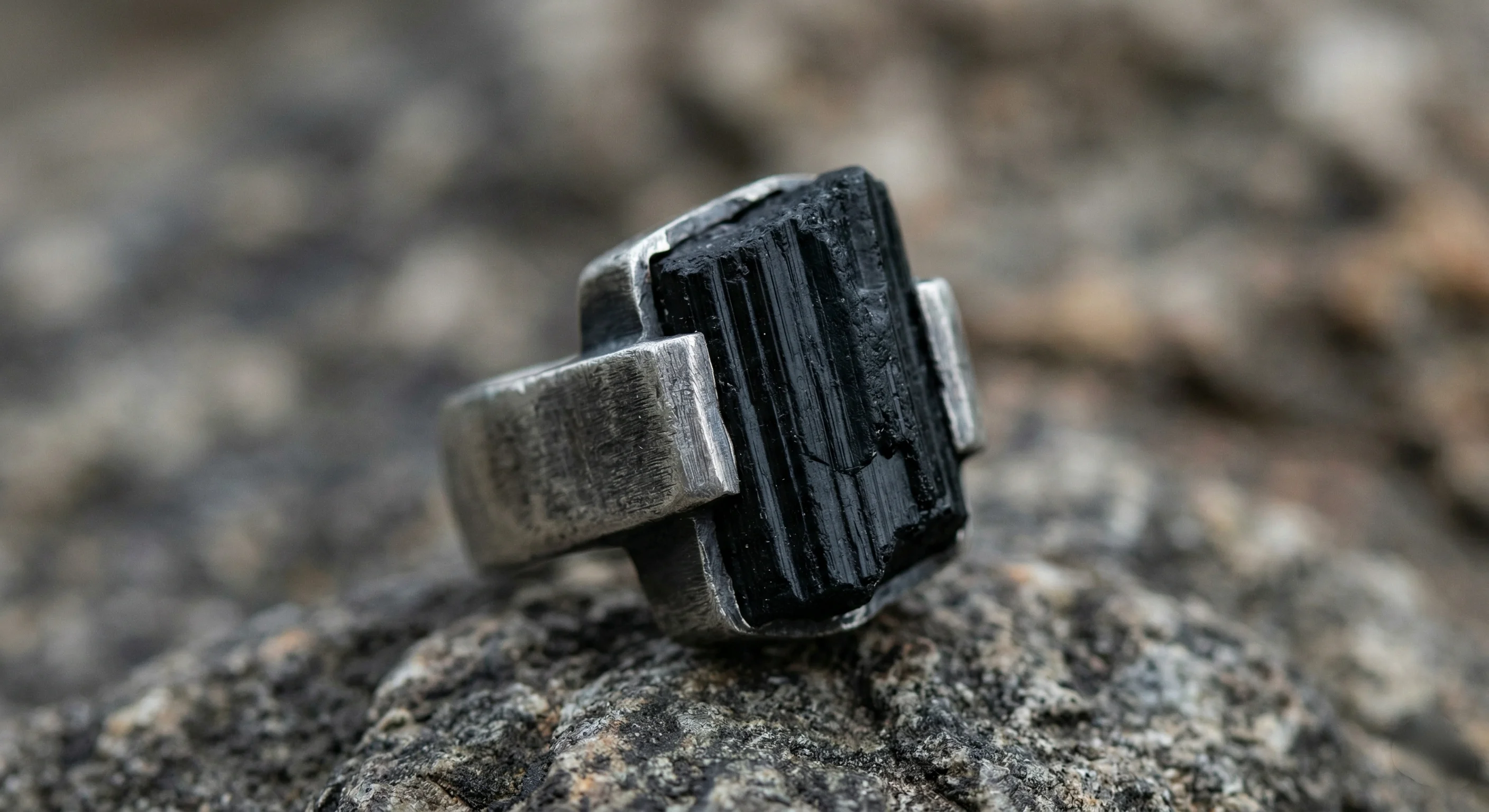
Moving away from subtle, easily ignored bands, the 2026 signet ring is an undeniable physical presence. We utilize heavy oxidized silver or aggressively brushed gold, physically clamping the metal around the unmodified, jagged edges of black tourmaline.
This is not a ring you forget you are wearing. It is dense. The raw mineral edge bites slightly into adjacent fingers if you make a tight fist. You deliberately trade ergonomic comfort for a constant, grounding physical reminder of your own boundaries during high-stakes boardroom negotiations.
Modular Amulets
Convertible jewelry for adaptable lifestyles. From minimalist geometric shapes during workspace hours, transforming into statement brutalist pieces for the evening.
Current: Minimalist geometry hides the raw stone.
Veteran's Deep Dive: The Anatomy of Daily Wear Failures ▼
The concept of "Wearable Armor" sounds fantastic in a marketing brochure. But as someone who has repaired hundreds of broken designer pieces, I need to bring you back to reality. Let us examine the Brutalist Signet Ring. A massive, raw stone recessed into a solid silver block creates deep, inaccessible crevices between the metal and the uneven crystal surface. What happens when you wash your hands? Soap scum, dead skin cells, and daily grime pack tightly into those micro-chasms. If the ring does not have a fully open gallery beneath the stone to allow for forceful steam cleaning, it becomes a biological trap. A ring that is supposed to serve as a clean, mindful visual anchor quickly turns dull and unsanitary. You must demand open-backed settings from your jeweler, even if it slightly compromises the solid, "heavy" aesthetic.
Regarding Modular Amulets: do not buy into the illusion of seamless transformation. Every moving part in a piece of jewelry is a guaranteed point of future failure. Micro-hinges, hidden clasps, and magnetic retention systems degrade. Springs lose their tension. Magnets corrode if exposed to sweat. The mechanism required to switch a pendant from "stealth mode" to "brutalist mode" relies on microscopic tolerances that simply do not survive the impacts of daily life. If you want a minimalist piece for the office and a heavy statement piece for the evening, buy two separate pieces of jewelry. Stop relying on fragile, gimmicky mechanics to perform a wardrobe change. The truest form of "brutalism" is a solid, unmoving object that requires zero maintenance.
References & Authority Core
- Geological Toughness Data: Gemological Institute of America (GIA) - Tourmaline Quality Factors. Documents the inherent cleavage and brittleness of the mineral structure.
- Tactile Sensory Processing: National Institutes of Health (NIH) - The Role of Somatosensory Feedback in Emotional Regulation. Examines how physical textures influence cognitive anchoring.
- Design Entropy & Brutalism: ArchDaily - The Principles of Architectural Brutalism. Details the philosophy of exposing raw materials and structure without decorative disguise.
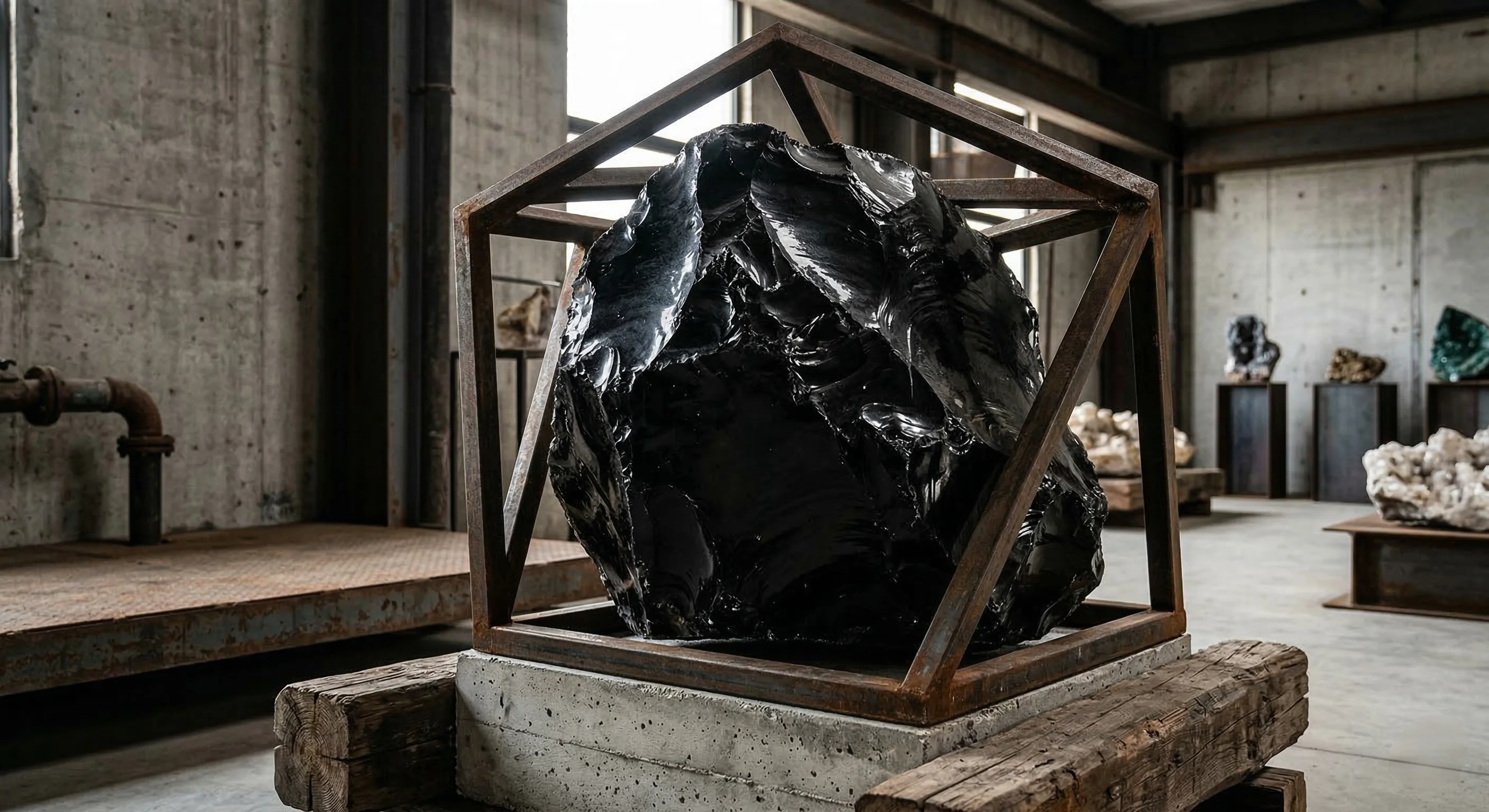
Black Tourmaline: 2026 Market Guide
This deep dive is a satellite chapter belonging to our core market analysis. Return to the main hub to explore the complete macroeconomic and aesthetic shifts defining the 2026 accessories landscape.
← Return to Main GuideENCRYPTION_ACTIVE
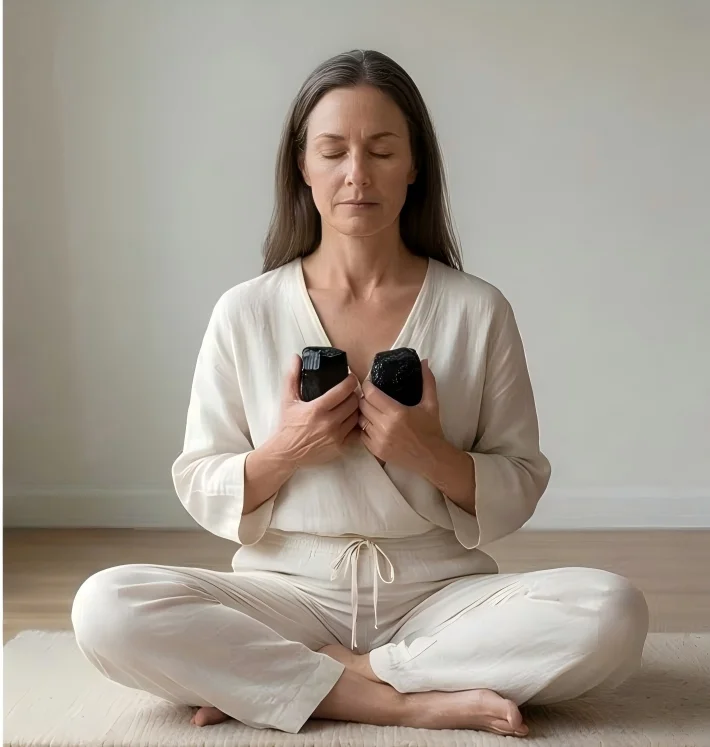
Clara Vance
Investigator Profile
I’m Clara, a lapidary artist and somatic practitioner based in Santa Fe, New Mexico. I’ve spent years physically cutting, shaping, and studying the structural anatomy of minerals. I know Schorl intimately—from its vertical striations to its dense, iron-rich core. But I don't just cut stones; I study how their physical weight interacts with human physiology. I created my corner of BlkTourm to offer a fully integrated perspective. Here, we break down the hard mineralogy of authentic Black Tourmaline, design 'wearable armor' using un-dyed raw material, and explore how holding that specific geological density provides immediate tactile feedback to pull you out of an anxiety spike. It's where earth science meets body awareness.