Grounded ritual boundary
Transmuting Ancestral Trauma with Earth Medicine in 2026
Ancestral Trauma Crystal Healing is safest to approach in 2026 as a symbolic, reflective practice, not a clinical method. Stones, soil, plants, water, candlelight, or an ancestor altar can help give shape to grief, lineage questions, and family patterns you want to meet with care. They should not be framed as removing inherited pain, proving family history, or replacing trauma-informed care, crisis support, or practical safety steps.
A grounded version of the practice is modest: it helps you pause, name a pattern, remember what matters, and choose one present-day action.
broader context
Black tourmaline context note
This narrower page works best after the broader black tourmaline context page.
What “Transmuting” Can Mean Here
In this context, “transmuting ancestral trauma” works better as metaphor than mechanism. It can mean changing your relationship to an inherited story: naming what was unspoken, grieving what was carried, choosing a different ritual posture, or creating a small physical practice that helps you stop before repeating a family pattern.
That is different from saying a crystal changes trauma in the body, repairs a lineage, retrieves lost parts of the self, or proves something about your ancestors. No public clinical, cultural, mineralogical, or firsthand sources were available for this draft, so the responsible answer stays narrow.
Earth medicine in 2026 is often used as a broad phrase for nature-based spiritual meaning: stones, herbs, soil, water, seasonal cycles, burial-and-return imagery, or time outdoors. Without tradition-specific sources, it should not be presented as one universal system. Here, it is better understood as a gentle language of relationship: the ground holds weight; stones invite stillness; seasons make change visible; an altar gives memory a place to rest.
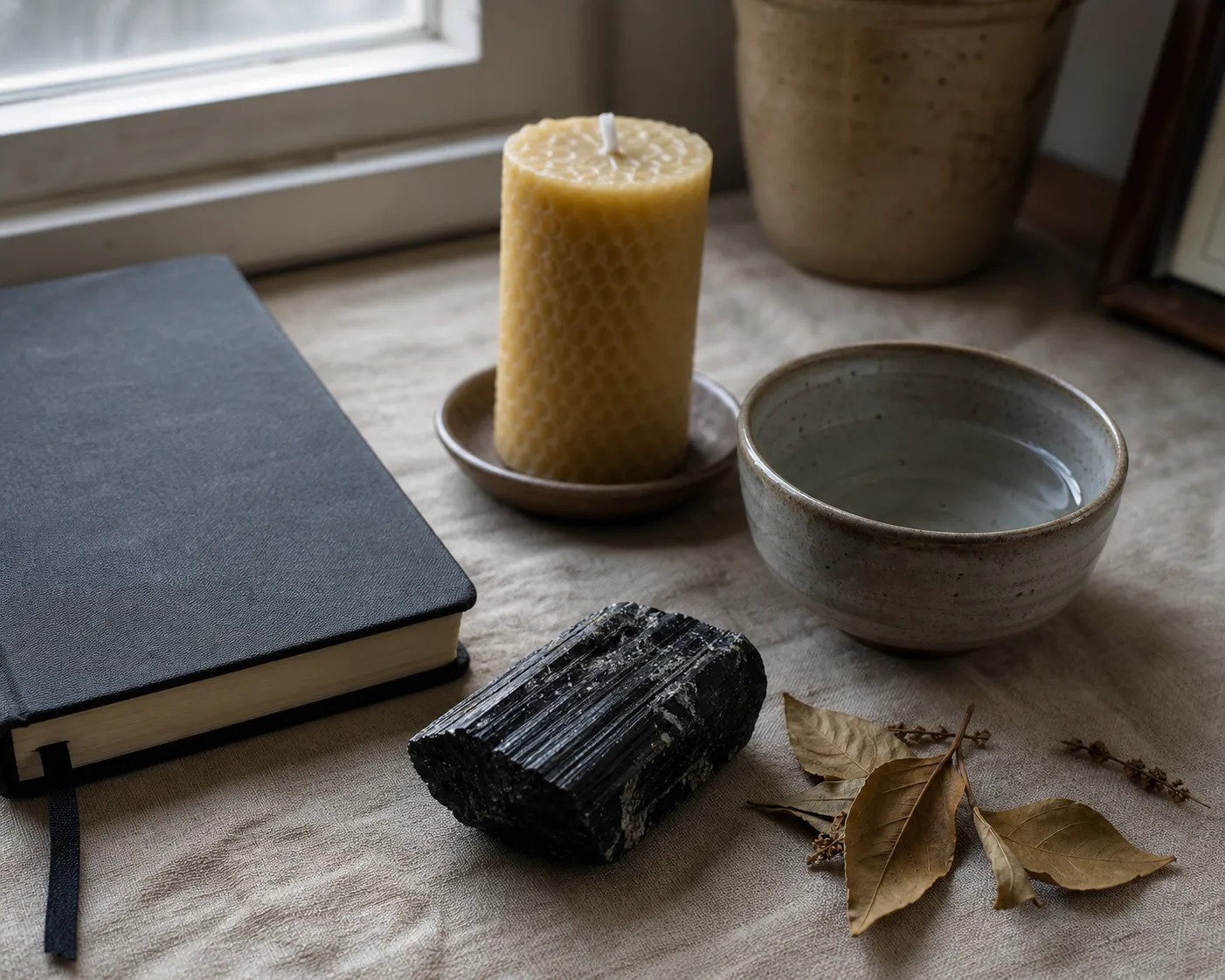
For readers drawn to black tourmaline, the stone can serve as a tactile symbol of boundary, density, and grounding. Its weight, texture, color, and placement may support a personal ritual container when the claim stays in the realm of attention and meaning.
What Keeps the Practice Grounded
A reflective ancestral practice becomes more stable when it is small, chosen, and easy to leave. The point is not to force memory open. It is to create a respectful place where lineage language can be held without being turned into certainty.
A grounded version might include:
- A stone or natural object chosen for personal symbolism, not promised results.
- A short journaling session with one question, not an attempt to uncover hidden memories.
- A candle, bowl of water, or small altar used as a visual anchor.
- A walk, breath awareness, or quiet sitting after the ritual to return to the present.
- A clear ending, such as washing hands, closing a notebook, or moving the stone back to its place.
This structure matters because words like lineage, intergenerational trauma, ancestral wounds, soul memory, and family pattern can touch grief, anger, loyalty, confusion, and longing at once. A small ritual gives the practice a beginning and an end.
Consent matters too. Family storytelling can be meaningful when people choose to participate. It becomes intrusive when someone pressures relatives for painful details, challenges a survivor’s boundaries, or treats a ritual impression as proof. “Would you like to talk about what life was like for your grandparents?” is very different from “I need you to confirm the wound I sensed.”
Where Crystals Fit
Crystals fit this page as objects of focus, not evidence of outcome. A stone can mark a threshold, hold a place on an altar, or remind you to slow down before entering a difficult family conversation. It can be chosen for color, hand feel, family association, mineral interest, or simple beauty.
Black tourmaline is often sought by readers who want a visual language of grounding and boundary. In non clinical crystal healing, that can be enough: the stone’s presence helps the user remember the intention. The object becomes a cue. A bowl of river stones, a piece of wood from a meaningful place, or a plain garden rock can serve a similar role if it carries personal meaning.
The limits of crystal healing matter when language shifts from symbolism to certainty. Claims about guaranteed protection, energetic diagnosis, inherited trauma removal, or family-line repair go beyond what this page can support. Wellness-market language should not be mistaken for evidence.
A useful test is simple: if the sentence still works as a personal intention, it is probably safer. “I use this stone to remember my boundary” is reflective. “This stone clears my lineage of trauma” turns a spiritual metaphor into a result claim. The first can belong in a personal practice. The second needs evidence and cultural authority that are not available here.
Intergenerational Trauma Language Needs Care
The phrase intergenerational trauma can be useful because many readers are trying to describe how pain, silence, survival strategies, displacement, violence, addiction, grief, or fear may echo through family life. Still, without authoritative trauma-informed sources in the current material, this article should not clinically define the concept or explain how it works.
For this page, safer language is observational and reflective: “patterns I learned,” “stories my family avoided,” “grief that shaped how people related,” “protective behaviors that no longer fit,” or “a family atmosphere I am trying to understand.” These phrases do not diagnose ancestors, assign blame, or claim certainty about causes.
Inherited trauma misconceptions often grow when spiritual practice is treated as evidence. A dream, body sensation, card pull, ritual image, or feeling during meditation may be meaningful. It may point toward a theme worth journaling. It may reveal a question. But it should not be used to rewrite family history, confront relatives, or decide that a specific ancestor caused present distress.
The most respectful stance is open and modest: your ritual may help you listen to your own response, but it does not give you automatic authority over the lives, cultures, or wounds of those who came before you.
Shamanic Retrieval, Soul Memory, and Lineage Language
Terms such as shamanic retrieval, soul memory, ancestral wounds, lineage work, and earth medicine are not neutral labels with one universal meaning. Some may belong to specific communities, teachers, ceremonial contexts, or spiritual lineages. Without tradition-specific sources, this article cannot define them as if they mean the same thing everywhere.
If you encounter shamanic retrieval language online, treat it as culturally and spiritually specific, not as a casual technique to copy. The same caution applies to Indigenous-adjacent imagery, “medicine” language, ritual tools, drumming, trance, journeying, and ancestor work borrowed from traditions you do not belong to. Cultural humility means slowing down, asking where a practice comes from, and avoiding the assumption that every ritual vocabulary is available for personal reinvention.
Soul memory can also be approached carefully. Some people use the phrase to describe a felt sense, a recurring emotional pattern, or a spiritual intuition about lineage. That does not make it a verifiable memory. If the phrase is meaningful to you, keep it in the language of personal symbolism: “This is the image my mind returned to,” or “This is the theme I want to sit with.” Avoid turning it into evidence about ancestors, past lives, family secrets, or another person’s experience.
Lineage language can still have a place when it describes a commitment to act differently: refusing cruelty, softening secrecy, seeking support, honoring lost names, or building rituals of remembrance. In that sense, the lineage is not changed by a stone alone. It is shaped by choices, relationships, repair where possible, and honest boundaries.
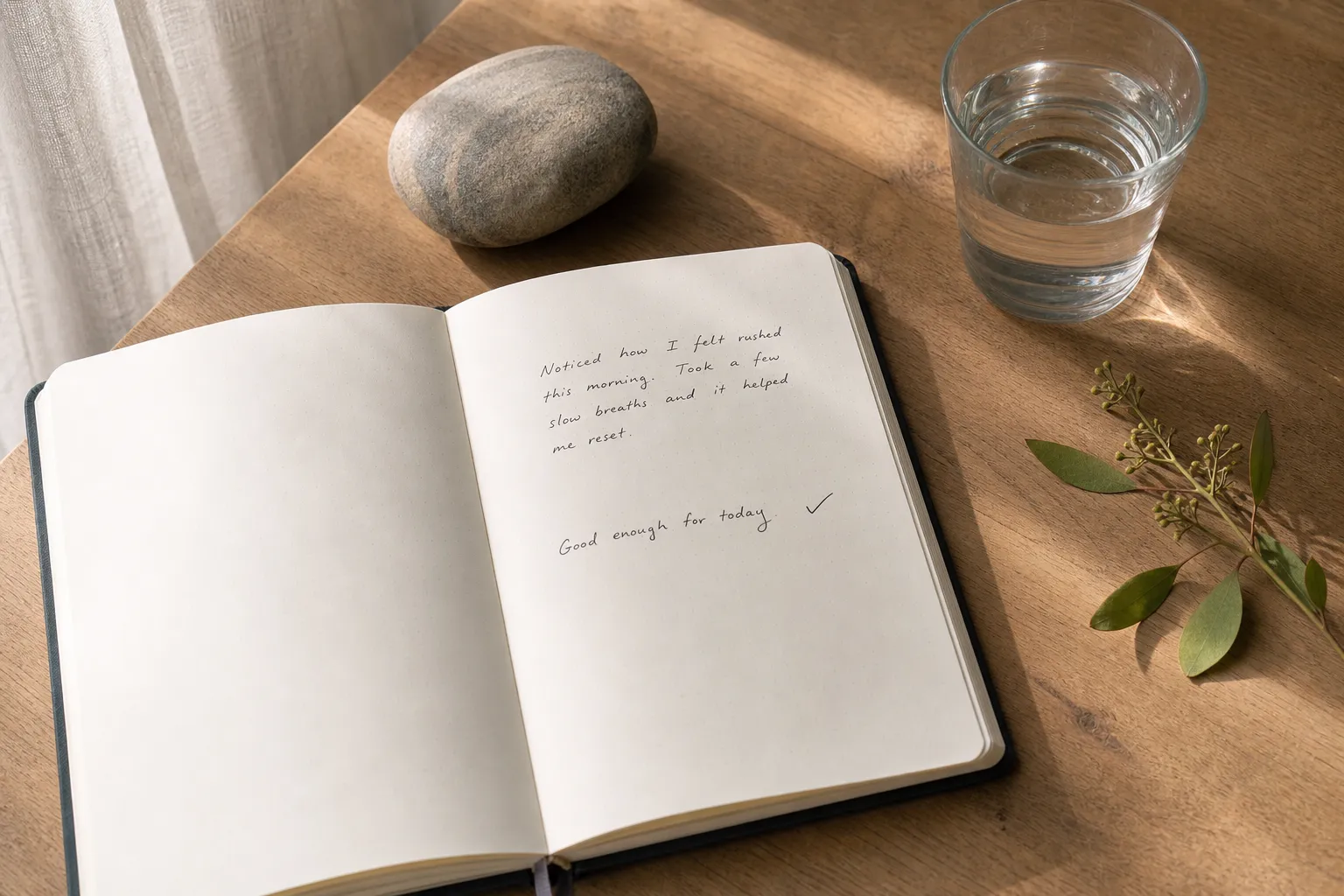
A Low-Risk Earth Practice for Ancestral Reflection
Choose one natural object: black tourmaline, a smooth stone, a bowl of soil, a shell, a seed, or a piece of wood. Place it somewhere stable. Sit with both feet on the floor. Notice the room, the surface under your hands, and the present date.
Write one sentence at the top of a page: “What pattern am I ready to meet without forcing an answer?” Then write for five to ten minutes. Stay with ordinary language. You do not need visions, revelations, or a complete family map. If the writing becomes overwhelming, stop. Look around the room, name a few visible objects, drink water, and return the stone to its place.
You might close with: “I honor what I know, I do not invent what I do not know, and I choose one grounded action for the present.” That action could be calling a safe relative, setting a boundary, cooking a family recipe with care, labeling old photographs, resting, making a therapy appointment, or deciding not to continue a conversation that feels unsafe.
This is reflective symbolic practice. Its value lies in pacing, attention, and meaning-making. It should be easy to adapt, pause, or abandon.
When the Answer Changes
The answer changes when distress is no longer mild, reflective, or manageable. If ancestral work brings up panic, dissociation, abuse memories, severe grief, fear of self-harm, family violence, or a sense that you cannot return to the present, the next step is not a stronger ritual. Seek qualified support, a trusted crisis resource, or a trauma-informed professional where available.
The answer also changes when the practice involves another person. Family members have the right not to discuss painful history. Living relatives should not be treated as characters in a ritual story, and no one should be pressured to confirm spiritual impressions. If there is active abuse, coercion, stalking, or violence in a family system, symbolic work is not a substitute for safety planning and appropriate support.
A third change happens when the language becomes culturally specific. If a practice uses shamanic, Indigenous, ceremonial, or lineage-bound terms, the responsible path is not to universalize it. Look for accountable teachers, community context, and tradition-specific guidance rather than blending vocabulary into a private method.
Common Confusion Around Ancestral Ritual Expectations
Expecting a decisive sign
One common confusion is expecting a ritual to produce a clear emotional release, a dream message, or a decisive sign. That expectation can make the practice feel like a test. A quieter standard is better: after the ritual, are you more oriented to the present? Do you have one sentence of clarity? Do you know whether to stop, rest, ask for help, or take one practical step?
Treating discomfort as proof
Another confusion is treating discomfort as proof that the practice is “working.” Discomfort can mean many things: grief, fatigue, suggestion, nervous-system activation, family loyalty, or simply too much intensity. You do not have to push through it to make the ritual valid.
Making earth practice elaborate
A final confusion is assuming that earth-based practice must be elaborate. A small stone by a notebook, a walk after a hard family conversation, or a bowl of water placed on a table for one evening can be enough. The point is not performance. It is a respectful container for what you can honestly hold.
The Honest Limit of This Page
This page has no usable public reference links behind it. That means it cannot make factual claims about the clinical mechanism of intergenerational trauma, the cultural origins of shamanic retrieval, the universal meaning of soul memory, or the spiritual effect of any crystal. It can only offer a careful editorial boundary: use ancestral trauma crystal healing as metaphor, ritual, reflection, and personal symbolism if it serves you gently; do not treat it as proof, diagnosis, treatment, cultural authority, or a guaranteed path to change.
In 2026, the most grounded way to work with earth medicine is not to make bigger promises. It is to make smaller, truer ones: I can remember without inventing. I can honor without appropriating. I can use a stone as a steady object without asking it to do clinical work. I can meet lineage questions with humility, and I can seek human support when the weight is too much to hold alone.