Whole-fragment reuse
Life After the Break: Rituals for Repurposing Shattered Protection Stones
A broken protection stone does not have to be treated as ruined, cursed, or useless. The safest way to approach repurposing broken crystals is to keep the fragments whole, contain sharp edges, clean gently only if needed, and give the stone a new symbolic role.
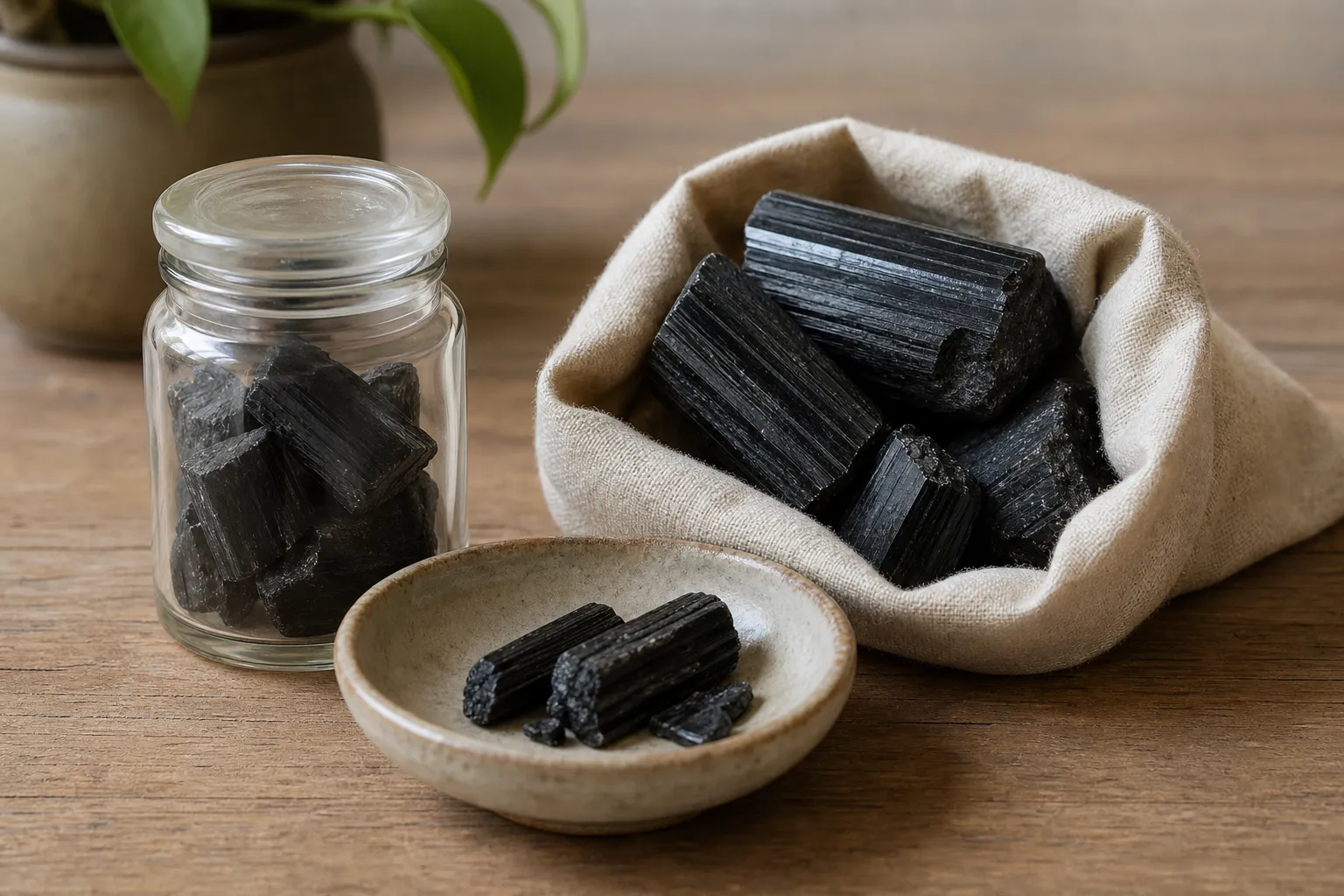
For a shattered black tourmaline, that might mean placing the pieces in a lidded jar, using larger fragments in a grid, wrapping them in cloth, setting them in a stable bowl, or retiring the stone with gratitude. The ritual meaning can be personal. The handling still needs to be practical.
Black tourmaline is often discussed mineralogically as schorl, but naming the mineral does not confirm protection claims. It simply helps keep the object grounded as a real material with edges, fractures, and dust concerns.
broader context
Broader schorl guide
This narrower page works best after the broader black tourmaline context page.
First, look at how the stone broke
Before choosing a ritual, check the condition of the fragments. A clean split into two pieces is very different from a crumble of splinters, grit, and powder.
Use a simple sorting step:
Large, stable pieces
Suitable for a bowl, shelf, dish, grid, or wrapped bundle.
Small sharp shards
Better kept in a sealed jar, lidded dish, or cloth pouch.
Loose grit or powder
Do not use in body contact, smoke work, burning, ingestion, or loose decoration.
Flaking pieces
Keep contained instead of handling repeatedly.
This is not about deciding whether the stone “failed.” It is about whether the pieces can be handled without cutting skin, snagging fabric, falling onto the floor, or being reached by children or pets.
With black tourmaline, ridges and striations can make a broken piece look especially dramatic. That does not mean the break carries a fixed message. It does mean the edges deserve attention.
Respectful ways to reuse the fragments whole
The best reuse options avoid sanding, drilling, grinding, crushing, or powdering the stone. Once you start modifying fragments that way, the question shifts from symbolic reuse into dust-producing stone work.
Here are low-intervention options that keep the broken stone intact.
Make a lidded remembrance jar
Place the fragments in a small glass jar, ceramic container, or lidded box. If the edges are sharp, cushion the bottom with cloth, paper, dried leaves, or another soft layer. You can add a label such as “retired,” “completed,” “boundary,” or the date it broke.
Some readers call this a broken crystal jar spell. If that language fits your practice, treat the jar as a symbolic container for memory, gratitude, or transition, not as a guaranteed mechanism. The practical rule stays simple: keep the pieces whole and contained.
This works especially well for tiny fragments that would otherwise be easy to lose.
Place larger pieces in a stable bowl
For larger fragments, a shallow bowl or dish can let the stone remain visible without being handled often. Choose a place where it will not be bumped, stepped on, or picked up casually. A shelf, desk corner, or quiet entryway surface is usually safer than a pocket, bedside table, or loose windowsill.
If the stone was once carried every day, moving it into a bowl can mark a shift from “active companion” to “resting object.” That symbolic retirement can feel complete without needing to claim a measurable change in the stone.
Wrap it in cloth
A cloth bundle is one of the gentlest choices for broken black tourmaline with sharp or splintery edges. Wrap the pieces in fabric, tie them with thread, and place the bundle in a drawer, keepsake box, or personal storage place.
The cloth gives the object a boundary and reduces direct contact with fracture points. If you want to include a note, keep it plain: what the stone meant to you, what you are releasing, or what you are preserving.
Use larger shards in a crystal grid
Using crystal shards for grids can work when the pieces are large enough to place safely and are not shedding grit. Treat them as placed objects, not material to crush, scatter, drill, or glue.
A broken stone may make a grid feel more personal because the pieces carry the history of the original object. That is a symbolic reading. The practical guidance is to keep the fragments visible, stable, and easy to remove when cleaning the surface.
Use a plant pot only for large, intact pieces
Some people place stones on the soil surface of a houseplant as a quiet form of reuse. If you do this, use only larger pieces that cannot be swallowed by pets or children and will not disappear into loose soil. Avoid sharp shards in pots you prune, water, or repot often.
This is not a suggestion to soak, dissolve, or make mineral-infused water. It is simply a decorative placement option for whole fragments.
What to do with broken black tourmaline
If you are asking what to do with broken black tourmaline, the answer is straightforward: contain it, keep it whole, and choose a new role that matches your relationship with the object.
A balanced approach looks like this:
- Acknowledge the attachment. If the stone mattered to you, the break may feel startling or sad.
- Check the fragments. Look for sharp points, loose dust, and pieces too small to handle safely.
- Clean gently only if needed. Use a soft cloth or mild cleaning approach rather than harsh treatment.
- Choose one next form. Jar, bowl, cloth bundle, grid piece, retirement box, or disposal.
- Let the meaning stay personal. A ritual can matter without being presented as a verified effect.
Gemological care guidance for tourmaline generally favors gentle handling. That matters more once a stone has broken, because fractured surfaces may chip, snag, or split further.
A simple closure ritual
If you want a ritual, keep it simple enough that you do not have to alter the stone.
You might try this:
- Lay down a cloth or paper towel so pieces cannot roll away.
- Place the broken fragments in front of you.
- Notice what the object represented: protection, steadiness, memory, a person, a place, or a season.
- Say or write one sentence of thanks.
- Choose its next form: jar, bowl, wrap, grid, box, or disposal.
- Put the pieces away carefully.
That is enough. Respectful crystal reuse does not require smoke, salt, water, flame, oil, moonlight, or elaborate tools. Some people include those elements in personal practice, but none of them changes the basic handling issue: sharp fragments remain sharp, and dust-making methods are best avoided.
If the break makes you uneasy, it may help to avoid fear-based interpretations. A crystal can break because it was dropped, compressed in a bag, struck, stressed along a natural weakness, or handled over time. You can still interpret the timing personally, but the break itself does not require panic.
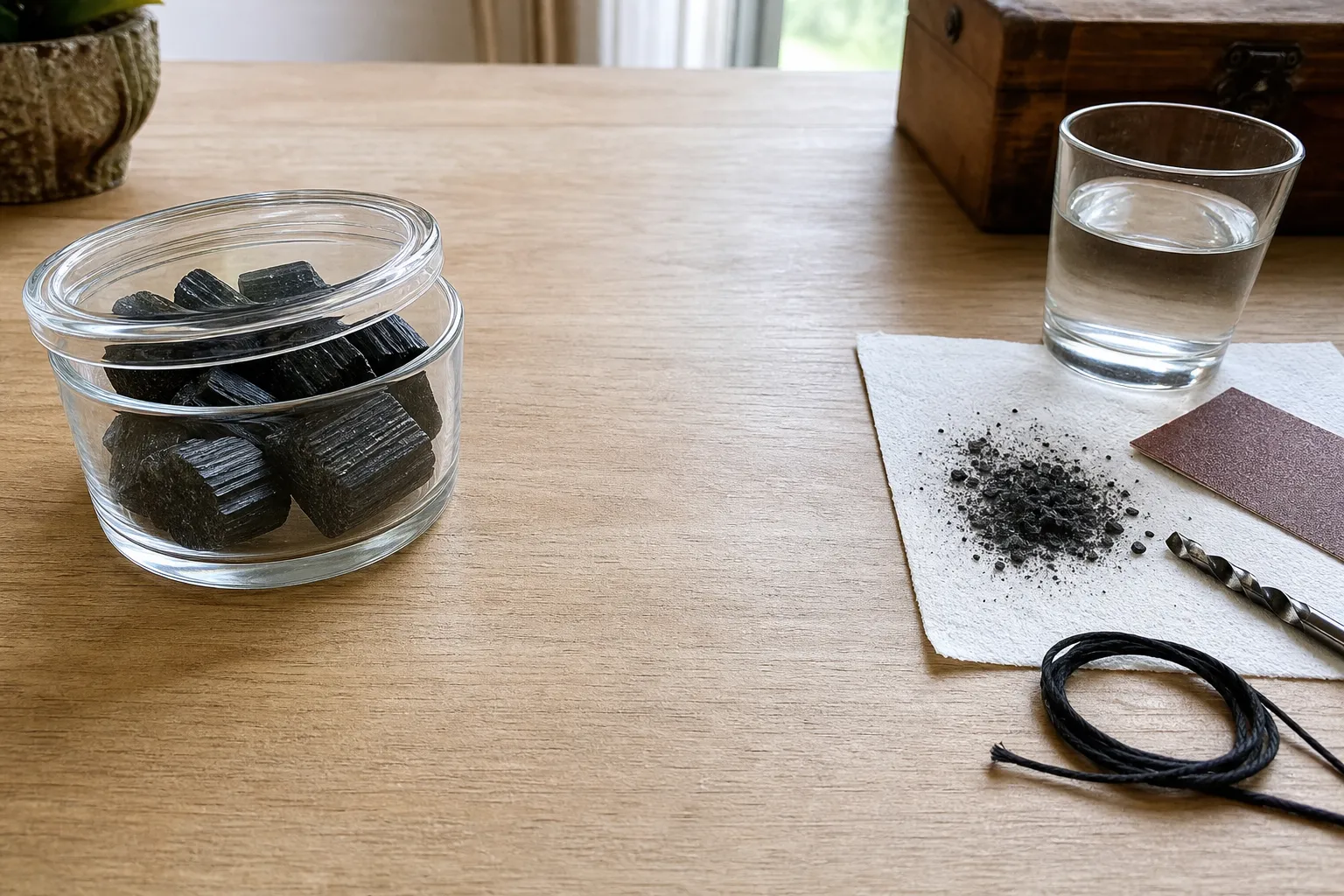
What not to do with shattered protection stones
The main boundary is this: do not turn the stone into dust. Avoid crushing, grinding, sanding, drilling, pulverizing, or scraping broken crystal pieces for jars, grids, resin crafts, body products, incense, or powders.
Occupational safety sources discuss respirable crystalline silica as a concern when certain mineral-containing materials are cut, ground, drilled, or otherwise processed into airborne dust. A home crystal fragment is not the same as an industrial worksite, but the practical takeaway is useful here: choose whole-fragment containment over dust-making craft methods.
Also avoid:
- placing loose shards in pockets or bedding
- leaving small fragments where pets or children can reach them
- using broken pieces in bathwater, drinking water, or body oils
- burning, heating, or smoking fragments
- putting grit into jars that may leak or be shaken loose
- gluing sharp shards onto objects that will be handled often
- assuming a ritual changes the physical hazard
If you want a drilled pendant, polished piece, or reshaped stone, that is no longer simple repurposing. It becomes lapidary work and is better handled by someone equipped for stone cutting and dust control.
When letting it go is the better choice
Repurposing is not mandatory. Sometimes the most respectful option is to retire or discard the damaged stone.
Consider letting it go if:
- the pieces are too small to contain confidently
- the stone keeps shedding grit
- it broke into sharp splinters
- it carries an association you no longer want to keep
- you feel obligated to preserve it out of fear rather than affection
A retirement box, wrapped placement in a private planter, or ordinary disposal can all be acceptable depending on your beliefs, local rules, and the condition of the stone. You do not have to follow claims that every broken protection stone must be buried, kept forever, returned to nature, or replaced immediately.
If you do bury a stone, use common sense. Avoid public land where adding or removing materials is not allowed, and do not bury sharp fragments where someone may dig later. A contained planter is often more controlled than an outdoor spot.
The quiet answer
A broken stone can move from daily use into memory, from pocket to bowl, from one object into gathered fragments. That change can be tender rather than alarming.
For broken black tourmaline, the grounded path is whole-fragment containment: keep the pieces intact, handle them gently, contain sharp edges, and choose a symbolic next role. Mineral sources can help name the material. Care guidance can support gentle handling. Dust-safety guidance helps set the line around what not to do.
The ritual meaning belongs to your practice, your grief, your gratitude, or your sense of closure. The break does not have to end the relationship with the stone. It can simply change the way you hold it.