Lapidary field note
Water vs. Oil: Choosing the Right Lubricant for Cutting Schorl
For most people comparing water versus oil as a cutting raw schorl lubricant, the answer is not that one fluid is always better. Use the lubricant your lapidary saw and blade are designed to run with first. Then weigh the practical differences: heat control, cleanup, residue, fluid handling, and how much uncertainty you can accept with the stone in front of you.
Raw schorl, the black variety of tourmaline, should not be treated as a material where any lubricant swap is harmless just because the cut looks simple. The fluid is part of the saw system, not just something added to the stone.
If your saw manual specifies water, use the water-based setup the maker describes. If it specifies oil, do not assume water is an easy substitute. If the instructions allow more than one fluid, water is usually the cleaner and simpler option to manage, while oil is usually messier and belongs only in equipment meant to handle it.
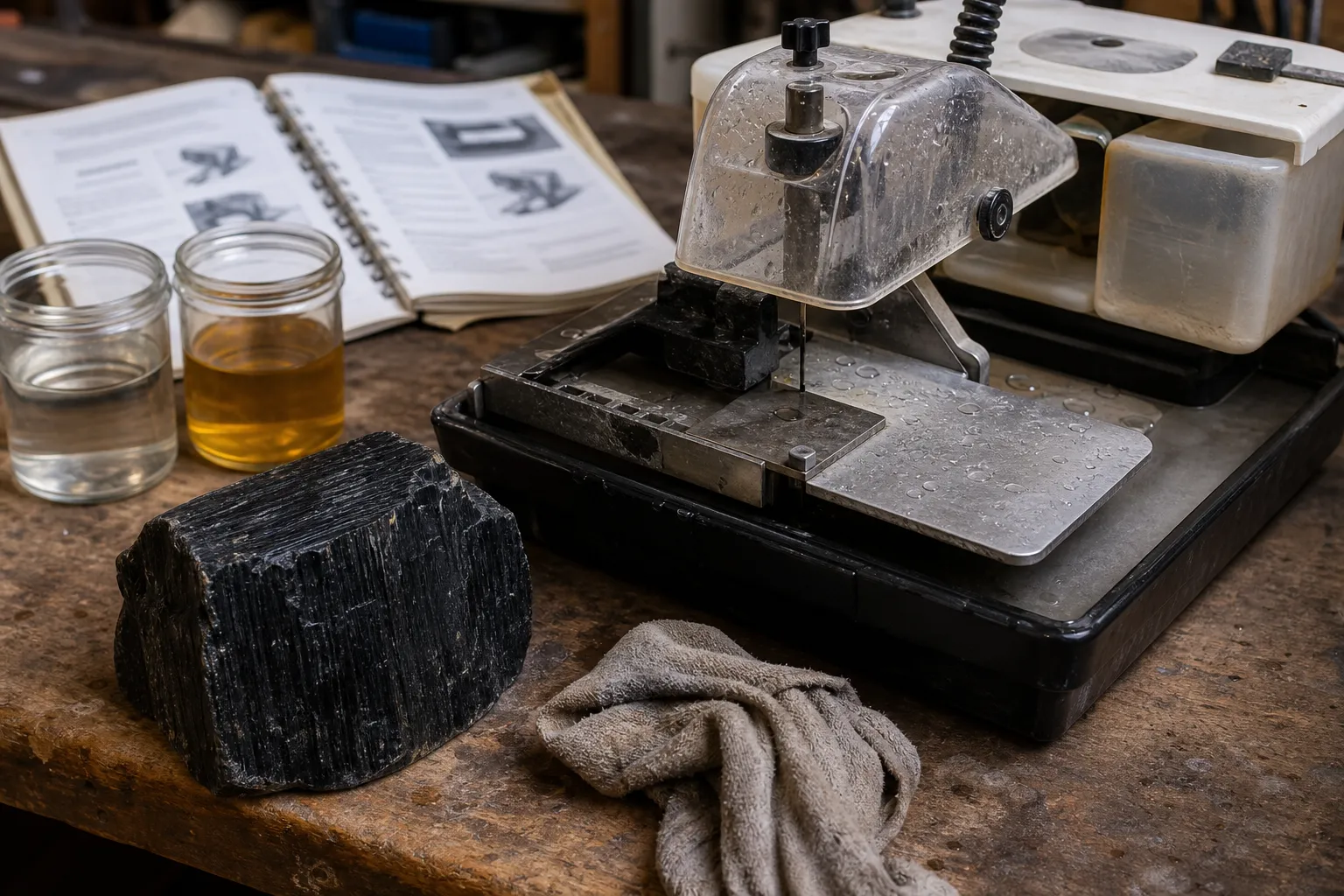
broader context
Black tourmaline context note
This narrower page works best after the broader black tourmaline context page.
Start with the saw, not the stone
A lapidary saw is more than a blade touching rock. The fluid has to work with the blade, reservoir, feed method, seals, bearings, motor area, and maintenance routine. That is why saw lubricant equipment compatibility matters more than a general water-versus-oil opinion.
For wet cutting tourmaline, the practical rule is narrow: choose by the equipment first, then ask whether the setup gives the schorl a steady, controlled cut. A convenient fluid that does not match the machine can create problems beyond the cut face, including residue, corrosion concerns, poor blade behavior, or difficult cleanup.
Manuals and blade instructions outrank shortcut advice.
This page does not have manufacturer manuals or technical documentation for a specific saw, so it should not pretend to verify those outcomes for any model. The manual, blade instructions, or direct manufacturer guidance should outrank a seller claim, forum habit, or quick comparison chart.
Water often appeals to newer cutters because it feels cleaner and matches the everyday idea of wet cutting. Oil often appears in discussions around certain slab saws and heavier cutting setups. Neither choice should be framed as automatically protecting black tourmaline, preventing every heat problem, or improving every cut.
For pro-sumer cutting setups, the distinction matters even more. These machines may look approachable, but they still depend on fluid level, blade exposure, feed pressure, and maintenance. A compact saw designed around water should not be treated like an oil saw because another cutter uses oil elsewhere. An oil-compatible saw should not be casually converted because cleanup sounds easier.
When water makes sense
Water makes sense when the saw is designed for water-based lapidary saw lubrication and the blade instructions support that use. It is usually easier to understand, easier to rinse from surfaces, and less likely to leave an oily feel on the stone or work area.
That does not make water a guarantee. A water tray, drip, or bath only helps if the fluid reaches the blade-stone contact point consistently. If the blade is wrong, the feed is forced, the stone is poorly supported, or the machine is being used outside its instructions, water alone does not solve the problem.
Water also fits the buyer side of the question. If you are not cutting the stone yourself and only want to understand how raw schorl might be trimmed or shaped, water-based cutting can sound less intimidating than oil. It may also mean less residue to remove from a specimen or preform. But the visible presence of a water tray does not prove that plain water is the correct lubricant for every saw or blade.
For cutting schorl cleanup, water has a clear advantage: less greasy film on hands, stone, machine surfaces, and the immediate workspace. Still, water mixed with mineral residue creates slurry. That residue needs careful handling around drains, electrical parts, shared surfaces, and any workspace where grit can spread.
When oil belongs in the decision
Oil is not automatically more professional, and it is not automatically wrong. It belongs in the decision when the saw and blade are designed for oil or for a specific oil-type cutting fluid.
The biggest practical difference is handling. Oil usually means more residue, more involved cleanup, more attention to storage and disposal, and more concern about where the fluid travels inside the machine. It can cling to the stone, saw parts, clothing, and nearby surfaces. For anyone comparing lapidary lubricant mess, oil is usually the option that asks for more planning before and after the cut.
If a saw manual calls for oil, replacing it with water because water feels simpler is not a careful shortcut. If the manual warns against certain fluids, that warning matters more than a general statement about what “works” on black tourmaline. A lubricant can affect the blade, feed, reservoir, seals, and cleaning routine, not just the stone face.
Oil can also matter after the cut. A freshly cut schorl piece may need more cleaning before it is ready for handling, display, or further lapidary work. If a cut surface feels slick or carries residue, treat that as a cleaning question. It does not prove authenticity, quality, or poor workmanship by itself.
Heat control without overclaiming it
Many readers ask this question because they are worried about preventing heat damage in crystals. That concern is reasonable: cutting creates friction, and lubricant is one part of managing the cut. But this page does not have mineral references, saw manuals, or confirmed firsthand tests that would allow it to state exactly how schorl behaves under a specific blade, speed, pressure, or fluid.
The more useful framing is this: lubricant is one part of the cutting condition. Blade speed, feed pressure, blade condition, stone support, cut depth, and steady fluid delivery all matter. A correct lubricant used poorly may still leave you with a bad cut. A controlled feed and appropriate blade may matter as much as the water-versus-oil label.
Two assumptions to avoid
- Water does not automatically prevent every heat-related issue.
- Oil does not automatically make the cut smoother or more controlled.
The better working rule is to avoid dry cutting when the tool is meant for wet use, avoid forcing the stone, keep the cut steady, and follow the saw and blade instructions.
For raw schorl, the shape of the piece matters too. Fractures, inclusions, uneven surfaces, terminations, and collector value can all change the decision. The lubricant cannot erase those physical realities. If the specimen is especially valuable, visibly cracked, unusually shaped, or important as a collector piece, the better choice may be to pause rather than cut.
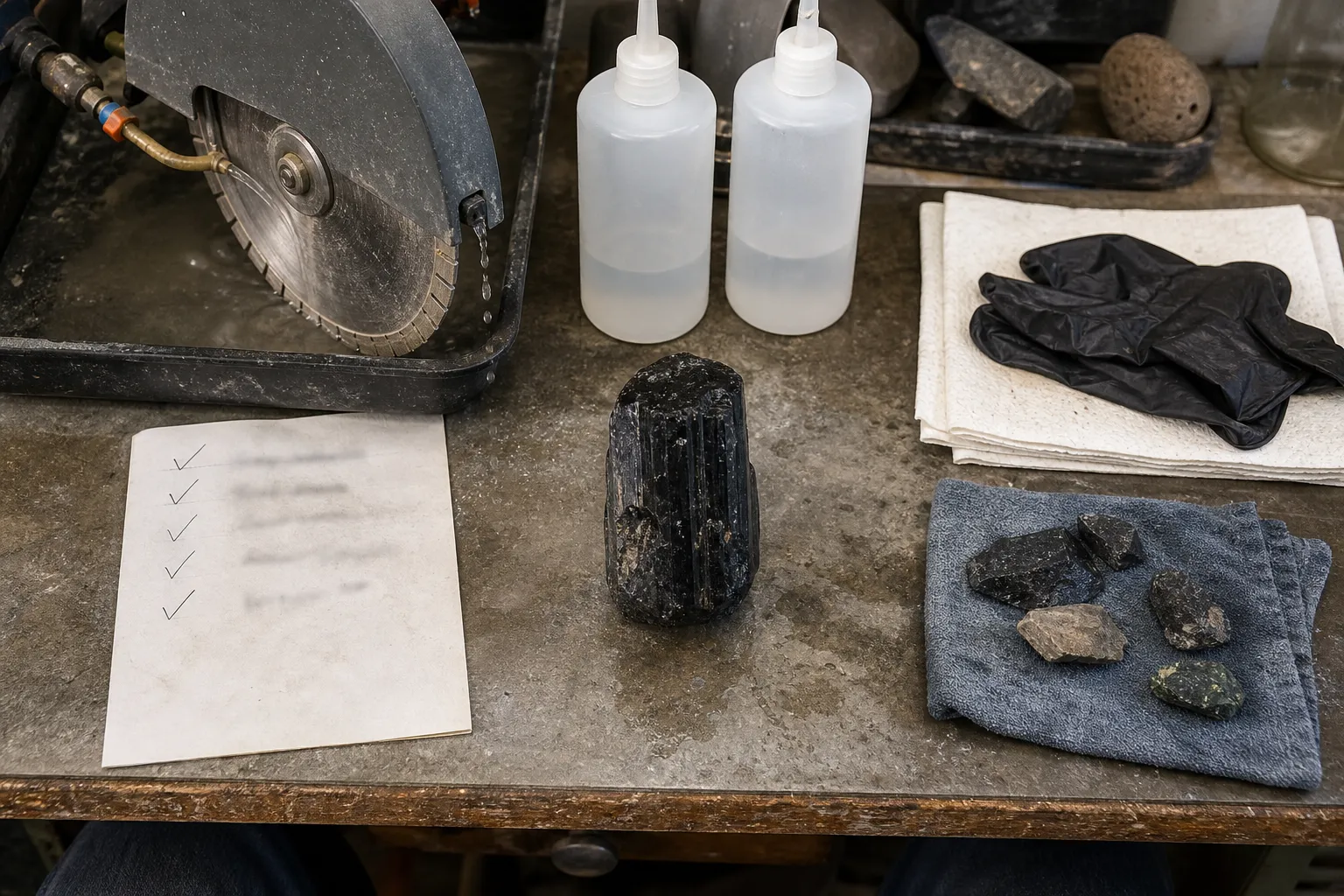
Cleanup is part of the choice
For many readers, the real decision is not theoretical cutting performance. It is what the session leaves behind: water, slurry, oily residue, odor, stained surfaces, or a saw that takes extra work to clean.
Water-based cutting usually sounds simpler because cleanup feels familiar. But slurry is still slurry. It should not be treated as harmless household water, and the right cleanup method depends on the machine, workspace, and local disposal expectations.
Oil-based cutting usually asks for more deliberate preparation. The stone may need degreasing, the saw may need careful wiping, and the work area may need protection before the blade ever starts. If you plan to display, polish, or handle the schorl soon after cutting, the post-cut surface condition matters.
So before choosing oil because someone says it cuts better, ask where the saw will sit, how the fluid is contained, and how the stone and workspace will be cleaned. Before choosing water because it seems cleaner, ask whether the saw actually supports it. Cleanup convenience matters, but it should not outrank equipment compatibility.
Common misunderstandings
“Wet cutting” does not identify the correct fluid
It may describe a water drip on a trim saw, a bath-style setup, a recirculating system, or an oil-fed slab saw. The phrase tells you the cut is not meant to be dry; it does not tell you what the machine should run.
Lubricant choice is not proof of skill
A cutter using oil is not automatically more experienced, and a cutter using water is not automatically taking shortcuts. The better sign is whether the lubricant matches the saw, the cut is controlled, and the cleanup plan is realistic.
A lubricant cannot rescue a poor cutting decision
If the schorl is unstable, poorly supported, too valuable to risk, or being pushed through the blade, water and oil may both be the wrong answer because the larger setup is wrong.
Residue does not prove much by itself
For buyers, a cut face or slight residue does not prove much by itself. Black tourmaline identification depends on broader material assessment, not on whether a seller says the piece was cut with water, oil, or another fluid.
Quick check before cutting
Before treating water or oil as the answer, check these points:
- Read the saw manual for lubricant, coolant, blade, reservoir, and maintenance instructions.
- Confirm the blade is meant for the saw and the kind of stone work being attempted.
- Make sure the fluid reaches the blade-stone contact point consistently.
- Plan cleanup before filling the reservoir or starting the cut.
- Do not force fractured, valuable, or oddly shaped schorl through a setup you do not fully understand.
- Treat broad online claims about flawless cuts or universal lubricant superiority as unverified.
For a small water-compatible trim saw, water may be the practical route if the manufacturer supports it. For a saw designed around oil, oil may be the correct route even if it is messier. For unclear instructions, the next step is not guessing. Find the manual, contact the manufacturer, or ask a credible lapidary instructor who can look at the actual setup.
Bottom line
The reliable answer is narrow: the right lubricant for cutting raw schorl starts with saw and blade compatibility. After that, compare water and oil by heat-control needs, mess, cleanup, and the condition or value of the stone.
Water may be cleaner and more convenient when the equipment is designed for it. Oil may be appropriate when the equipment calls for it, despite the added mess. Neither should be treated as a universal answer for every black tourmaline cut.
This page is intentionally cautious because no usable external references were available for publication support. It should not be read as a technical standard, workshop safety protocol, or tested comparison of water and oil on schorl. Before making this page more technical, it would need support from lapidary saw manuals, credible lapidary instruction, mineral references for schorl or tourmaline, and relevant workshop safety guidance.
Until then, do not improvise the lubricant system around the stone. Match the fluid to the saw, keep the cut controlled, and let uncertainty slow the decision rather than push the blade faster.