Material Clash Field Note
Solar Empress Gold and Raw Stones: Mastering the 2026 Material Clash
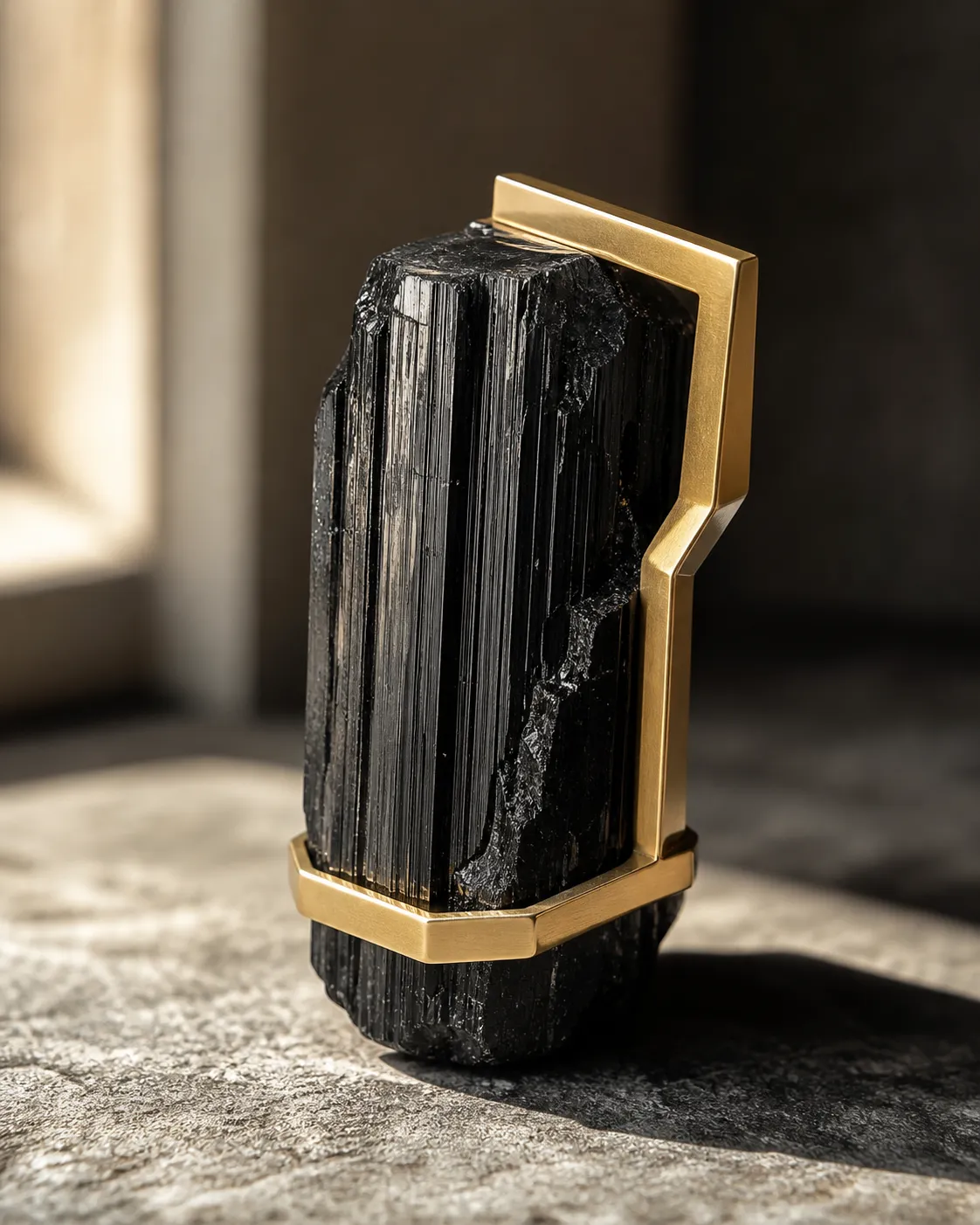
18K gold and raw tourmaline work as a material clash when the gold behaves like a disciplined frame, not a decorative apology for the stone’s roughness. The point is not to make raw tourmaline look finished. It is to let polished warmth meet geological irregularity in a way that feels intentional, edited, and slightly unresolved.
In this reading, “Solar Empress” is an editorial mood: luminous gold, controlled scale, and a raw stone presence that refuses perfect symmetry. It belongs in the language of conceptual jewelry, not in claims about investment value, certified rarity, skin safety, gem performance, or confirmed 2026 market direction.
broader context
Black tourmaline context note
This narrower page works best after the broader black tourmaline context page.
The Clash Works When the Gold Does Less
The strongest version of this pairing is not a heavy gold setting swallowing a rough stone. It is a restrained gold structure that gives raw tourmaline enough space to remain visually uneven.
Raw tourmaline already carries complexity: irregular surface, uneven silhouette, shadowed edges, and the sense of a mineral form that has not been forced into polite uniformity. If the gold becomes too ornate, the contrast turns noisy. If the gold becomes too faint, the piece can look unfinished rather than deliberate.
A useful balance
- Gold supplies light, boundary, and formal control.
- Raw tourmaline supplies texture, interruption, and geological irregularity.
- The tension works only when both materials remain legible.
- The luxury signal comes from editing, proportion, and judgment, not excess.
That is what makes “material clash” more precise than simple contrast. It means a visible argument between polish and rawness, held together by design control.
What Makes It Feel Intentional
Gold Needs a Job
It might trace one edge, hold the stone from the side, create a halo of negative space, or form a quiet architectural base. Gold scattered around a rough stone without purpose weakens the idea.
Rawness Stays Visible
If every uneven edge is disguised, the piece loses its central tension. The surface tension here comes from exposure: a rough plane beside a polished line, a dark mineral mass beside reflective metal, a natural edge set against a deliberate boundary.
Scale Changes the Reading
A small raw stone inside a larger gold composition may feel like an accent. A larger raw piece held by lean gold can feel more sculptural. Neither is automatically stronger; the question is whether the viewer can read the relationship quickly: gold as solar frame, raw tourmaline as grounded interruption.
Asymmetry can help, but only when it looks chosen. A clean gold line, repeated spacing, a deliberate gap, or a strong silhouette can make irregularity feel composed rather than improvised.
Reading “Solar Empress” Carefully
“Solar Empress” works best as a design phrase, not as a verified trend label. It suggests radiant gold, ceremonial warmth, and a strong central presence. With raw tourmaline, that mood becomes less polished and more grounded.
Gold brings the solar part: glow, reflection, controlled opulence. Raw tourmaline interrupts that shine with mineral density. That interruption keeps the piece from becoming purely regal or decorative. It gives the jewelry a more contemporary tension: not crown-like perfection, but authority with friction.
The “Empress” side also needs restraint. If the gold becomes too symbolic, too heavy, or too literal, the stone can start to feel like a prop. A stronger interpretation keeps the imperial note abstract: confidence, warmth, structure, and presence. The raw stone keeps that presence from turning theatrical.
Without stronger source support, this page should not claim that affluent buyers are moving toward this pairing, that raw tourmaline is a confirmed 2026 luxury trend, or that the combination has future resale advantage. The safer and more useful answer is narrower: for a design-conscious reader, 18K gold and raw tourmaline can feel current because the pairing values contrast, edited imperfection, and material literacy.
Where the Pairing Can Fail
Raw plus gold does not automatically equal avant-garde luxury. A conceptual jewelry material clash needs discipline.
It can fail when the stone is treated as novelty rather than structure. If the design depends only on the fact that the stone is unpolished, the piece may feel thin after the first glance. The better question is: what does the roughness do to the shape, the light, and the mood?
It can also fail when gold is used to “upgrade” the stone. That reading weakens both materials. Gold is not there to rescue raw tourmaline from roughness. The two surfaces should expose each other: gold looks more controlled beside irregular stone, and raw tourmaline looks more deliberate beside polished metal.
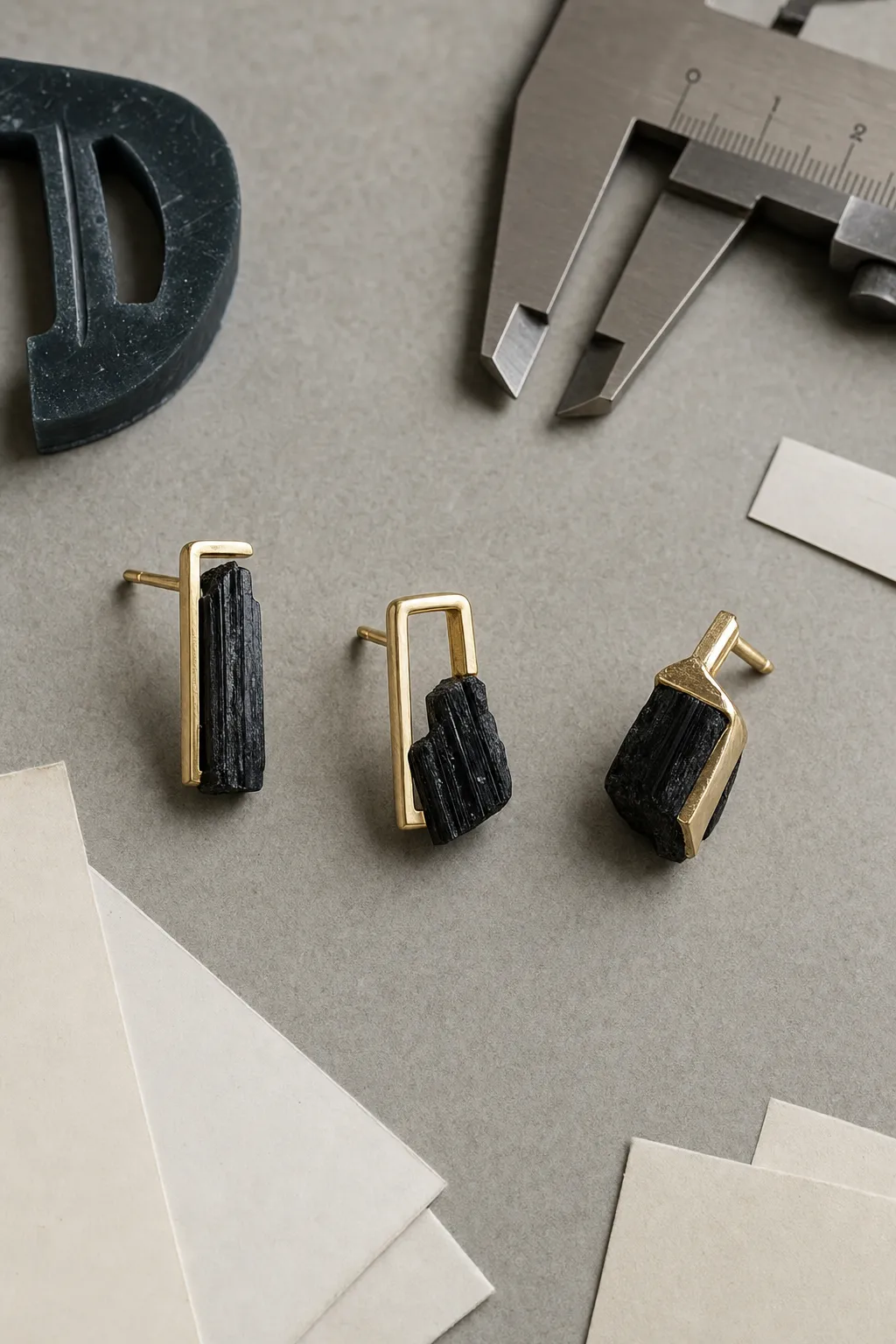
Another weak version is contrast made too literal: half smooth, half rough, with no deeper relationship. Stronger pieces give the eye a path. A gold edge may echo one stone face. Negative space may repeat a natural gap. A polished plane may make one rough surface feel more dramatic. These are design readings, not fabrication rules, but they help separate intentional clash from simple juxtaposition.
A Quick Editorial Check
Before calling a piece successful, ask:
- Can the viewer identify both materials without one erasing the other?
- Does the gold have a clear structural or compositional role?
- Does the raw tourmaline remain meaningfully raw?
- Is the contrast controlled enough to feel designed?
- Would the piece still make sense without “2026,” “luxury,” or “Solar Empress” language?
That last question matters most. If the design only sounds convincing when wrapped in trend language, the material relationship may be weak. If the gold and stone already create a clear visual exchange, the editorial language simply names what is present.
The best pieces do not treat polish and rawness as a hierarchy. The polished surface is not more complete. The raw surface is not more authentic by default. The design succeeds when both qualities are necessary to the composition.
Scope Limit
No authoritative public references were available in the supplied source pool for this page. That means the article should stay in the lane of editorial design interpretation.
It can describe how the pairing reads: warm against dark, polished against irregular, controlled against geological, ceremonial against grounded. It can explain why those contrasts may appeal to a conceptual jewelry reader.
It should not verify gemstone durability, treatment status, fabrication methods, allergy considerations, ethical sourcing, appraisal value, resale behavior, or luxury-market demand. Those questions require documentation, maker details, stone information, and qualified review outside this article.
The Short Answer
18K gold and raw tourmaline create a convincing material clash when the gold acts as precise, luminous restraint and the stone remains visibly irregular. The design should not smooth away the tension. It should hold it.
The best reading is not “raw stone made luxurious by gold.” It is “gold made sharper by rawness, and raw tourmaline made more deliberate by gold.” That is the useful center of the Solar Empress idea: radiance under control, interrupted by the mineral fact of the stone.