Safe pacing note
Shadow Work and Stone Triggers: Processing Emotional Releases Safely
If a crystal session or shadow-work exercise suddenly brings up grief, fear, anger, shame, or old memories, the safest first move is to slow down. Do not assume the stone caused the experience, and do not treat intensity as a sign that you must go deeper.
People who use crystals and shadow work may call this an “emotional release from crystals” or a “stone trigger.” That language can be personally meaningful, but it is not proof of a mechanism. Pause, ground through ordinary sensory cues, reduce the ritual intensity, and seek qualified support if the emotion feels unmanageable.
broader context
Broader schorl guide
This narrower page works best after the broader black tourmaline context page.
When a Stone Experience Feels Too Intense
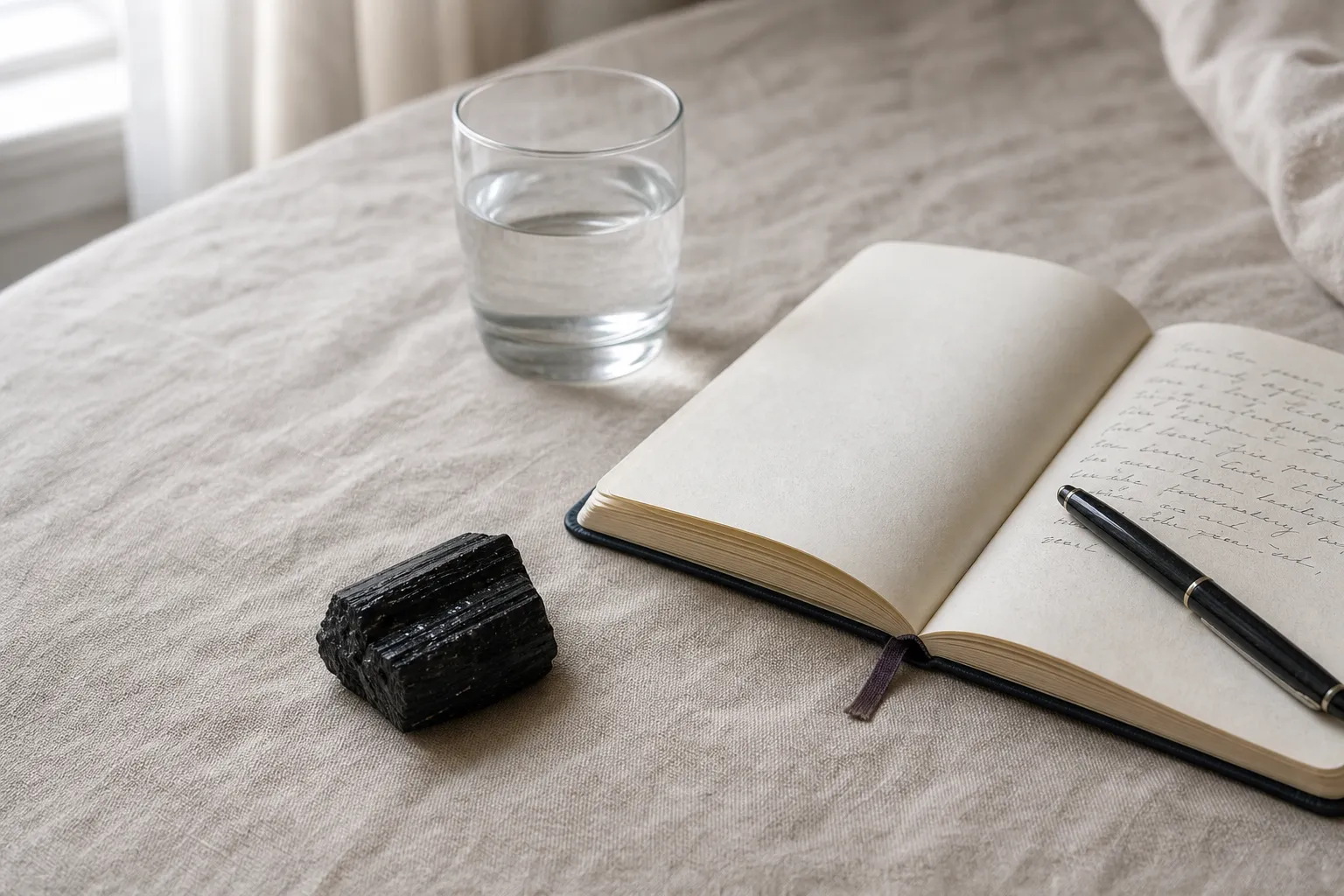
An intense stone experience can happen while holding black tourmaline during journaling, meditating with a crystal on the body, sleeping near a stone, arranging an altar before difficult reflection, or reading spiritual language that frames a stone as “bringing up” buried material.
The experience may feel meaningful. It may also be shaped by expectation, memory, setting, fatigue, stress, or the seriousness of the topic you are exploring.
That distinction matters. A crystal can be part of a personal ritual, a visual anchor, or a symbolic object. It does not need to become the explanation for everything that follows. A more careful reading is: something in the practice, timing, environment, memory, or personal association may have increased emotional intensity.
For black tourmaline in particular, readers often bring strong associations to the experience: protection, grounding, boundaries, density, or the feeling of being pulled inward. Those are common spiritual meanings in crystal communities, but they should not be treated as confirmed effects of the mineral. If the stone feels too charged for you, put it away for now, choose a calmer setting, and notice what changes when the practice becomes less intense.
What to Do in the Moment
When the feeling rises quickly, interpretation can wait. The first task is to lower the pressure around the experience.
Put the stone down. Move it away from your body if it feels too central. Open your eyes if they are closed. Notice the room you are in. Name ordinary details: the floor, the wall color, the temperature, the closest sound. Take a sip of water. Change posture. If you were lying down, sit up. If you were sitting still, stand and feel your feet.
This is not a ritual failure. It is a boundary.
If you are journaling, stop trying to finish the prompt. Write one plain sentence instead: “This feels intense, and I am pausing.” If language makes the emotion bigger, close the notebook. If music, candlelight, darkness, incense, breathwork, or a long meditation is amplifying the mood, remove the strongest element first.
Grounding during shadow work often means making the practice more ordinary, not more dramatic.
A simple pause sequence may look like this:
- Put the crystal down and step away from the setup.
- Look around and name five neutral objects.
- Feel both feet or both hands against a steady surface.
- Shorten the session or end it completely.
- Contact a trusted person if being alone makes the feeling grow.
The point is not to suppress emotion. It is to keep the experience within a range where you can stay oriented, make choices, and return to daily life. Processing dark emotions does not require staying in the deepest possible intensity.
What Changes the Right Response
The same feeling can call for different responses depending on context. A few tears during reflective journaling is different from panic, dissociation, or feeling unable to function. A heavy mood after exploring a painful memory is different from losing track of where you are. A symbolic insight is different from believing a stone has uncovered something you must confront immediately.
Safe shadow work limits are not only about the object you use. They are about pacing, consent, support, and your ability to stop. If you feel compelled to keep going because a stone “wants” you to face something, step back. A meaningful practice should still leave room for refusal.
Your history also matters. If certain topics, body sensations, smells, images, dates, or memories already carry emotional weight, a crystal practice may become the setting where those feelings appear. That does not prove the crystal created them. It may mean the setting gave you permission to notice something, or it may mean the exercise was too intense for the day you were having.
The environment matters too. Long sessions at night, isolation, fasting, lack of sleep, intense music, repeated prompts about wounds or fear, and strong expectations can all make reflection feel more charged. If you want to continue using crystals in a symbolic way, adjust the conditions first: use daylight, sit upright, keep the stone nearby rather than on the body, set a time limit, choose a neutral prompt, and plan what you will do afterward.
Personal meaning
A stone can serve as a symbol, focus, ritual object, or reminder inside a personal practice.
Evidence boundary
The feeling of intensity does not prove the crystal caused, uncovered, or resolved psychological material.
Practice pacing
Shorter sessions, daylight, neutral prompts, and clear permission to stop can make reflection safer.
Support threshold
Panic, dissociation, self-harm thoughts, traumatic overwhelm, or daily-life disruption call for qualified support.
Common Confusion Around Crystal Shadow Work
One common confusion is treating emotional intensity as proof that a stone is “working.” Intensity only proves that the experience felt intense. It does not tell you why it happened, whether it helped you, or whether you should repeat it.
Another confusion is assuming discomfort always means growth. Some reflective practices are uncomfortable because they touch honest material. Others are uncomfortable because the pace, setting, or framing is too much. The difference is not always obvious in the moment, which is why stopping is allowed.
A third confusion is mixing spiritual interpretation with mental-health certainty. It is fine to say, “Black tourmaline helps me think about boundaries,” or “This stone reminds me to stay grounded.” It is much riskier to say the stone is identifying hidden trauma, forcing a release, or resolving psychological pain. The first kind of language keeps the meaning personal and symbolic. The second makes a claim this page cannot support.
There is also a subtle fear loop in some crystal content: if the stone feels heavy, it must be exposing darkness; if you feel worse, the work must be deeper; if you stop, you are avoiding the lesson. That loop can make readers ignore their own stop signs.
A steadier frame is simpler: if the practice increases distress beyond your ability to stay present, reduce it. Meaning does not require escalation.
Reflection Prompts That Keep Choice Intact
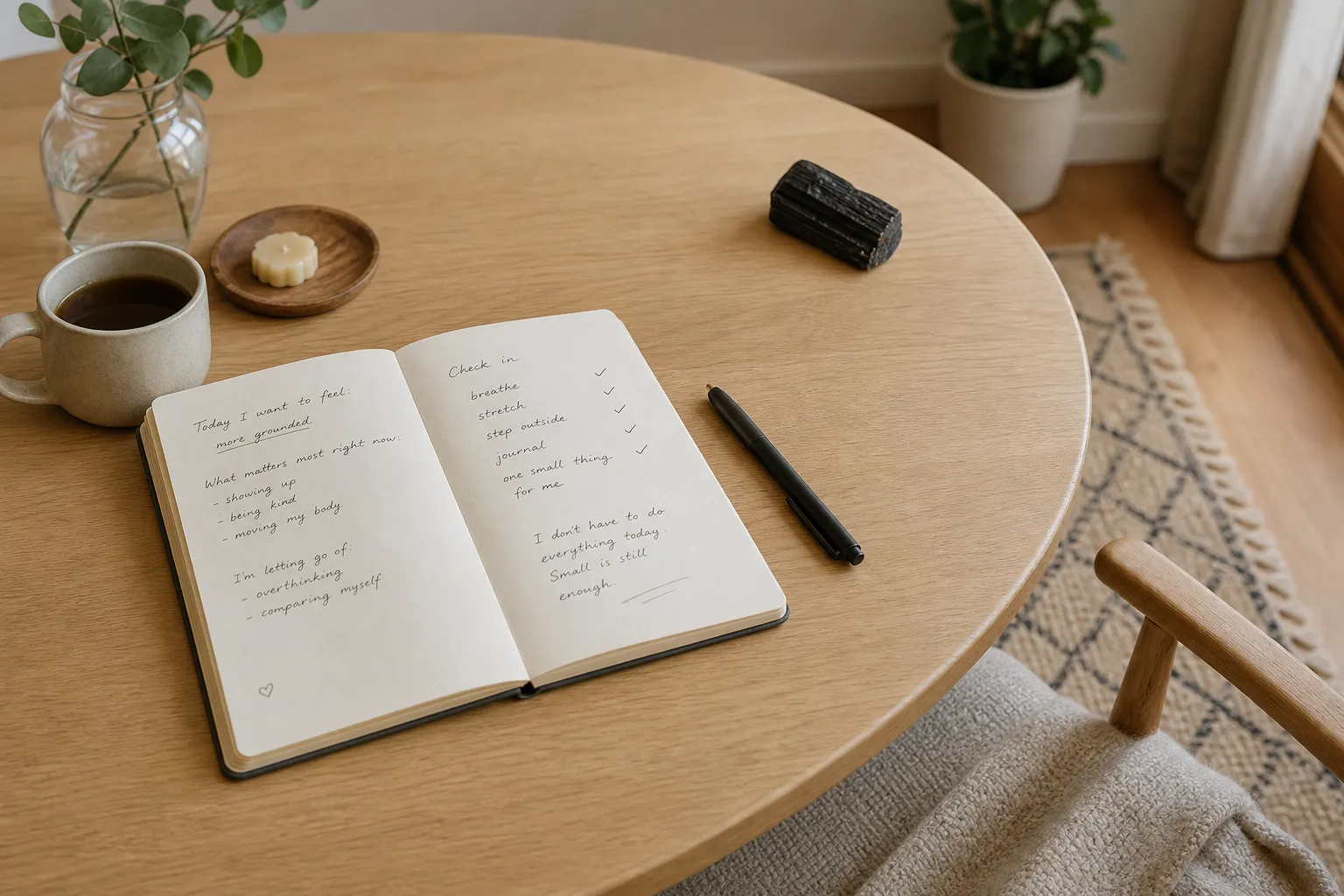
If you feel settled enough to reflect later, use prompts that help you observe rather than intensify. The best questions are plain, bounded, and reversible.
Try:
- “What was happening before the emotion rose?”
- “What part of the setup may have made the session stronger?”
- “Did the stone feel symbolic, sensory, decorative, or emotionally loaded?”
- “What would make this practice 50% gentler next time?”
- “What support would I want nearby if I revisit this topic?”
Avoid prompts that pressure you to uncover a hidden truth, force a breakthrough, or assign a single cause. Reader-centered reflection prompts should help you track the experience without turning it into a command. If a question makes you feel trapped, it is not the right question for that moment.
You can also separate the stone from the shadow-work content. For one session, journal without the crystal. For another, keep the crystal in the room but avoid deep prompts. For another, use the stone only as a visual reminder to end on time. These small changes do not prove cause and effect, but they can help you notice which parts of the practice feel supportive and which parts increase pressure.
If black tourmaline feels too intense, you do not need to argue with the feeling. Store it away, move it from the bedside, or use it only as a decorative piece for a while. In a grounded spiritual practice, distance can be a valid form of respect.
Stop Signs for Overwhelm
Some responses call for more than journaling or a gentler ritual. If a session is followed by panic, dissociation, thoughts of self-harm, resurfacing traumatic memories that feel unmanageable, or difficulty functioning, contact a qualified mental health professional or emergency support. If you are in immediate danger or may harm yourself, contact local emergency services or a crisis line in your area.
This boundary does not invalidate your spiritual language. It keeps crystal shadow work boundaries clear. Stones, rituals, and personal symbolism should not be asked to carry situations that require human support and trained care.
It is also worth stopping the practice if you notice repeated destabilization: you feel worse each time, you dread the stone but feel unable to put it away, you lose sleep after sessions, or you begin organizing major life decisions around what you believe the crystal is revealing. These are signs to widen the circle beyond the ritual itself. Talk with someone grounded, reduce the frequency, and avoid solitary deep work until you feel steadier.
A Calm Bottom Line
You can honor an emotionally intense crystal experience without turning it into a certainty claim. The safest framing is: the session mattered to you, the stone may have served as a symbol or focus, and the emotion deserves careful pacing. You do not need to conclude that the crystal caused a release, exposed trauma, or demanded further work.
If you continue, keep the practice smaller: shorter sessions, lighter prompts, more daylight, less isolation, and clear permission to stop. If the experience crosses into panic, dissociation, self-harm thoughts, traumatic overwhelm, or daily-life disruption, move from spiritual reflection to qualified support.
Crystals and shadow work can be part of personal meaning-making. They should not replace safety, consent, or ordinary grounding. The most grounded response to a stone-trigger experience is not to push harder; it is to stay oriented, reduce intensity, and let interpretation come only after you feel steady again.