Indirect solar elixir method
Solar Structuring: The Right Way to Use Sunlight for Indirect Crystal Elixirs
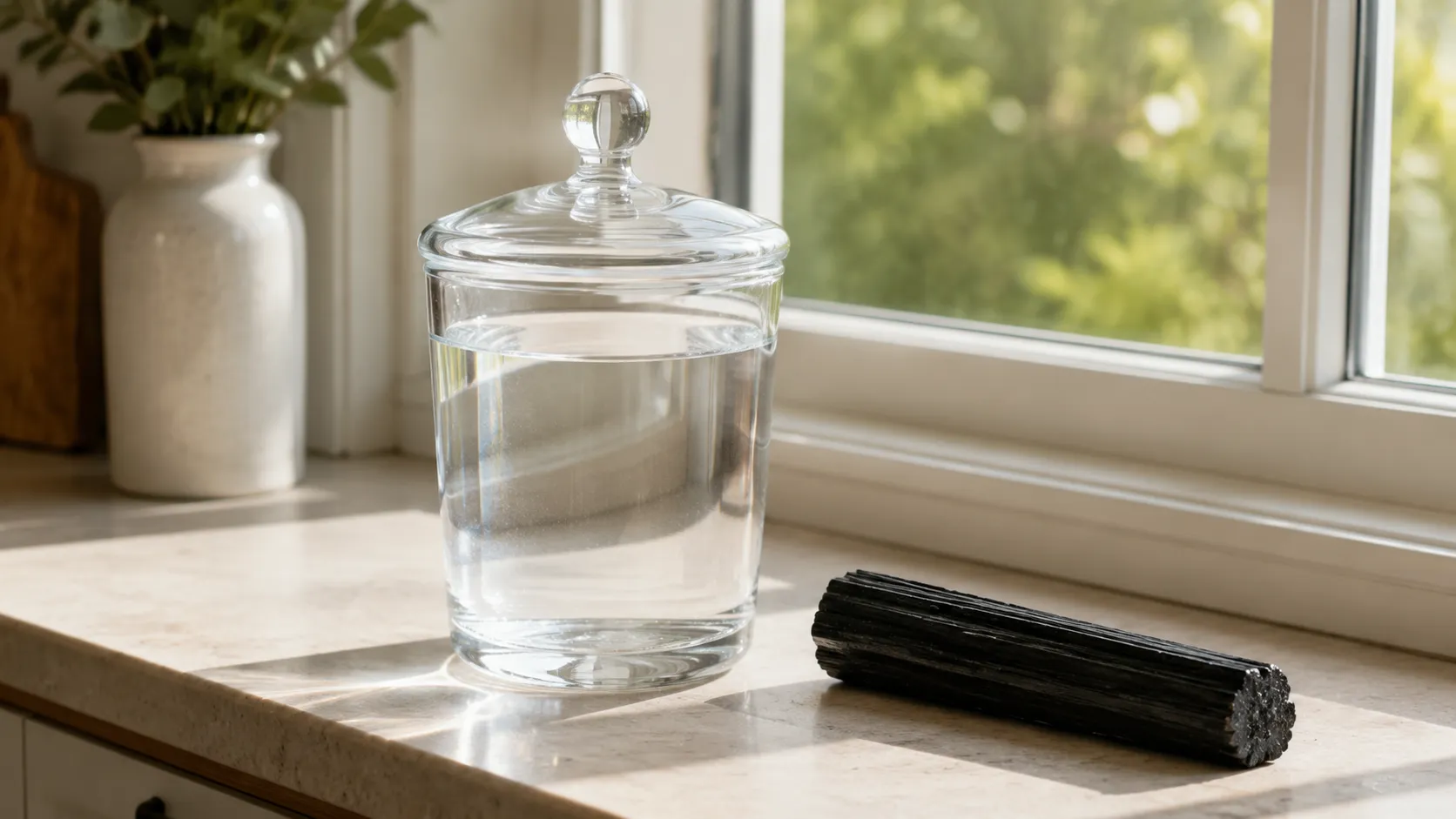
A black tourmaline wand in sunlight can belong beside the glass, not inside it. For solar water structuring techniques, the cleanest method is indirect: put potable water in a clean food-contact container, keep every crystal completely outside the drink, use a short daylight window, then drink the water soon or refrigerate it.
The sunlight can carry symbolic meaning in the ritual. The handling rules are more ordinary: clean water, clean containers, no crystal contact, heat awareness, and no long storage in direct sun.
broader context
Start with the main black tourmaline page
This narrower page works best after the broader black tourmaline context page.
The indirect solar method, stated plainly
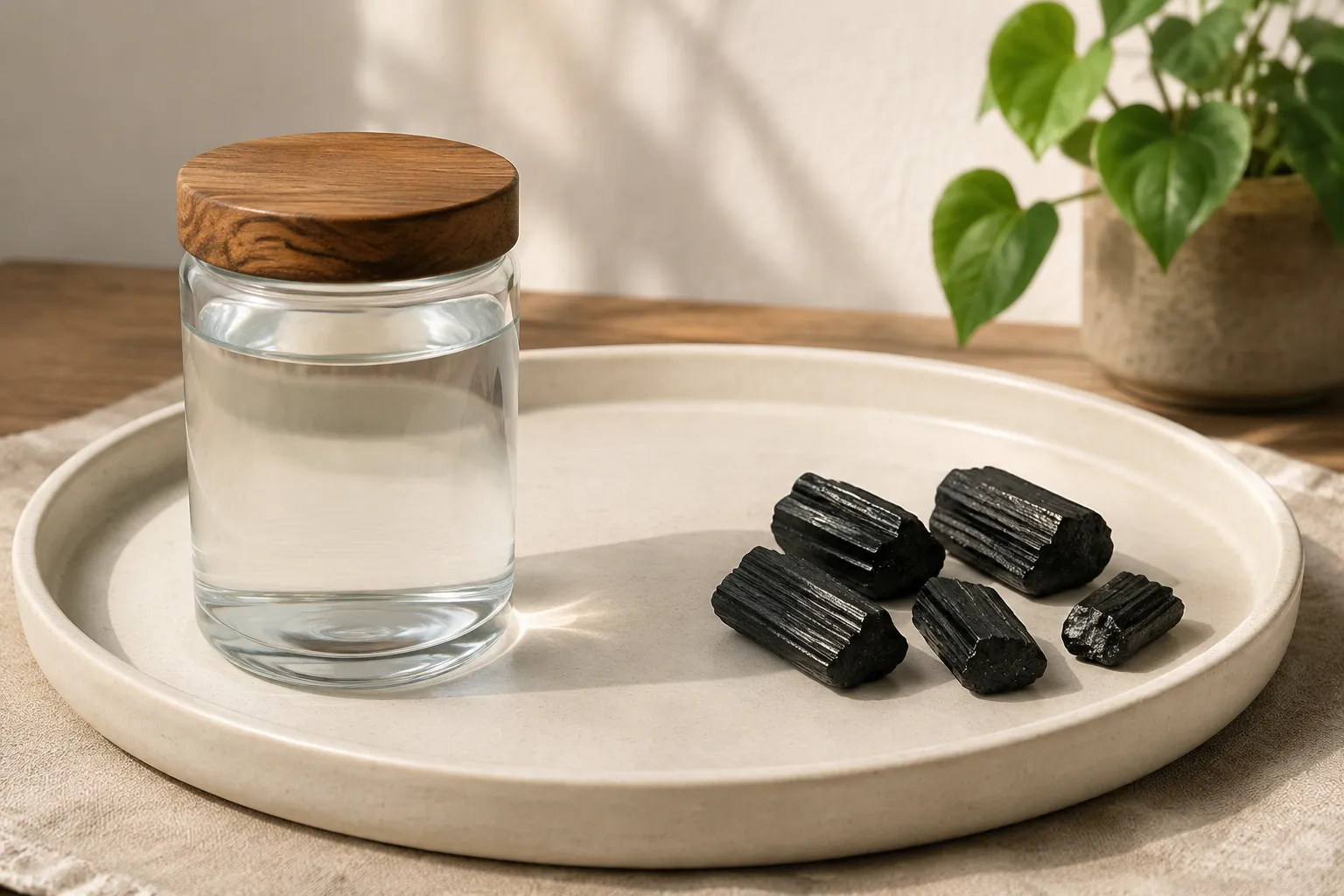
An indirect crystal elixir method separates the ritual object from the water that may be consumed. In a direct method, the crystal touches the drinking water. In an indirect method, it does not. The stone may sit beside the vessel, around it, behind it, or inside a separate sealed display container that never opens into the drink.
That separation is the point. It keeps mineral surfaces, polishing residue, cleaning agents, dust, small fragments, coatings, dyes, and unknown inclusions out of the water. It also avoids the weak shortcut that a stone is fit for drinking-water contact just because it can be rinsed or feels hard.
A restrained setup looks like this
- Fill a clean food-contact glass, jar, or bottle with potable water.
- Cover the opening with a clean lid, cap, or food-safe cover.
- Place crystals outside the container, not on the rim and not inside the vessel.
- Set the covered water in gentle daylight for a short ritual period.
- Remove it from sun and heat; drink soon, or refrigerate if you are not drinking it right away.
This remains a ritual practice. Sun-charged water language belongs to the symbolic layer; the physical method belongs to drinking-water handling.
Containers, placement, and the no-contact rule
The container matters more than the crystal. If the water will be consumed, use a clean vessel intended for food or drink contact. Public health and university extension guidance on stored drinking water emphasizes clean containers and appropriate storage conditions; that is the part of the evidence base that applies here. A decorative bowl, altar dish, antique bottle, painted vase, or metal container with an unknown finish may be beautiful without being a drinking-water vessel.
For daylight indirect infusion, use a covered clear glass or jar on a stable surface. Place the crystal outside the jar, not leaning into the mouth of the vessel. If you want a more formal layout, arrange stones in a dry ring around the container, or place one larger specimen behind it where the light catches its surface. With black tourmaline, the striations and dark mass can give the setup a grounded visual center without touching the water.
A secondary-container setup needs the same boundary. Some practitioners place a stone in a small sealed glass container and arrange that near the water. If the smaller container can leak, tip, chip, shed residue, or touch the drinking water, it is no longer a clean indirect method. The rule is not “the crystal is nearby.” The rule is “nothing from the crystal or its holder enters the drink.”
For black tourmaline specifically, keep mineral naming separate from drinking-water suitability. Schorl is a form of tourmaline, and black tourmaline is commonly discussed in that mineral context. That does not answer questions about a specific specimen’s polish, coating, fracture, dust, or handling history. Mineral identity is not food-contact clearance.
Sunlight timing: short daylight exposure, not all-day storage
Popular sun charged water methods often mention fixed windows, such as two hours or four to six hours. Treat those numbers as practice conventions, not technical requirements. The stronger sources available for this page do not establish a required sunlight duration for crystal elixirs, prana, vibrational essence, or solar structuring.
A better rhythm is a short daylight exposure that serves the ritual without turning the water into a heat-storage project. Morning light, a bright shaded windowsill, or a brief outdoor placement can be enough for the symbolic act. The point is not to bake the water or leave it forgotten in a hot place.
Heat changes the practical picture. A sealed glass jar in direct sun can warm quickly, especially on stone, metal, or dark surfaces. Warm water left standing is not made more shelf-stable because the ritual involved sunlight. CDC water-storage guidance is written for household and emergency contexts, not crystal elixirs, but the storage caution still matters: drinking water should be stored in clean containers and kept out of careless heat and contamination.
Use this timing rule instead of chasing a perfect number
| Ritual goal | Better physical choice |
|---|---|
| A brief solar gesture | Short daylight exposure, then remove from sun |
| A visually composed altar moment | Keep the vessel covered and the stones outside |
| A hot day or strong window heat | Use bright indirect light, not prolonged direct sun |
| Water for later | Refrigerate promptly rather than storing in sunlight |
| Uncertain container or stone | Do not use it with drinkable water |
This keeps the indirect sun-infused method focused: the sun marks the ritual; ordinary hygiene governs the water.
What the indirect method does and does not solve
The indirect method reduces contact between crystal material and drinkable water. That is its practical strength. It does not make every object suitable to handle near a glass.
A dusty, friable, dyed, coated, or unknown stone can still shed particles onto a surface. A sharp specimen can chip. A polished stone may carry residues from past handling or finishing. A display object may have glue, lacquer, oil, fragrance, or cleaning products on it. The answer is not drama; it is distance. Keep those materials away from the inside of the container, the rim, the lid interior, and the water.
The “water safe crystals” misconception mixes three different questions
- Can a stone tolerate a quick rinse without obvious damage?
- Is a stone appropriate for long contact with water?
- Is that stone appropriate for contact with water someone may drink?
Those are not the same question. Hardness, shine, and durability do not settle the drinking-water question. Neither does a seller’s broad care note. For crystal elixir safety boundaries, avoid crystal water contact unless you have a separate, reliable basis for food-contact use; in ordinary ritual practice, separation is the cleaner default.
The same caution applies to energetic language. In crystal practice, sunlight is often described as clarifying, charging, activating, or carrying radiant energy. Terms like vibrational essence and prana belong to that cultural vocabulary. The sources used here do not validate those mechanisms, set a required duration, or establish measurable body effects from sun-charged crystal water. You can still use the language symbolically if it matters to the ritual, while keeping the physical setup modest.
Storage after solar structuring
Sunlight charged water storage should be treated like drinking-water storage, not like a preserved preparation. If you plan to drink it, use potable water, keep the container clean and covered, and do not leave it sitting in a sunny window for extended periods.
A practical rule is simple
- Drink it soon after the short daylight ritual, or
- Refrigerate it in a clean covered food-contact container.
Do not keep moving the same jar through repeated sun cycles and assume the ritual keeps it fresh. Do not store it near soil, plant water, incense ash, loose mineral dust, pet areas, or decorative objects that can contaminate the lid or rim. If the container becomes warm, cloudy, dirty, or questionable, discard the water and clean the vessel before starting again.
For interiors, this also keeps the arrangement calmer. The black tourmaline can remain a dry textural object in the room, catching light from the side or resting on a tray. The drinking water can remain ordinary drinking water. That distinction is the cleanest version of the practice.
A compact checklist before you drink
Use this quick check when the ritual is finished:
- The water began as potable drinking water.
- The vessel is clean and intended for food or drink contact.
- The crystal never touched the water, rim, lid interior, ice, straw, or spoon.
- No dust, chips, herbs, ash, oils, or decorative residues entered the container.
- The water was exposed to daylight briefly, not stored in heat.
- The water will be consumed soon or refrigerated.
- The ritual meaning is kept separate from claims about measurable effects.
If one point fails, remake the water with a cleaner setup. The stone does not need to enter the vessel for the ritual to have visual or symbolic structure.
FAQ
Can I make a direct versus indirect crystal elixir with black tourmaline?
For a drinkable preparation, use the indirect method only: keep black tourmaline outside the water. Schorl identity and visible crystal habit do not answer questions about residues, dust, coatings, breakage, or food-contact suitability.
Is sun-charged water preserved because it was charged?
No. Treat it as ordinary drinking water. Sunlight is part of the ritual frame, not a preservation method. Avoid long-term direct-sun storage, and refrigerate if you are not drinking it soon.
Does indirect placement prove the elixir has a vibrational essence?
No strong independent source in the supplied material validates vibrational essence, prana transfer, or a required solar timing. Indirect placement is best understood as a cleaner physical boundary for a symbolic practice: crystals outside drinking water, clean container, short daylight, and careful storage.