Bounded rehabilitation answer
Ecological Soil Rehabilitation: The New Era of Tourmaline Mining
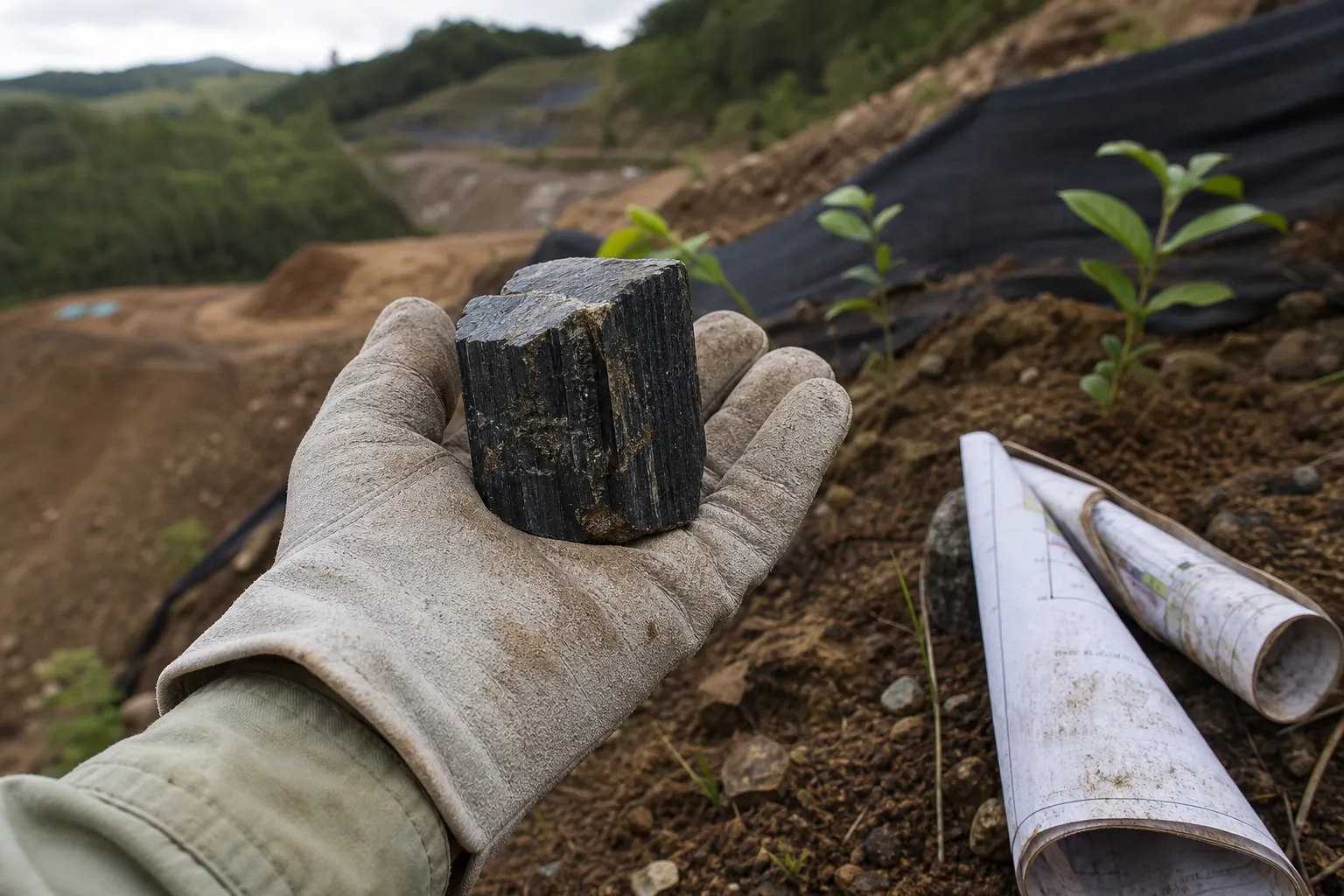
A black tourmaline specimen shows extraction in miniature: broken schorl faces, striated surfaces, and the missing ground it came from. Ecological Soil Rehabilitation can frame a more responsible era of tourmaline mining when it is treated as a mine-life obligation, not as a soft phrase added after removal.
For tourmaline mining, that means planning for disturbed soil, waste rock, tailings, water movement, vegetation return, and post-closure monitoring before the mine is exhausted. The boundary is just as important: the supplied research set for this page includes no public regulator documents, no selected standards, and no verified tourmaline mine case studies. So this answer can explain what a credible rehabilitation frame should require, but it cannot confirm that any specific mine has restored soil, stabilized tailings, met closure standards, or earned green capital on that basis.
broader context
Start with the main black tourmaline page
This narrower page works best after the broader black tourmaline context page.
What Ecological Soil Rehabilitation Means Here
In tourmaline mining, ecological soil rehabilitation means returning disturbed ground toward a more stable, functioning landscape after extraction. It is not the same as filling a pit, spreading soil over waste, or planting quick cover. A stronger version looks at soil structure, erosion control, drainage, plant establishment, tailings behavior, and the longer arc of post-closure restoration.
That matters because tourmaline is often valued at hand scale: a black tourmaline point on a shelf, a crystal in a collection, a polished stone in an interior arrangement. The mining footprint sits at site scale. Soil is moved, access routes are cut, host rock is disturbed, and leftover material has to be managed so it does not become a later instability.
Useful test
The useful question is plain: what happens to the ground after the mineral leaves? If the answer includes a closure plan, soil recovery methods, tailings stabilization, vegetation goals, and monitoring responsibilities, ecological rehabilitation has substance. If the answer is only a green label with no site-specific detail, the claim remains weak.
When Rehabilitation Becomes More Than Wording
Early planning
Post-closure restoration is more credible when it is built into mine design, not left as a final repair after the easiest material has been removed. Soil layers, drainage, access routes, and waste placement are harder to correct once disturbance has already set the site’s shape.
Site specificity
Tourmaline deposits do not share one climate, slope, soil profile, or land-use setting. Soil depth, rainfall pattern, erosion risk, nearby waterways, and existing vegetation all affect what recovery can reasonably mean. Without that local context, broad language about soil recovery or biodiversity restoration is too loose.
Tailings and waste management
Tailings treatment is not a side detail; it affects whether post-mining land can remain physically stable. This page does not have the evidence to describe tourmaline tailings as one uniform risk category. A cautious reader can still ask where tailings go, how they are contained, how water is managed, and who remains responsible after active mining ends.
Visible accountability
Environmental regulators, mine closure standards, geological agency materials, technical reports, and credible case documentation can help separate aspiration from performance. Their absence in the supplied material does not prove poor practice at any mine. It only means this page cannot verify performance claims.
Where Green Capital Helps, and Where It Misleads
Green capital can support better tourmaline mining when funding is tied to specific rehabilitation duties, transparent milestones, and long-term closure costs. It is not enough for a project to sound green because the mineral market overlaps with nature, wellness, or design language.
This is where wording and evidence need to stay separate. Phrases such as responsible tourmaline mining, ecological extraction, or green-funded restoration may fit the mood of a biophilic mineral story, but wording does not restore soil. A useful claim names the disturbed area, the rehabilitation target, the closure stage, the responsible party, and the evidence that will be reported over time.
The risk is category confusion. A mine may have careful specimen handling, attractive branding, or a market story that appeals to collectors and interior designers. Those details do not show that soil has recovered or that tailings have been stabilized. The surface of a black tourmaline specimen can help you read crystal habit and handling; it cannot verify the ecological condition of the mine site.
Green capital claims should be read as proposals until documentation appears. They may point toward better practice, but they do not replace closure standards, regulator-facing reports, monitoring records, or credible site evidence.
Common Confusion Around Rehabilitation Language
Restoration is not a finish line
In mining contexts, post-closure restoration is better read as a staged process: disturbance, stabilization, revegetation, monitoring, and adjustment if the site does not behave as expected. A single after-photo cannot carry the whole claim.
Small crystals do not automatically mean small impact
A tourmaline crystal may be small, but access roads, waste rock, water flow, and soil disturbance can still matter. The safer conclusion is narrower: every site needs its own rehabilitation evidence.
Specimen authenticity is not mine responsibility
For a black tourmaline buyer, striations, crystal habit, weight, and surface texture may help frame questions about the specimen itself. They do not prove provenance, labor practice, regulatory status, or rehabilitation quality. Material evidence works at hand scale; site responsibility requires site-level records.
Biodiversity restoration needs local evidence
Biodiversity can be part of a rehabilitation goal, but claims about species return need local baseline information, realistic targets, and monitoring over time. This page does not have source material that supports successful biodiversity outcomes at tourmaline mines.
A Practical Verification Lens
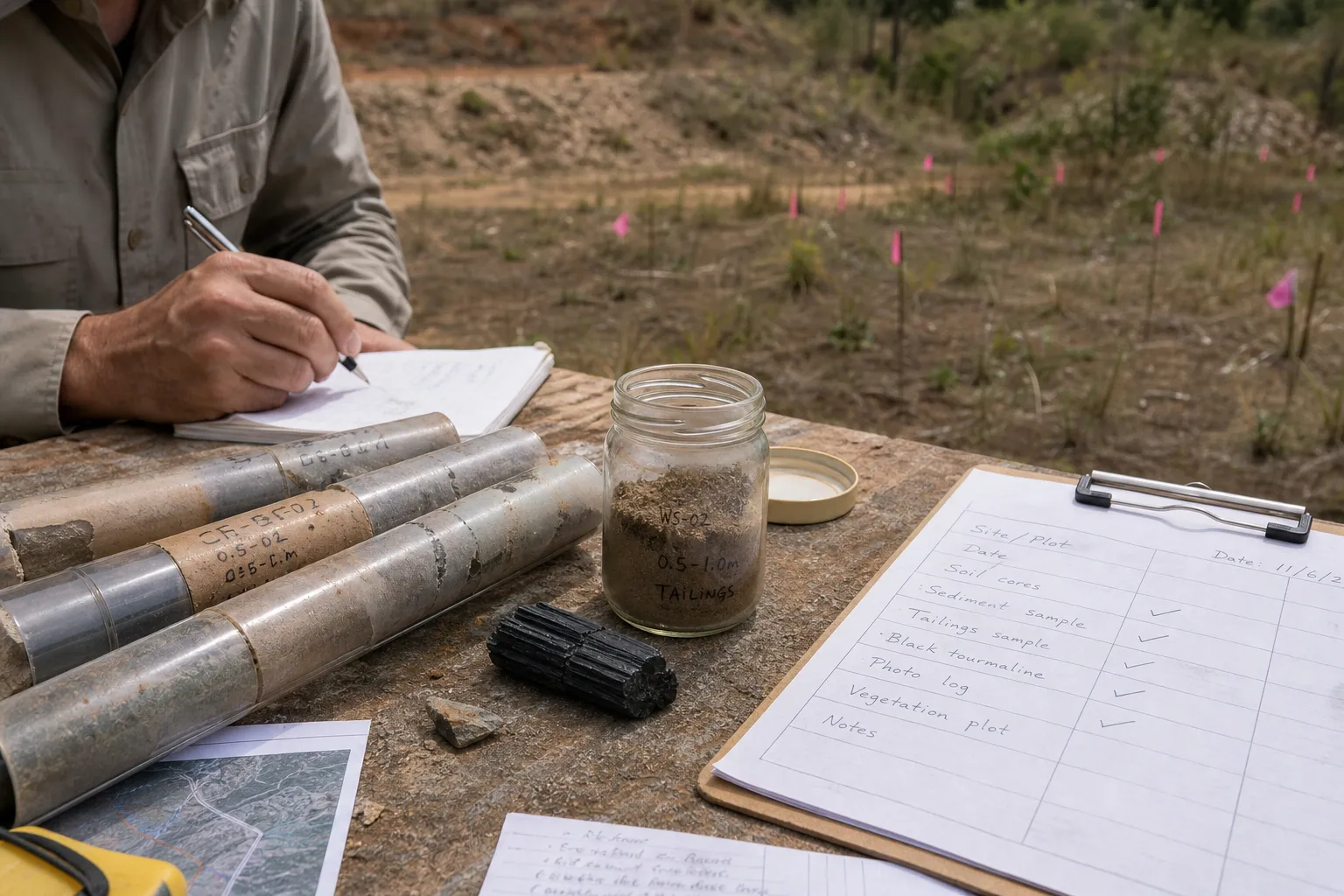
When a tourmaline seller, mine, or project uses ecological soil rehabilitation language, look for concrete answers rather than polished phrasing. A credible explanation should identify the mine or region, describe the disturbance being addressed, and explain how soil, water, tailings, and vegetation are handled after extraction.
Useful questions include:
- What mine or extraction area does the rehabilitation claim refer to?
- Is there a post-closure restoration plan, or only a general sustainability statement?
- Are tailings treatment and waste rock management described in site-specific terms?
- Does the claim mention monitoring after closure, not just planting or cleanup?
- Are environmental regulators, mine closure standards, or credible technical documents visible?
- If green capital is mentioned, is the funding linked to measurable rehabilitation work?
A missing answer is not automatic proof of harm. It is a reason to avoid over-reading the claim. The responsible posture is to separate what is known, what is claimed, and what still needs documentation.
The Evidence Limit for This Page
The strongest boundary is straightforward: no public reference candidates were available from the supplied research for this article. This page cannot verify specific tourmaline mining practices, soil chemistry outcomes, pollution reduction, regulatory compliance, investment performance, or successful biodiversity restoration.
What it can do is define the editorial test. Ecological Soil Rehabilitation is a useful frame for responsible tourmaline mining when it shifts attention from the beauty of the extracted mineral to the condition of the land after extraction. It becomes meaningful when tied to post-closure restoration, tailings stabilization, site-specific soil recovery methods, and visible accountability. It becomes weak when used as a broad label without evidence.
For black tourmaline readers, that distinction keeps schorl in its real context. The specimen may belong in a quiet room, on a shelf, or within a biophilic interior by weight, texture, and presence. The mining story behind it needs a different kind of grounding: not mood, not branding, but documented care for disturbed soil and the land left behind.