Specimen value note
The Cost of Perfection: Why Polished Tourmaline Loses Value
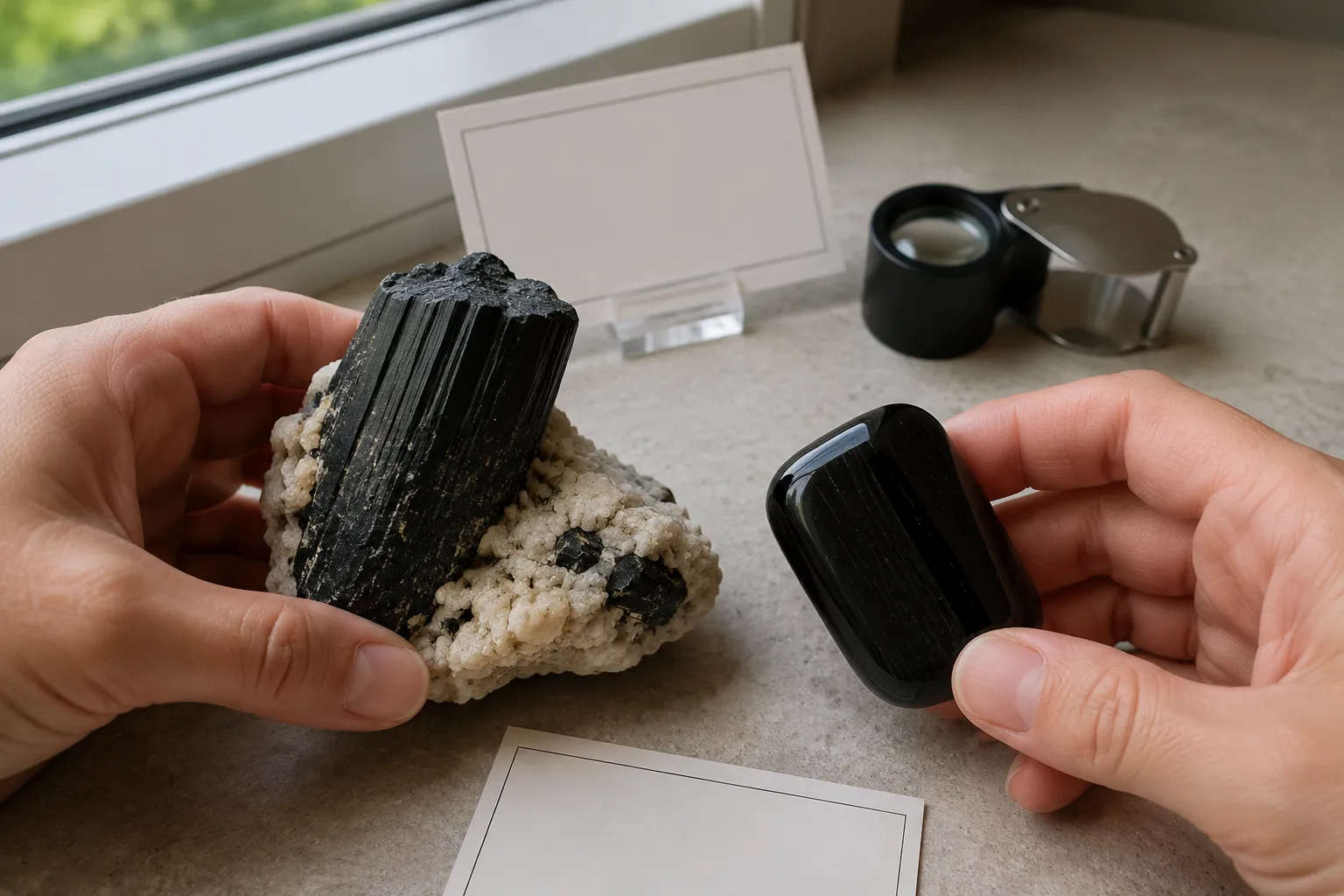
A polished black tourmaline piece can look cleaner, smoother, and more deliberate, but that finish may lower its value as a mineral specimen when it removes the features collectors use to read the stone. The issue behind polished black tourmaline value is not simply shine versus roughness; it is information.
Raw matrix, natural faces, striations, terminations, contact points, and locality context can help a specimen carry a visible geological narrative. Once those surfaces are ground, rounded, or reshaped, the piece may become more decorative but less informative to a specimen-focused buyer.
That does not mean polished tourmaline is worthless, fake, or always less desirable. It means the value frame changes.
broader context
Broader schorl guide
This narrower page works best after the broader black tourmaline context page.
Polishing can trade geological context for surface finish
Black tourmaline, often discussed as schorl in mineral contexts, appeals to many specimen buyers because of form: crystal habit, ribbing, termination quality, surface texture, and the way the crystal sits in or separates from surrounding rock.
A raw matrix black tourmaline piece can show more than the black crystal itself. It may show attachment, growth direction, neighboring material, break history, and the relationship between the crystal and its original setting.
Polishing changes that reading. It can round edges, soften striations, blur the difference between broken and natural surfaces, and make matrix relationships harder to evaluate. For a decorative object, that may be useful. For black tourmaline specimen valuation, it can be a loss because the surface no longer tells as much about the mineral’s natural form.
The “cost of perfection” is practical, not mystical. The more a specimen’s appeal depended on untouched mineral character, the more polishing can reduce collector interest.
What raw matrix can preserve
Raw matrix matters because it can anchor the crystal in context. A loose black tourmaline rod may still be attractive, but a crystal attached to matrix can feel less like a shaped object and more like a preserved mineral occurrence.
Matrix does not automatically raise value. Poor balance, unstable host rock, heavy damage, or an ordinary crystal can still limit appeal. But when the matrix is meaningful to the piece, polishing may remove or weaken several value cues:
- Natural relationship to host material: A crystal still seated in matrix can show how it grew or was preserved.
- Visible contrast: Dark schorl against lighter surrounding rock may create stronger display presence.
- Condition evidence: Natural contact points, chips, and breaks can be easier to read before polishing.
- Locality and provenance cues: Matrix alone does not prove locality, but it may support a broader documentation story when paired with reliable labels or collection history.
- Specimen integrity: A raw piece can feel more complete when crystal, matrix, and natural surface belong together visually.
Polishing can flatten that story into one continuous finish. The result may be sleek and pleasing in the hand, yet weaker as geological evidence.
The buyer segment decides whether polish helps or hurts
The secondary market for black tourmaline is not one audience. A designer, jewelry maker, tactile-object buyer, metaphysical-shop customer, and mineral-specimen collector may all use different value language. That is why polished versus raw tourmaline comparisons often get confusing.
A polished piece may appeal when the buyer wants
- a smooth object for display,
- a palm-sized tactile piece,
- a clean decorative accent,
- a bead, cabochon, carving, or jewelry component,
- a uniform black surface with fewer sharp edges.
A raw specimen may appeal when the buyer wants
- visible crystal habit,
- natural faces on tourmaline,
- intact or expressive terminations,
- raw matrix,
- documented locality,
- minimal alteration,
- a stronger sense of geological history.
Neither buyer is automatically right. They are valuing different things. The same polish that makes a piece easier to place on a shelf or hold in the hand may make it less compelling to someone comparing mineral specimens. In that context, surface finish can look like alteration rather than improvement.
The cleanest way to understand polished black tourmaline value is this: polish can increase decorative usefulness while reducing specimen information.
Why terminations, faces, and striations matter
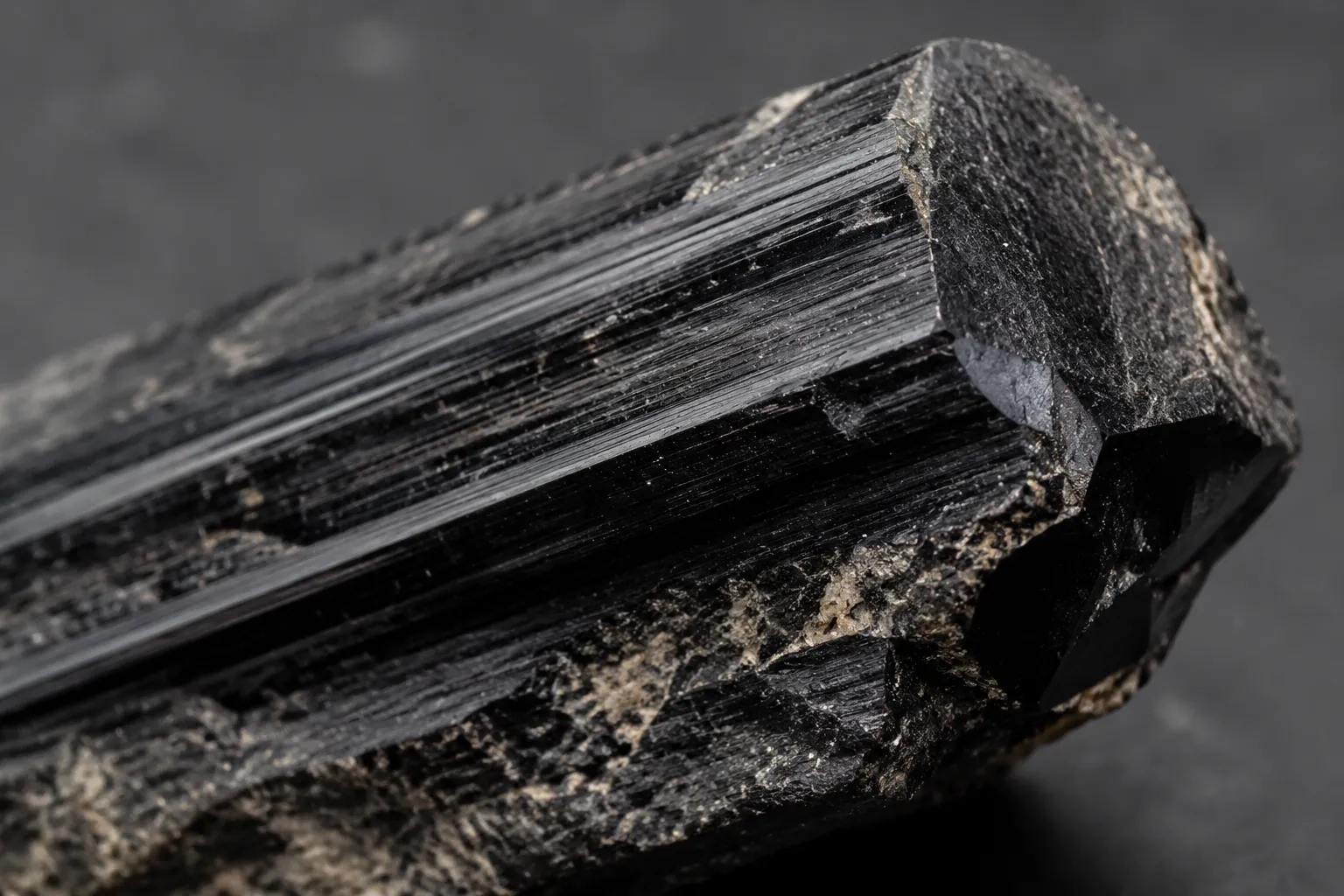
A black tourmaline crystal is often judged partly by what remains visible. Terminations, natural faces, and longitudinal striations help a viewer see crystal habit rather than only black mass. When those features are crisp, the specimen carries more mineralogical character. When they are rounded away, the piece may still be tourmaline, but it becomes harder to read as a natural crystal.
Tourmaline termination quality is especially sensitive to alteration. A sharp, undamaged termination can be part of the appeal of a raw piece. If polishing reshapes that end, the viewer may no longer be able to tell whether the termination was natural, damaged, repaired, or simply worked into a pleasing shape. That uncertainty can matter in specimen valuation.
Natural faces work the same way. A natural face may show growth texture, small irregularities, and the original geometry of the crystal. A polished face shows lapidary finish. Both can be beautiful, but they answer different questions: one preserves a surface; the other presents a worked surface.
For collectors who prioritize natural form, that distinction is not minor.
Polishing is an alteration, not automatically damage
It would be too simple to say polishing ruins black tourmaline. Some material is polished because it was already broken, massive, incomplete, or better suited to decorative use than specimen display. In those cases, polishing may create a more useful object than the rough fragment offered.
Still, in specimen-focused contexts, polishing is usually read as human alteration. That does not make the piece bad. It does mean a buyer may ask what was removed, what was hidden, and whether the remaining form still represents the mineral honestly.
Condition is where the answer becomes conditional. A raw specimen with obvious damage is not automatically more valuable than a polished one. A polished piece made from ordinary broken material may be entirely appropriate for its purpose. But a high-character raw crystal with matrix, natural faces, and a strong termination may lose specimen appeal if polished into a smoother object.
The effect depends on what the piece was before it was worked.
Common misunderstanding: shiny does not always mean more valuable
Many readers assume finish equals quality. That makes sense in furniture, jewelry, and many design objects, where polish often signals refinement. Mineral specimens are different because they can be valued as preserved natural objects, not only as finished goods.
A glossy black tourmaline wand may photograph well and feel substantial in the hand. It may work in a room where the goal is visual weight, dark texture, and a quiet mineral accent. In biophilic interiors, a polished piece can still hold presence through shape, mass, and contrast.
The same object may be less interesting to a specimen buyer if it has lost raw matrix, surface texture, or termination evidence. This is not a judgment against polish. It is a reminder that beauty and specimen value are not the same category.
Decorative value asks: “Does it look and feel right for its intended use?”
Specimen value asks: “What natural information does it preserve, and how desirable is that preserved state?”
When polished black tourmaline may still hold value
Polished black tourmaline can still be desirable. It may hold value when the workmanship is good, the form is pleasing, the size is useful, the material has strong visual presence, or the intended buyer wants a finished object rather than a natural specimen.
Jewelry-grade, carving-suitable, or display-friendly material is often judged by different criteria from a raw matrix specimen. A piece does not have to preserve every natural surface to be wanted in those categories.
There are also cases where the raw form had limited collector appeal. If the crystal was heavily broken, lacked readable habit, had no meaningful matrix, or looked visually ordinary, polishing may make it more marketable for decorative use.
The exception matters most when the rough specimen had strong natural evidence. If a piece began with a good termination, clear striations, attractive matrix, and credible documentation, polishing may remove the traits a mineral-focused buyer would have noticed first.
So the answer is conditional: polishing can reduce value when it subtracts from the specimen’s natural story, not simply because polish exists.
How to evaluate a polished piece before assuming loss
If you are comparing polished versus raw tourmaline, start with buyer purpose. Are you judging the piece as a mineral specimen, a design object, jewelry material, or a tactile object? The answer changes the value frame.
For specimen-focused judgment, ask:
- 1. What natural features remain visible?
Look for striations, crystal habit, natural faces, terminations, and unworked areas. - 2. Was matrix removed or preserved?
A detached polished crystal may have lost context that a raw matrix piece retained. - 3. Does the polish hide condition questions?
Rounded surfaces can make chips, breaks, repairs, and reshaping harder to interpret. - 4. Is there reliable locality or provenance documentation?
Labels and collection history matter more than appearance alone. This page cannot verify any individual claim. - 5. Who is the likely buyer?
A specimen collector and an interior-design buyer may reach different conclusions about the same object.
This is not an appraisal formula. It is a way to keep one visual cue, shine, from carrying the whole judgment.
The limit on specimen valuation claims
Black tourmaline specimen valuation is not governed by one public rule that says raw always beats polished. Market response varies by specimen quality, locality, condition, aesthetics, documentation, and buyer preference. Without a formal appraisal and stronger documentation for a specific piece, exact value-loss claims should be treated cautiously.
The narrow, useful statement is this: polishing black tourmaline specimens may reduce collector appeal when it removes natural context that specimen-focused buyers use to judge the piece. It may not reduce appeal for buyers who want a finished decorative or tactile object. In some categories, it may improve usefulness.
Polishing changes what the object communicates; the market response depends on who is listening.
Bottom line
Polished black tourmaline loses value only in certain value systems. If the original appeal of the piece came from raw matrix, natural faces, terminations, striations, provenance cues, and geological narrative, polishing can make it less desirable as a mineral specimen. If the goal is touch, jewelry, clean display, or room placement, polish may be a feature rather than a flaw.
The practical question is not “Is polished tourmaline bad?” It is “What did the polishing remove, and who was going to value what was removed?”
For specimen-focused buyers, perfection can cost context. For decorative use, the same smooth surface may be exactly the point.