Raw schorl field note
Stop Polishing the Power: The Scientific Case for Raw Striated Specimens
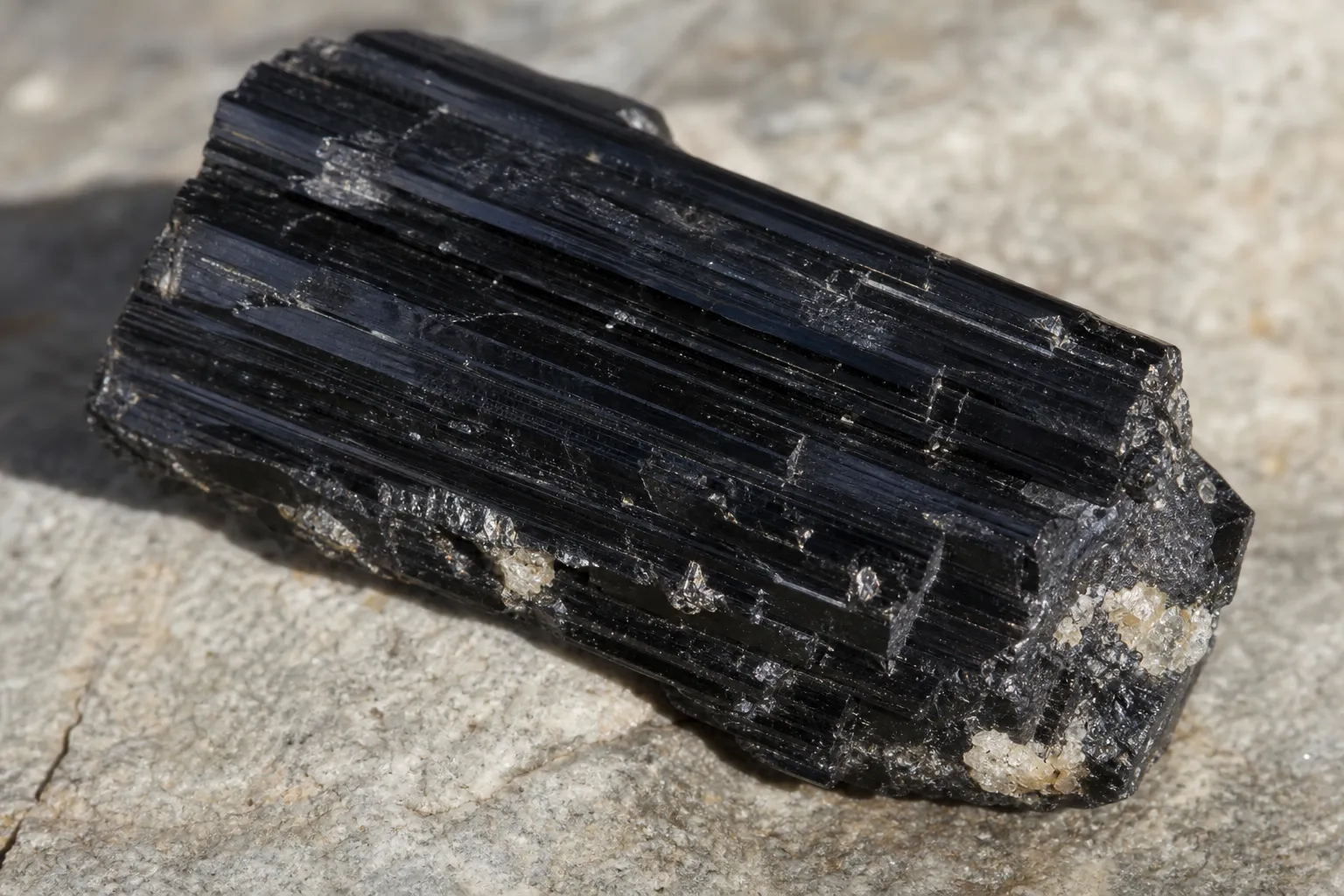
Raw Striated Schorl is most compelling when it stays unpolished because the surface is part of the specimen’s evidence. The lengthwise grooves, broken terminations, uneven luster, and possible matrix contacts are not decorative flaws; they are the visible language of schorl crystal habit.
Polishing can make black tourmaline smoother, shinier, and easier to wear. It can also simplify the surface until the piece reads as a finished black object rather than a mineral with readable growth texture. The “power” worth defending here is not a measurable spiritual force. It is preserved surface evidence, tactile irregularity, natural aesthetics, and symbolic presence held inside an observable mineral form.
broader context
Start with the main black tourmaline page
This narrower page works best after the broader black tourmaline context page.
What Raw Striated Schorl Keeps Visible
Schorl is the black, iron-rich tourmaline most people mean when they say black tourmaline. In raw specimens, it often appears as elongated prismatic schorl, with lengthwise striations running along the crystal. Those grooves matter because they connect the eye to crystal growth, not just to color.
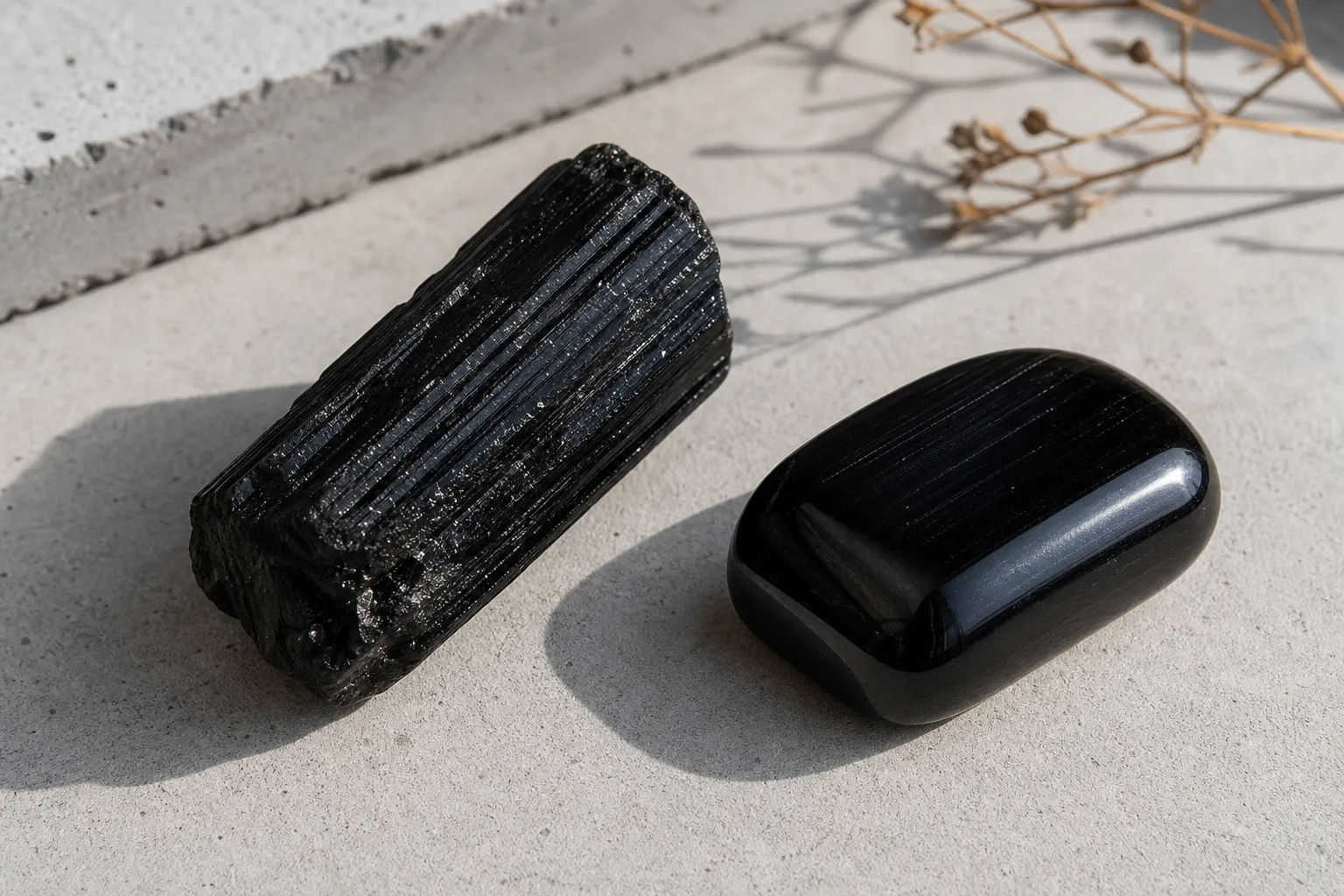
A polished black tourmaline surface changes that reading. It may deepen shine, soften edges, and make the piece easier to hold or set into jewelry. At the same time, it can reduce visible growth texture. A raw face may show ridges, fractures, matte patches, glossy flashes, and angular interruptions. A polished face often gives one smoother impression: black, reflective, finished.
That is not a flaw in polished stone. Polished pieces can be beautiful and practical. The narrower point is this: if the question is why a raw striated specimen feels more compelling as a mineral specimen, the answer lies in what it does not hide. It preserves the schorl crystal habit in a way a rounded or tumbled form often cannot.
Raw versus polished schorl should not be reduced to stronger versus weaker. A raw specimen may feel more forceful because it has mass, shadow, edge, and visible geological texture. That is a sensory and aesthetic difference, not evidence that the unpolished form produces a stronger effect in the room or body.
The Geological Case Behind the Surface
Tourmaline is a boron-bearing crystalline silicate mineral group, and schorl is one of its best-known black members. Geological references commonly place tourmaline in granitic rocks, pegmatites, aplites, and hydrothermal veins. For black tourmaline specimens, pegmatite schorl occurrence is especially relevant because many collector pieces are discussed through pegmatite settings and associated minerals.
Pegmatite cooling can allow large crystals to form, but that statement should stay general unless a specific specimen has documented origin and context. A loose black crystal on a shelf does not announce its full geological history by appearance alone. Still, the visible form can tell a limited story: dark schorl color, striated prism habit, angular growth, and sometimes relationships with quartz, feldspar, mica, or other matrix material.
Those schorl matrix relationships are one reason raw pieces are valuable to study. A black crystal emerging from pale quartz, or sitting with mica-like flashes, gives the eye more context than a detached polished shape. Matrix does not prove everything about origin or authenticity, but it can preserve a geological setting that polishing may erase.
This is the scientific case in its most useful form: raw striated schorl can retain observable mineral features. It should not be stretched into claims the specimen itself cannot support.
“Original Energy Flow” Works Better as Symbolic Language
Many readers arrive with words like Original energy flow, grounding, protection, or natural power. That language matters because it describes why people are drawn to raw black tourmaline. It should not be mistaken for mineralogical evidence.
Factual layer
Raw schorl preserves physical features: striations, prism shape, rough edges, possible matrix, tactile irregularity, and contrast between matte and glossy surfaces.
Symbolic layer
People may experience those features as more grounded, direct, or visually protective because the object looks less processed.
That symbolic reading can be meaningful as personal or cultural language. It is not a scientific measurement. The available mineralogical sources support morphology, occurrence, and material description; they do not support the claim that raw schorl has stronger measurable spiritual energy than polished schorl.
Physical terms sometimes used around tourmaline, including pyroelectric and piezoelectric, should also stay in their lane. They describe physical mineral properties. They do not turn raw black tourmaline into proof of room-clearing, body-protection, radiation-shielding, or guaranteed spiritual outcomes.
So “Stop Polishing the Power” works best as an editorial reframing: do not polish away the evidence if what you value is raw geological presence. Do not turn that preserved presence into a laboratory-style claim about energy.
When Polished Schorl Still Makes Sense
The case for raw striated specimens is strongest when the reader’s goal is mineral evidence, natural aesthetics, and sculptural presence. It changes when the goal changes.
A polished piece may make sense when touch comfort, jewelry use, pocket carry, or a more controlled visual surface matters more than preserving growth texture. A tumbled or polished black tourmaline form can be easier to handle, less likely to snag, and visually quieter in a room. If the specimen is being used as a design accent on a desk, nightstand, or shelf, polished and raw forms create different moods rather than a simple hierarchy.
Raw schorl has compromises. It may shed tiny fragments, feel sharp along broken edges, collect dust in grooves, or sit less securely without a stand. Its surface can be visually complex, which is part of its appeal, but that complexity is not practical in every placement.
The exception is important: not every raw black piece is automatically more informative. A broken, weathered, or heavily damaged fragment may show less readable structure than a carefully polished piece with known provenance or a clear label. Rawness helps when it preserves visible form. It does not create certainty by itself.
The Authenticity Clue Is Helpful, Not Decisive
Black color alone is a weak identification clue. Polished black stones can resemble onyx, obsidian, or other dark materials because polishing reduces surface texture and visual irregularity. Raw schorl can be easier for a layperson to read when lengthwise striations, prismatic form, fractured terminations, and matrix contacts remain visible.
That does not mean black tourmaline striations prove authenticity on their own. Similar-looking textures can mislead, photos can distort scale and luster, and marketplace descriptions may use “black tourmaline” and “schorl” loosely. The lower-risk approach is non-destructive identification: observe form, surface, luster, weight, matrix, and context; compare with reliable mineral references; seek professional mineral or gem identification when certainty matters.
Scratch testing deserves caution. Advice to scratch glass or test hardness appears in casual online discussions, but it can damage a specimen and is not diagnostic by itself. A mineral specimen should not be harmed just to chase a simplified yes-or-no answer.
For everyday readers, the practical verification point is modest: preserved surface evidence can support a more informed first look, especially when the specimen shows elongated prismatic habit and lengthwise striations. It cannot replace proper identification.
Natural Aesthetics Are Part of the Case
The strongest argument for an unpolished schorl specimen is not only technical. It is also visual. Raw black tourmaline has an architectural quality: dark vertical ridges, broken ends, sudden reflective planes, and a sense of weight that changes with light. In biophilic interiors, that mineral presence can give a room contrast without needing bright color.
Natural schorl aesthetics depend on irregularity. A raw specimen can look grounded because it resists smoothing. It may sit like a small geological column, a dark shard, or a mineral fragment with shadowed grooves. That presence differs from a polished black stone, which often reads as calmer, cleaner, and more object-like.
Tactile irregularity matters here. The hand can feel ridges and interruptions, while the eye follows the crystal’s length. For people who use grounding language in a non-medical, body-aware way, that texture can become a point of attention: a physical object with weight, edge, and cool surface. The mineral is not making a health-outcome promise. It is giving the senses something concrete to orient around.
At room scale, raw schorl can also avoid looking overly decorative. It sits well near wood, linen, stone, ceramic, or plants because the appeal comes from contrast: black mineral against softer natural materials, rough surface against finished interior lines.
The Bottom Line on Raw Versus Polished Schorl
Raw Striated Schorl is compelling because it keeps the specimen closer to its observable mineral character. The unpolished surface can preserve striations, prism habit, matrix relationships, fractured terminations, and the natural texture that makes schorl visually legible. Polishing may improve smoothness and handling, but it can also reduce the surface cues that carry geological and aesthetic meaning.
The careful answer is not that raw schorl has scientifically stronger “energy.” The careful answer is that raw schorl often holds more visible evidence. If “power” means preserved texture, sculptural force, and symbolic presence rooted in material form, then the raw striated specimen makes the stronger case. If “power” means a measurable spiritual or health outcome, the available mineralogical evidence does not support that leap.
Choose the raw piece when you want schorl before symbolism: ridges, weight, shadow, and surface. Choose polished when comfort, simplicity, or a quieter object matters more. The most honest value of raw black tourmaline is not hidden inside a claim; it is already there on the surface.